Page 4 of 4 · Places 25–1
25. Trolltunga, Norway
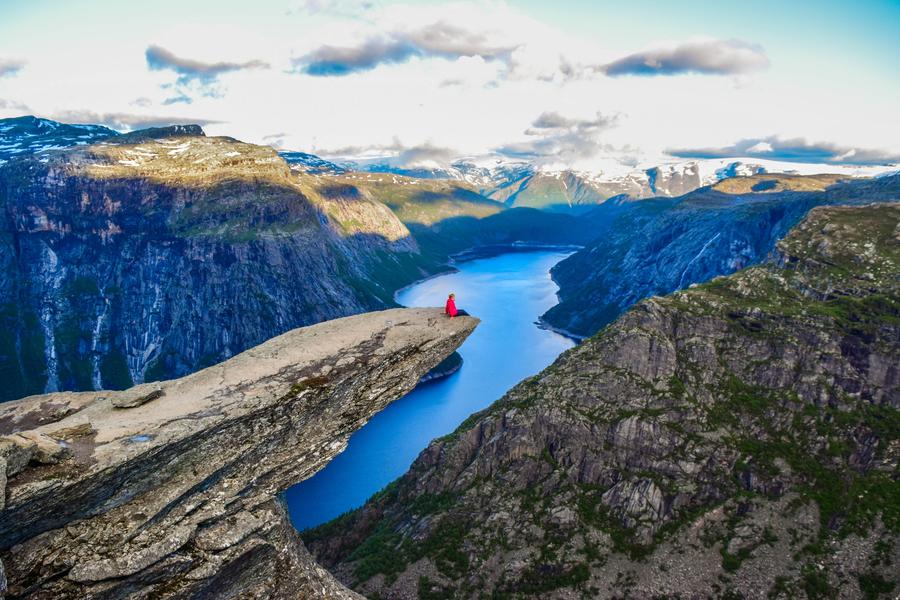
Trolltunga projects roughly 2,300 feet (700 m) above Lake Ringedalsvatnet, creating a dramatic ledge over the Norwegian mountain landscape. The long lake and surrounding slopes give the view much of its depth. Reaching it is demanding: the route from the P2 parking area is about 17 miles (27 km) round trip, usually taking 8–12 hours. This is a high-mountain hike that needs preparation, not a viewpoint reached by a short roadside stroll.
24. Iguazú Falls, Argentina and Brazil
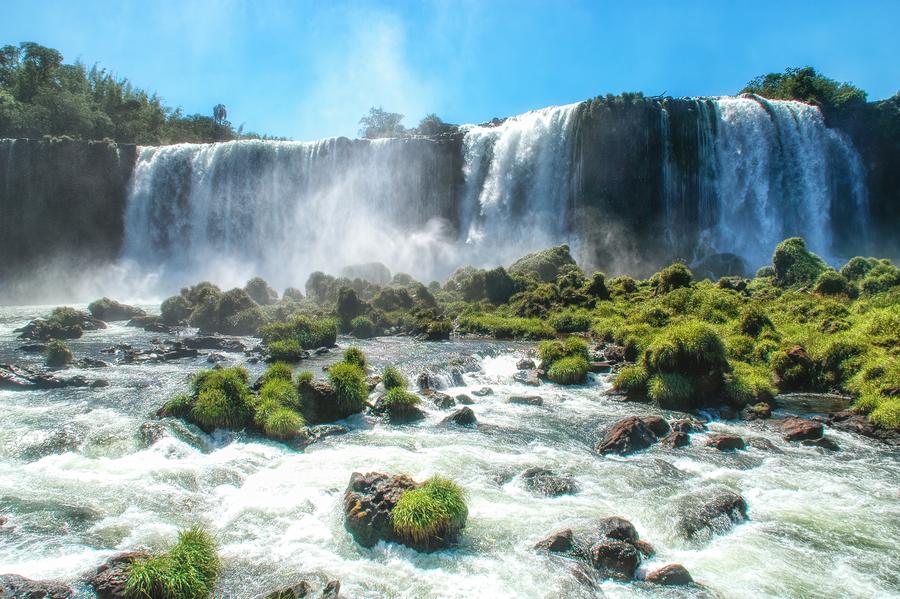
A broad arc of cascades breaks through subtropical forest at Iguazú Falls, on the border of Argentina and Brazil. The system extends across roughly 1.7 miles (2.7 km), with water tumbling over a basalt edge into clouds of spray. Its scale comes from the many separate falls combining into one landscape. Dense forest frames the white water, and the surrounding national park protects a rich variety of plants and animals alongside the spectacle.
23. Venice, Italy
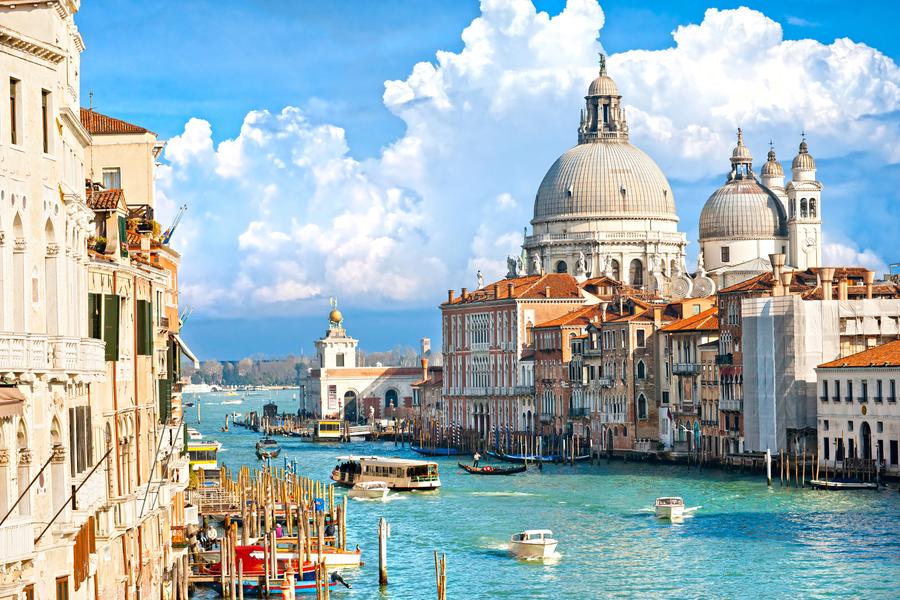
Built across 118 small islands, Venice turns waterways into streets and bridges into everyday crossings. Palaces and churches meet the canals at the water’s edge, their stonework reflected in the moving surface below. The city’s former importance as a maritime power remains visible in its architecture and art. Beyond the famous views, smaller buildings and narrow passages carry the same relationship with water, making the overall setting as compelling as any individual landmark.
22. Vatnajökull Ice Caves, Iceland
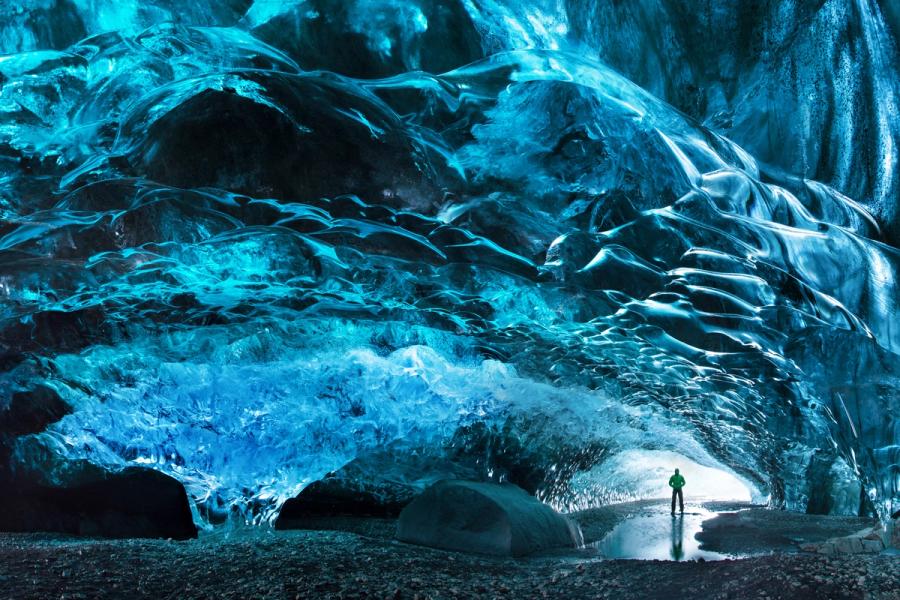
Blue walls and curved ceilings reveal a different side of Iceland’s glaciers inside the ice caves around Vatnajökull. Meltwater helps form passages through the ice, and their shapes change with the glacier rather than remaining fixed year after year. Light through the walls brings out ripples, bubbles and deeper blue tones. Visits depend on weather and ice conditions; arrange a guided trip instead of entering independently, and expect the available caves to change.
21. Pamukkale, Turkey
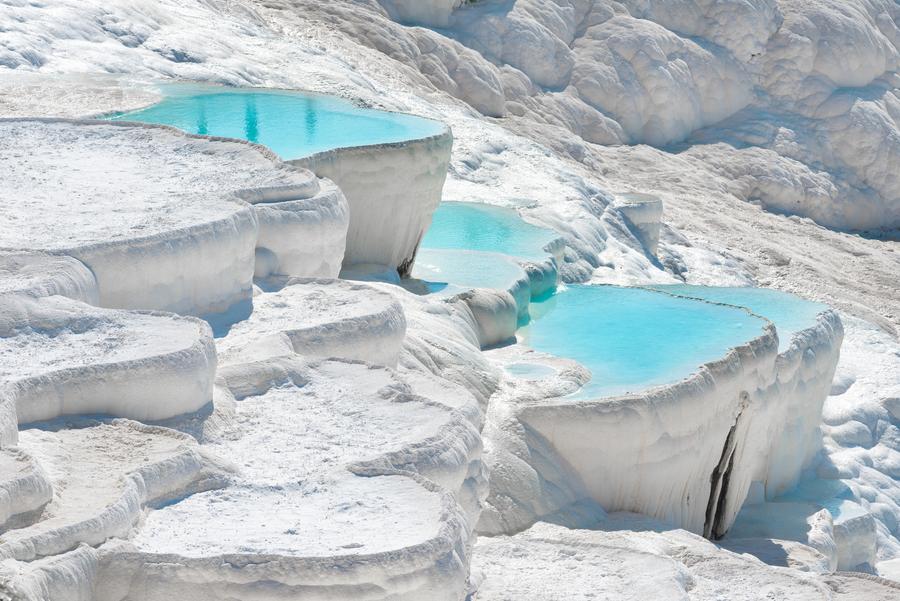
Mineral-rich spring water has built Pamukkale’s pale terraces and basins, giving the hillside the appearance of a cascade turned to stone. The name means Cotton Palace, an apt description of the white formations above the plain. Nearby Hierapolis adds an ancient city to the landscape, with surviving baths, temples and other ruins. Seeing the terraces alongside those remains connects the unusual geology with the long history of people drawn to the thermal springs.
20. Colosseum, Rome, Italy
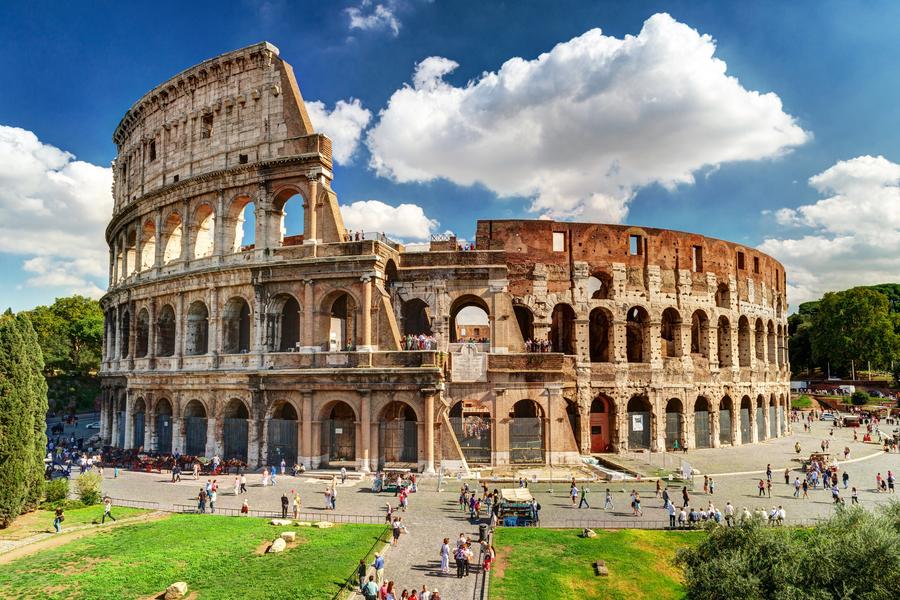
The Colosseum’s open arches frame an arena that first hosted spectacles in AD 80. Its surviving walls make the scale of ancient Roman entertainment visible in the middle of modern Rome. Beneath the arena, a network of passages and lifting machinery once brought animals, people and scenery into view. Looking down into those underground spaces reveals how much engineering stood behind the performances, as well as the monument’s familiar exterior.
19. Angkor Wat, Cambodia
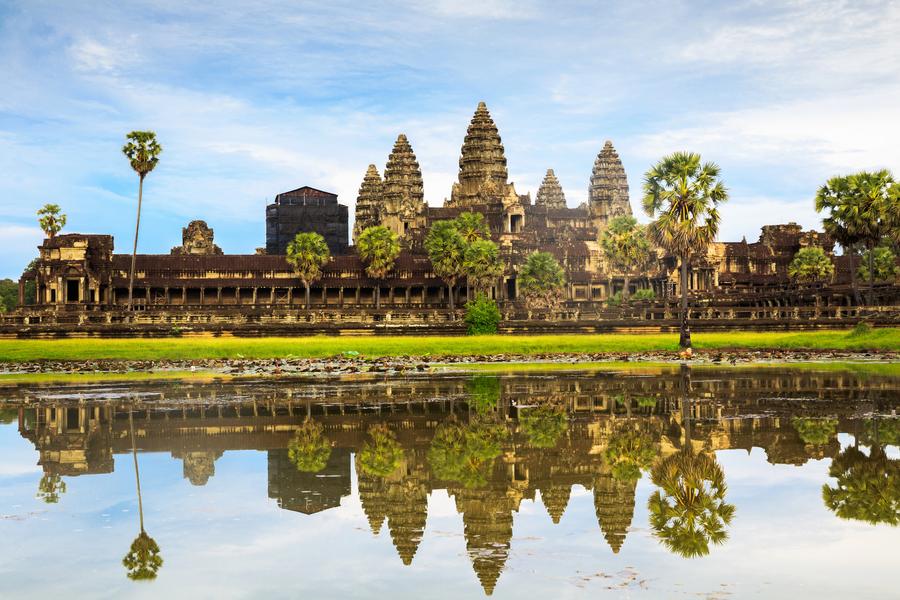
Angkor Wat’s towers rise above a moat and long galleries carved with stories from Hindu tradition and Khmer history. Built in the first half of the 12th century under Suryavarman II, it later became a Buddhist place of worship. The broad approach gives a sense of the temple’s symmetry; the reliefs reward a much closer look. Leave time for both the distant silhouette and the figures, processions and scenes cut into its sandstone walls.
18. Barbados
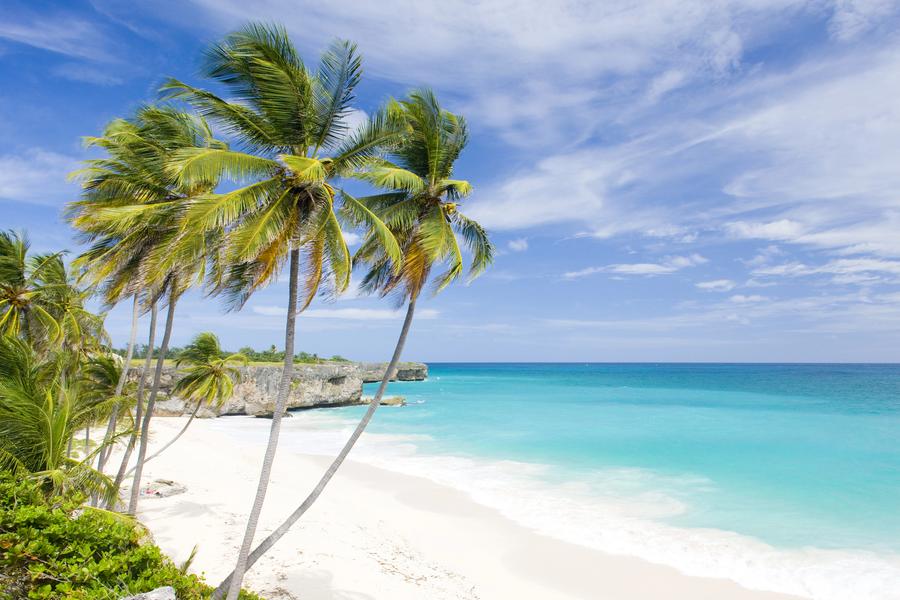
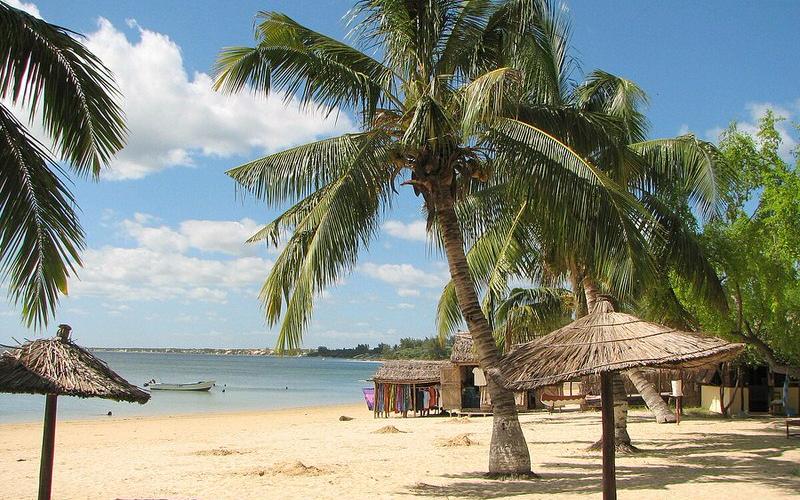
High coral cliffs and tall palms frame Bottom Bay, a beach in Barbados’s parish of St. Philip. The cliffs partly enclose the sand, creating a sheltered-looking scene beside the open sea. It is a good place for a picnic and coastal views, but the tourism board warns that the strong waves make swimming inadvisable. Elsewhere, historic Bridgetown and its Garrison preserve another part of the island’s character.
17. Marble Caves, Chile
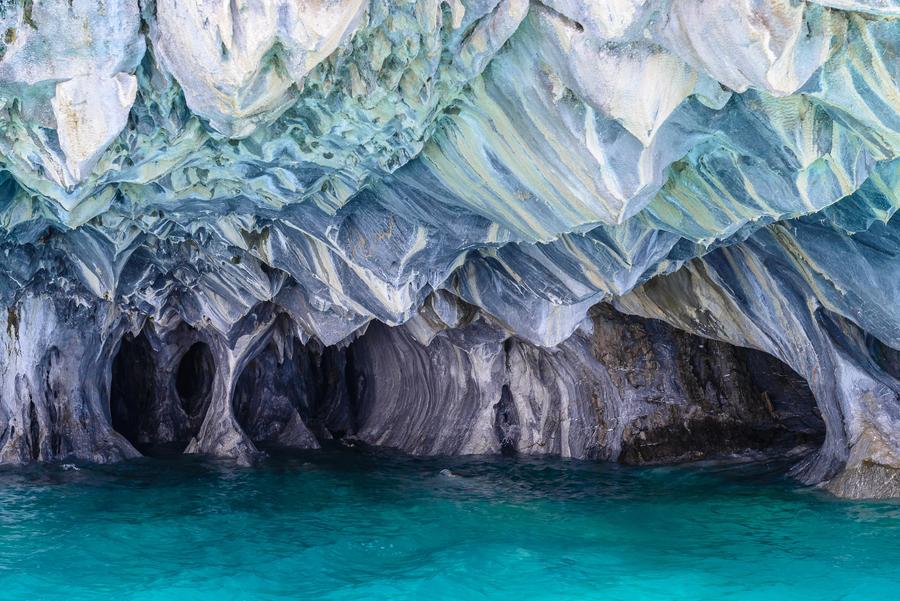
Water has sculpted the Marble Caves on General Carrera Lake into pale chambers, arches and curved columns. The surrounding blue water reflects onto the stone, changing how the walls look as the light shifts. These formations lie in Chile’s Aysén region, with boat and kayak trips leaving from Puerto Río Tranquilo. Seeing them from water level brings the patterned marble close enough to appreciate its detail, while the wider lake provides the mountain setting.
16. Moraine Lake, Canada
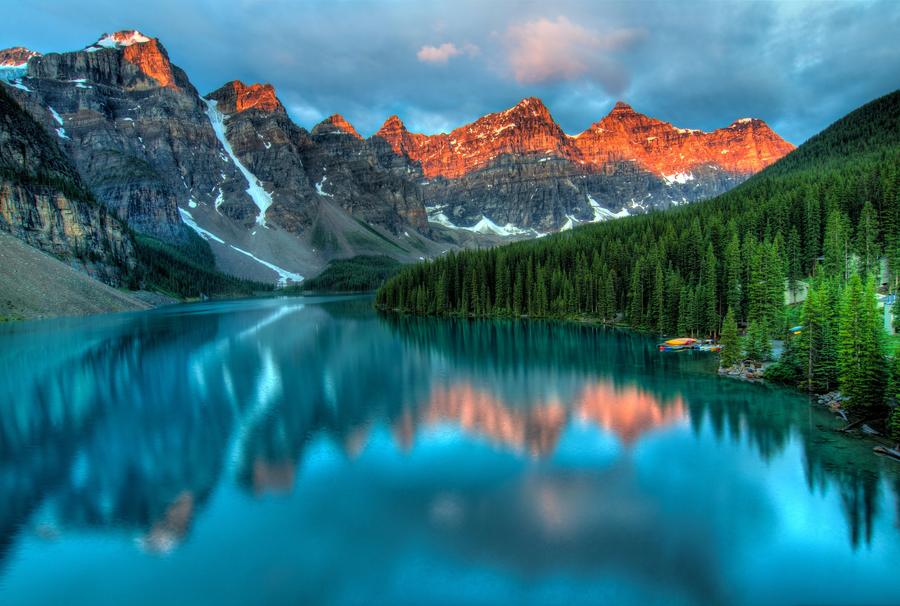
Moraine Lake’s bright blue water and mountain scenery make it one of Banff National Park’s most recognizable views. Trails around the lake offer different angles on the water, trees and peaks. As of October 2026, its access road is closed to personal vehicles, with limited exceptions. Parks Canada shuttles require reservations, and licensed operators also provide seasonal access. Check the operating season before planning a visit; winter avalanche hazards make the lake inaccessible.
15. Salar de Uyuni, Bolivia
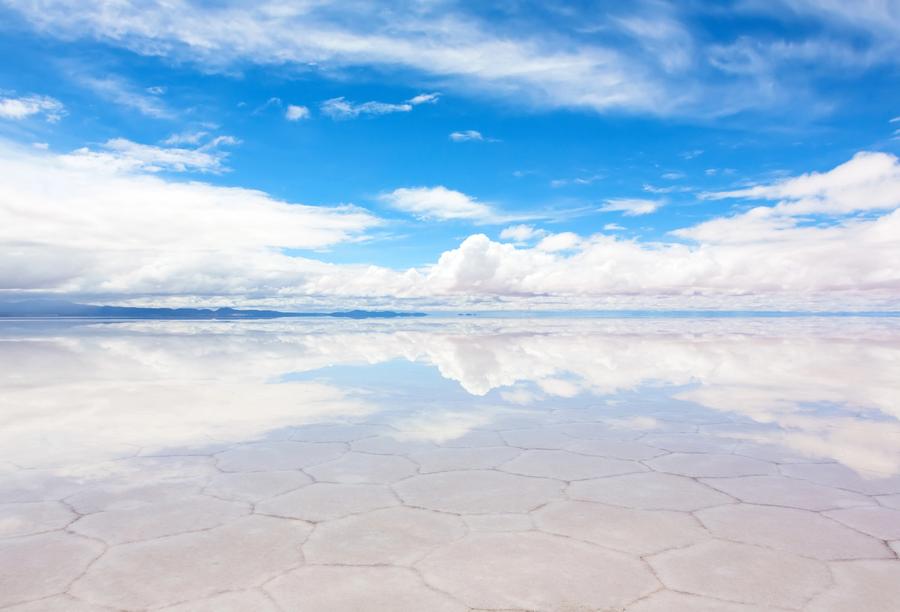
Salar de Uyuni is the world’s largest salt flat, covering roughly 4,000 square miles (10,000 km²) of Bolivia’s high plateau. Dry conditions reveal a vast white crust stretching toward the horizon. When rainfall leaves a shallow layer of water, parts of the surface reflect clouds and sky like a mirror. Those are different seasonal views of the same landscape, so the famous reflection is not something every visit will produce.
14. Zhangye Danxia, China
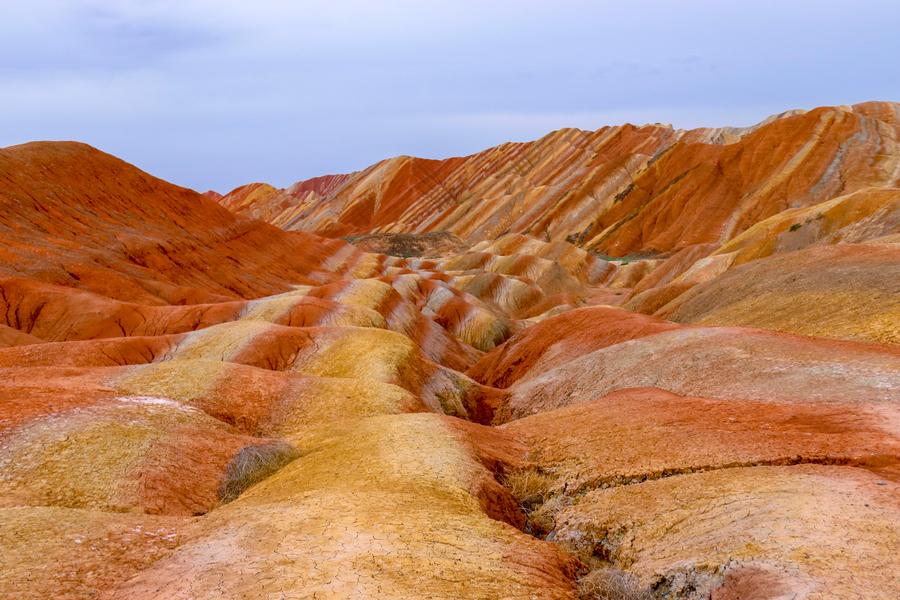
Zhangye’s colorful hills display bands of rock folded and exposed through a long geological history. Within the Zhangye UNESCO Global Geopark, tectonic movement and erosion have produced ridges, gorges and striking Danxia formations. The smooth, striped slopes of the Colourful Hills contrast with the more sculpted shapes at Binggou Danxia. Together they show how much variety sits within this landscape in northwestern China, beyond the single rainbow-hill view often used to represent it.
13. Niagara Falls, United States and Canada
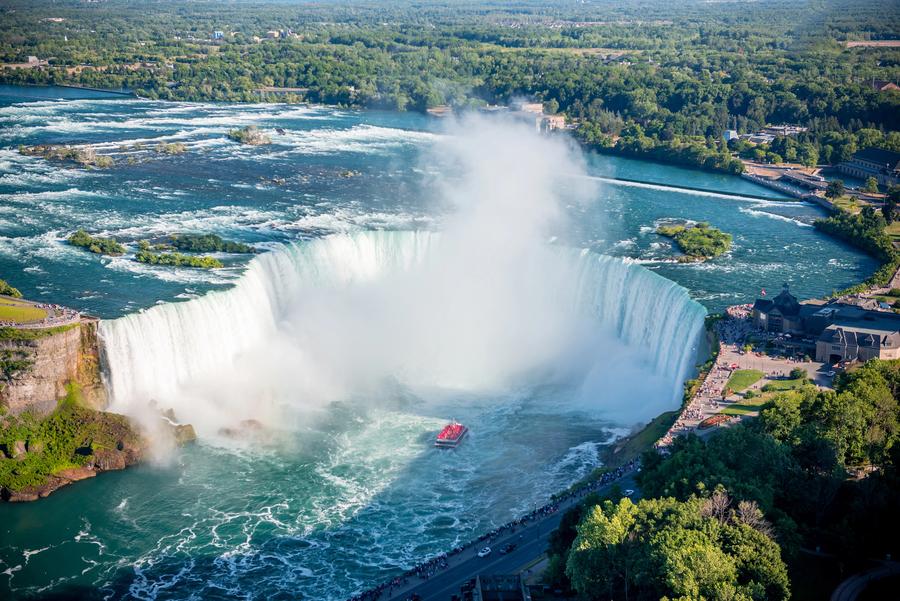
Niagara’s appeal lies in the breadth and force of water pouring into the gorge. The Canadian Horseshoe Falls has a crest about 2,200 feet (670 m) wide, creating a sweeping curve of falling water and spray. The Niagara River connects Lake Erie with Lake Ontario, crossing the border landscape between the United States and Canada. Its green color comes partly from dissolved minerals and finely ground rock carried along by the current.
12. Santorini, Greece
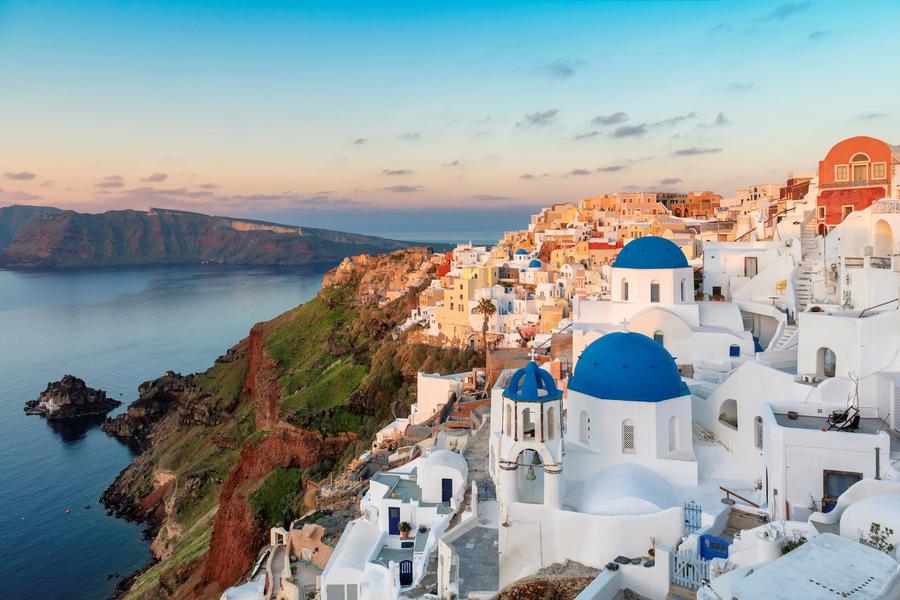
Santorini’s white houses sit above a volcanic caldera shaped by repeated eruptions. The deep blue Aegean, reddish cliffs and tightly packed settlements create its familiar contrast of colors. Fira and Oia offer views across the flooded center, while black and red beaches show another side of the island’s geology. Beyond the cliffside towns, vineyards and smaller villages spread across the dry slopes, giving the island more to explore than its best-known sunset viewpoints.
11. Great Pyramid of Giza, Egypt
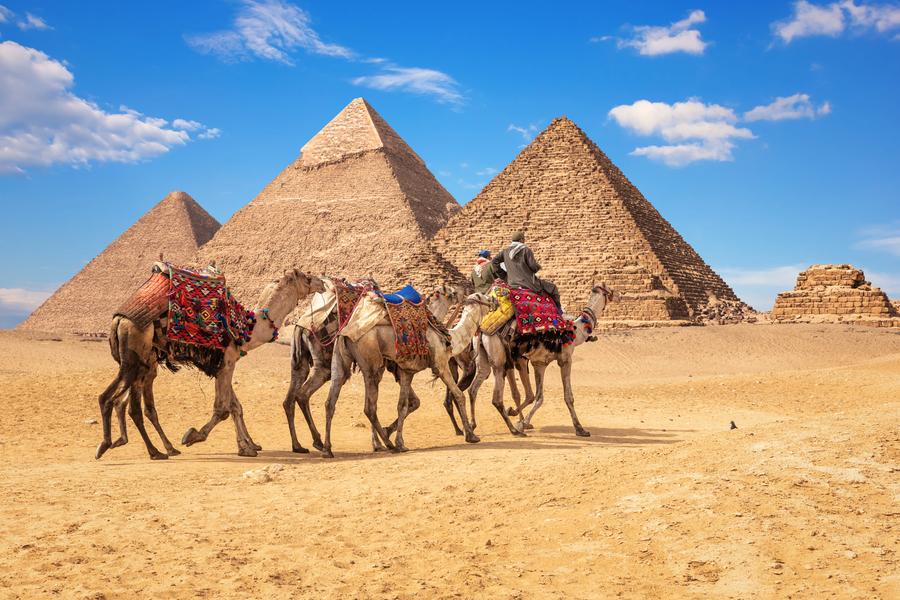
The Great Pyramid is the last surviving wonder of the ancient Seven Wonders. Built as the tomb of King Khufu, it originally stood about 481 feet (146.5 m) high and was covered in smooth, high-quality limestone. Its present stepped surface makes the scale of the masonry easier to see. Inside, the ascending Grand Gallery and the King’s Chamber reveal a different kind of precision from the immense geometric outline visible across the Giza Plateau.
10. Great Blue Hole, Belize
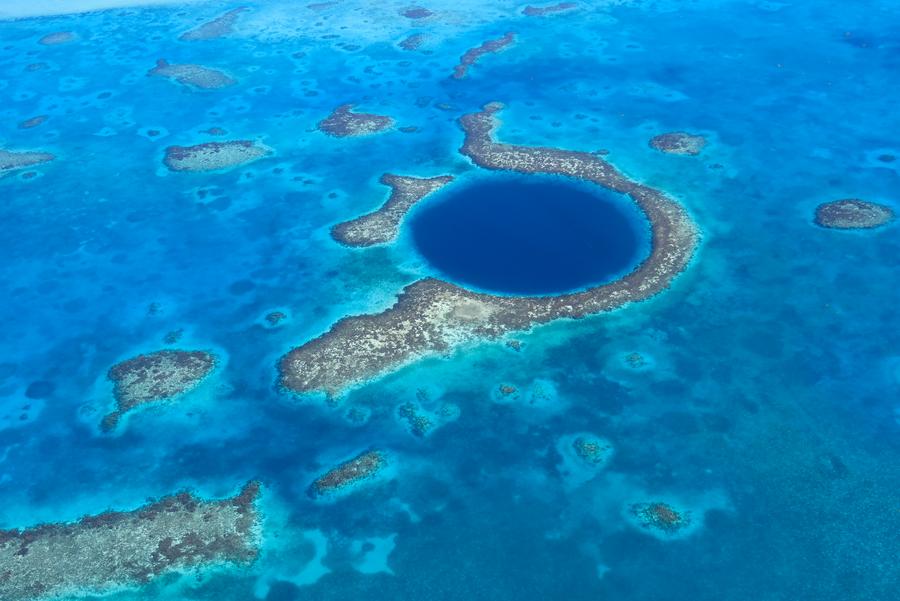
The Great Blue Hole forms a deep blue circle within the lighter waters of Lighthouse Reef Atoll. Roughly 1,000 feet (300 m) across, this underwater sinkhole creates one of Belize’s most distinctive aerial views. Below the surface, submerged cave features reveal an earlier landscape that formed above sea level. Diving offers a close look at that geology, while a sightseeing flight shows the full ring and its contrast with the surrounding reef.
9. Great Wall, China
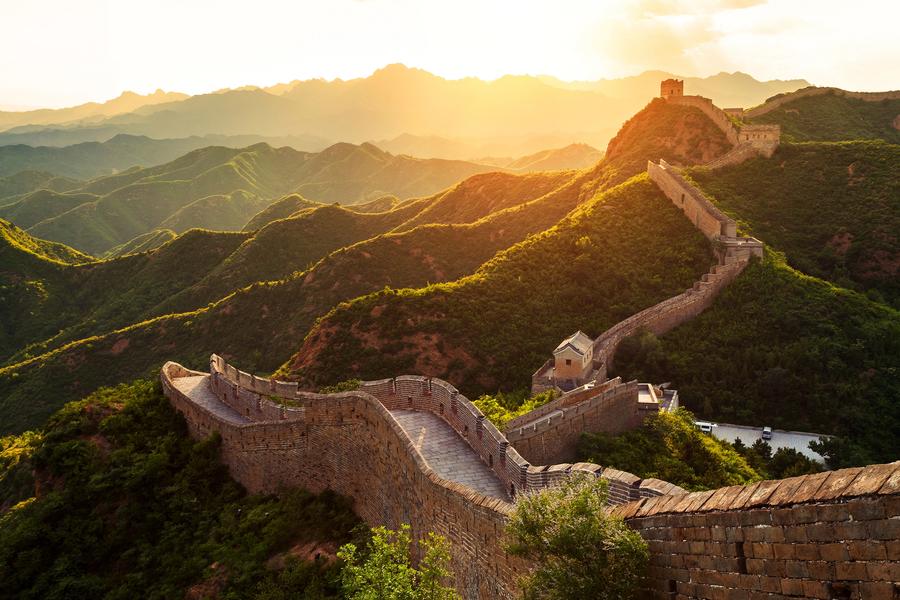
The Great Wall follows mountain ridges in a sequence of walls, towers and steep climbs that seems to continue into the distance. Its history reaches back to earlier defenses joined under Qin Shi Huang around 220 BC, with construction continuing through the Ming dynasty. It is a vast defensive system built over many periods. The changing terrain is part of its beauty: stonework rises and falls with the hills rather than cutting a straight line across them.
8. Machu Picchu, Peru
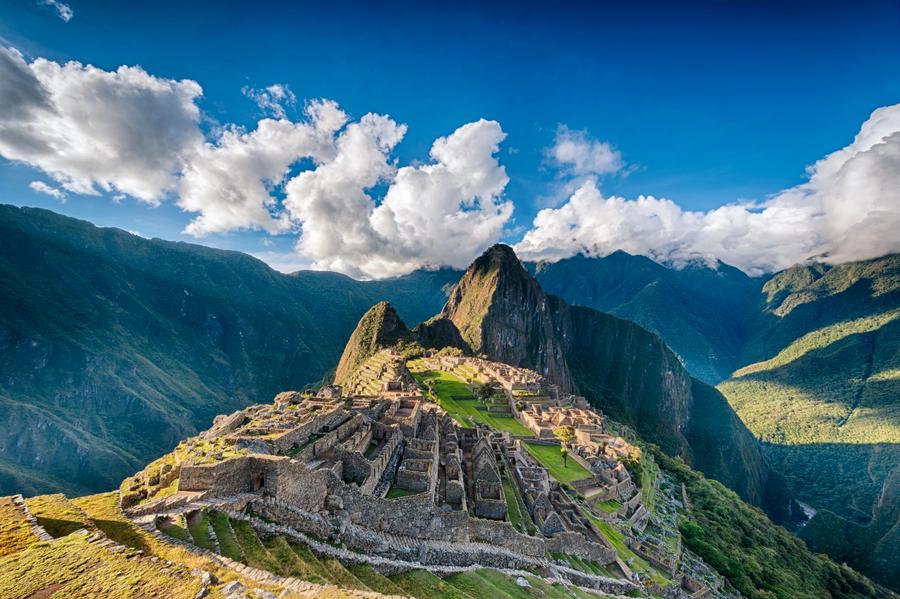
Machu Picchu stands about 7,970 feet (2,430 m) above sea level in tropical mountain forest on the eastern slopes of the Andes. Inca walls, ramps and agricultural terraces fit closely against the rocky ridge, making the settlement appear to grow from the mountain. The surrounding peaks give the familiar panorama its depth, but the stonework rewards closer attention. Its setting also belongs to the upper Amazon basin, linking this high mountain site with a much wider living landscape.
7. Taj Mahal, India
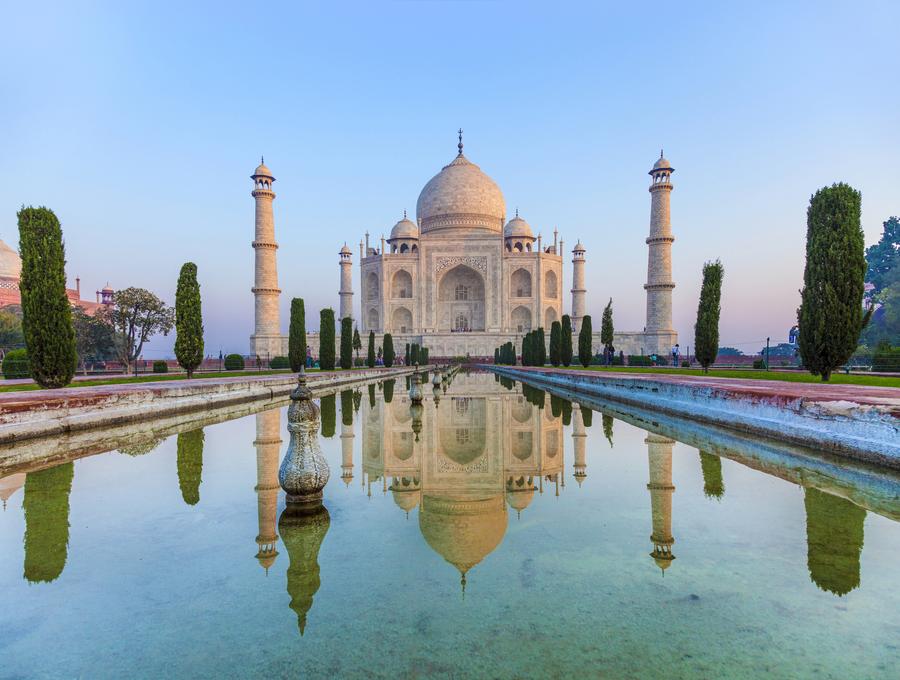
The Taj Mahal’s white marble mausoleum anchors a carefully arranged complex in Agra. Shah Jahan commissioned it in memory of his wife, with the main mausoleum built between 1631 and 1648. Its central dome, slender minarets and long garden approach create a balanced view, while carved decoration and inlaid details reward a closer look. The monument’s beauty works at both scales: as a complete silhouette and as thousands of small decisions in stone.
6. Bora Bora, French Polynesia
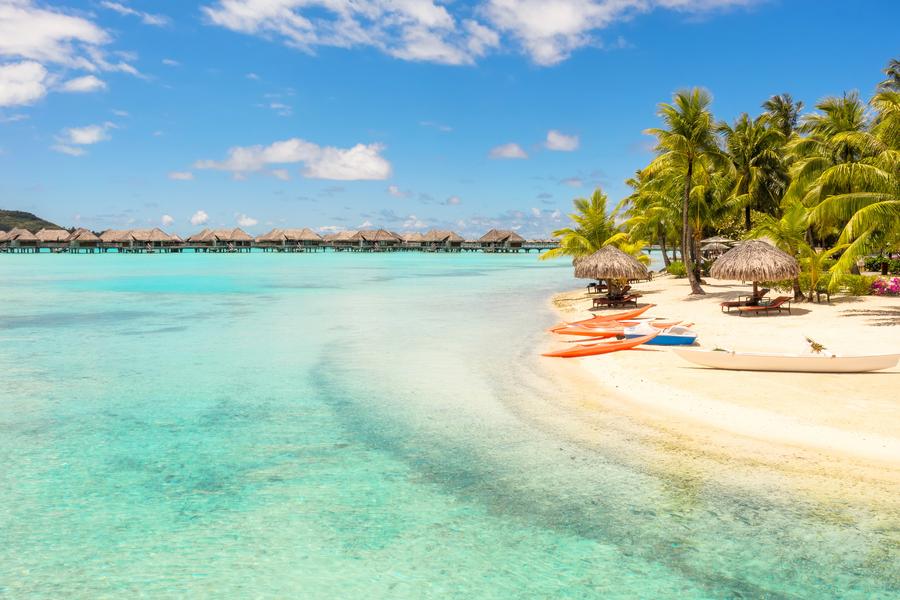
Bora Bora’s turquoise lagoon surrounds a volcanic island with Mount Otemanu rising sharply behind it. Small palm-covered islets, called motu, edge the water, and white beaches bring the changing shades of blue close to shore. This Society Islands destination offers several ways to see that setting, from Matira Beach to kayaking and snorkeling in the lagoon. The mountain remains a visual anchor, giving even a simple view across the water a striking backdrop.
5. Antelope Canyon, Arizona, United States
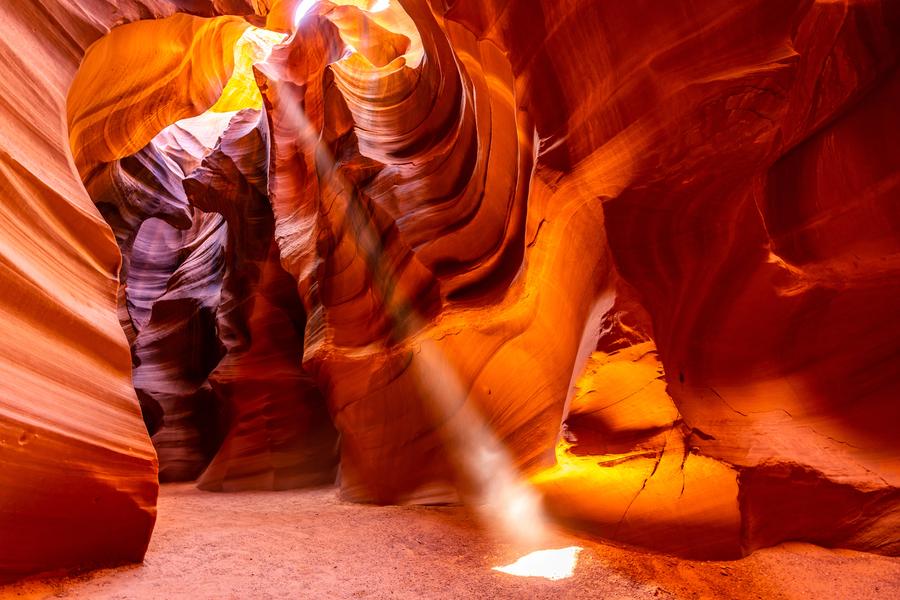
Antelope Canyon’s narrow passages curve between warm-colored rock walls, with light from above picking out their ripples and edges. The view changes as you move through the canyon: a dark bend can open onto a glowing wall just a few steps away. It lies on Navajo land near Page, Arizona, and a guided tour is required for Upper and Lower Antelope Canyon. Book through an authorized operator and follow the guide’s instructions inside the confined passages.
4. Antarctica
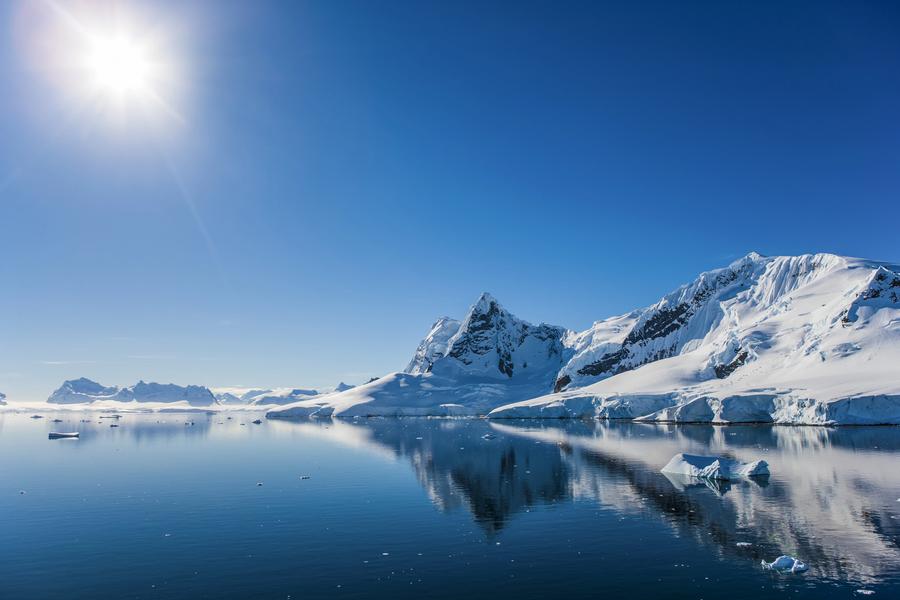
Antarctica is almost entirely covered by an ice sheet, with glaciers flowing toward the sea and icebergs breaking away at the coast. Exposed mountain peaks and dark water sharpen the contrast with the surrounding snow and ice. Wildlife adds movement to that immense setting, but visits need care. Antarctic visitor guidance requires people to avoid disturbing animals, keep their distance and leave natural objects where they are. Follow your expedition team’s site-specific instructions.
3. Great Barrier Reef, Australia
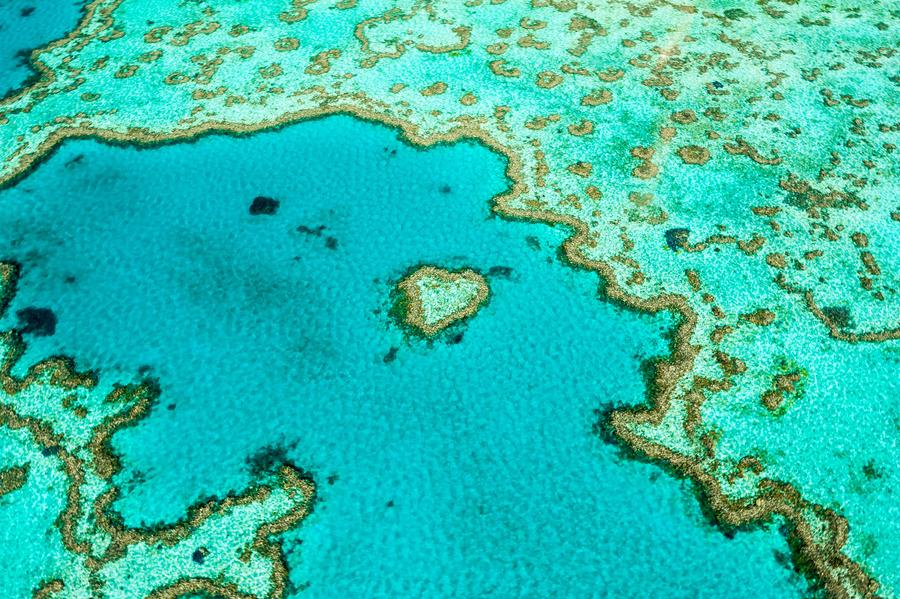
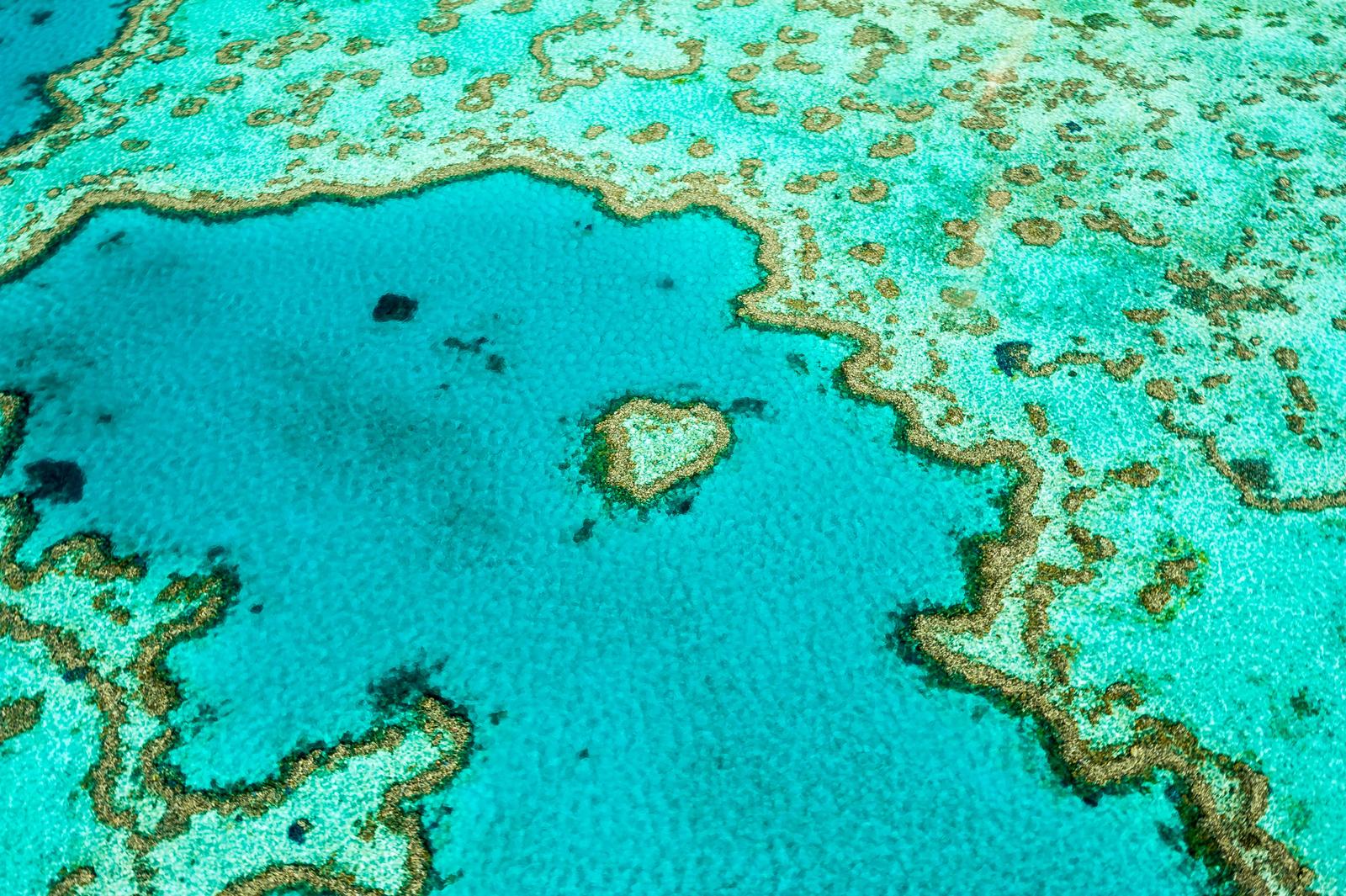
The Great Barrier Reef is the world’s most extensive coral reef ecosystem, stretching along Australia’s northeastern coast. Seen from above, reefs and islands form patterns in blue water; below the surface, fish, corals and other marine life fill the view with detail. Its beauty depends on a living system, not just clear water and bright colors. Climate change and water quality threaten the reef, making its protection inseparable from the experience of visiting it.
2. Grand Canyon, Arizona, United States
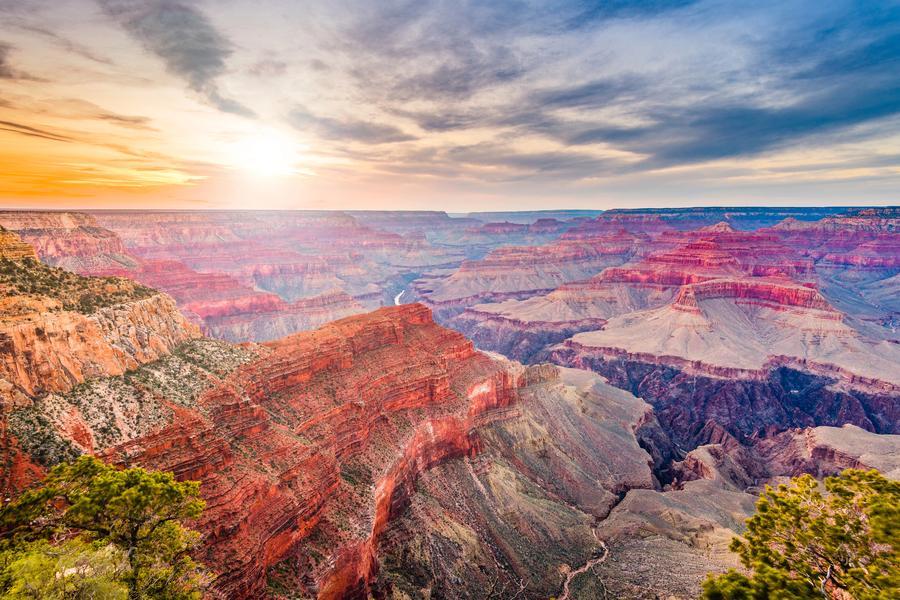
The Grand Canyon exposes nearly two billion years of geological history in rock layers cut through by the Colorado River. From the rim, ridges and side canyons overlap in bands of color and shadow, making the landscape difficult to take in at once. Looking longer reveals smaller forms within the vast view. This is also an ancestral landscape for Indigenous peoples, whose continuing connections add human history to the much older story written in the rock.
1. Maldives
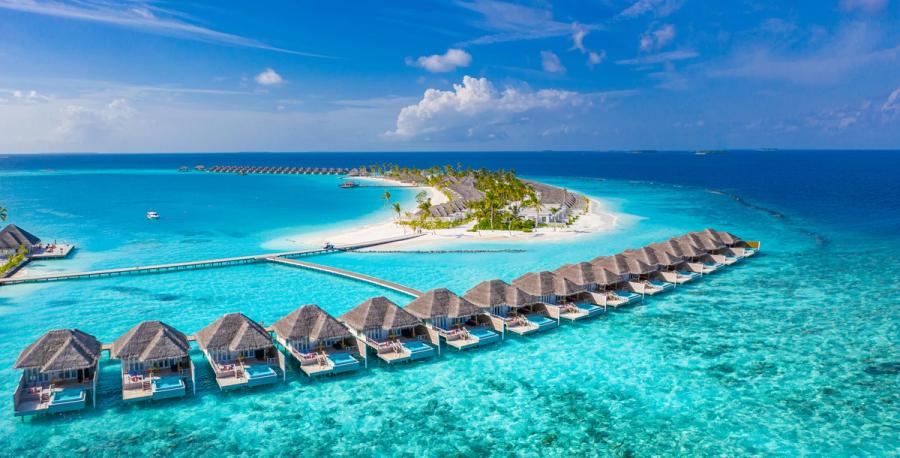
The Maldives brings together white sand, clear shallows and coral reefs across a double chain of 26 atolls in the Indian Ocean. From above, islands and reef edges form rings and ribbons of color; at water level, the scene becomes quieter and more intimate. The underwater landscape matters just as much, with corals, reef fish, manta rays and whale sharks. It takes our top spot for that close connection between island scenery and marine life.