The Maldives and Bora Bora offer tropical lagoons, while the Grand Canyon, Great Barrier Reef and Antarctica show nature on a much larger scale. These 100 beautiful places bring together islands, mountains, cities and famous landmarks for a worldwide travel wishlist.
Check current travel advice, access rules and seasons before planning a visit.
How we chose these
We chose these places for their natural or architectural beauty and wide recognition. The numbers give an editorial display order, rather than a measured ranking of beauty. Facts are checked against UNESCO, park authorities, official tourism boards and government sources.
100. Meteora Monasteries, Greece
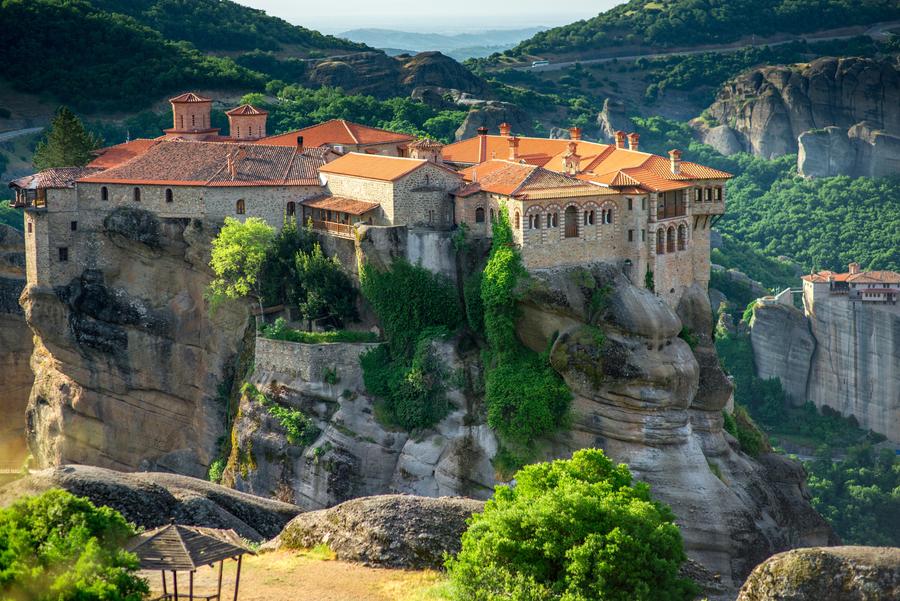
Monasteries crown the sandstone pillars of Meteora, turning a dramatic landscape in central Greece into an extraordinary religious site. Monks settled among these rocks from the 11th century, and later communities built churches and living quarters on their summits. Red roofs, sheer cliffs and distant mountains share the same view. Inside, 16th-century frescoes add another reason to visit: the buildings are important works of art as well as remarkable feats of construction.
99. Lake District, United Kingdom
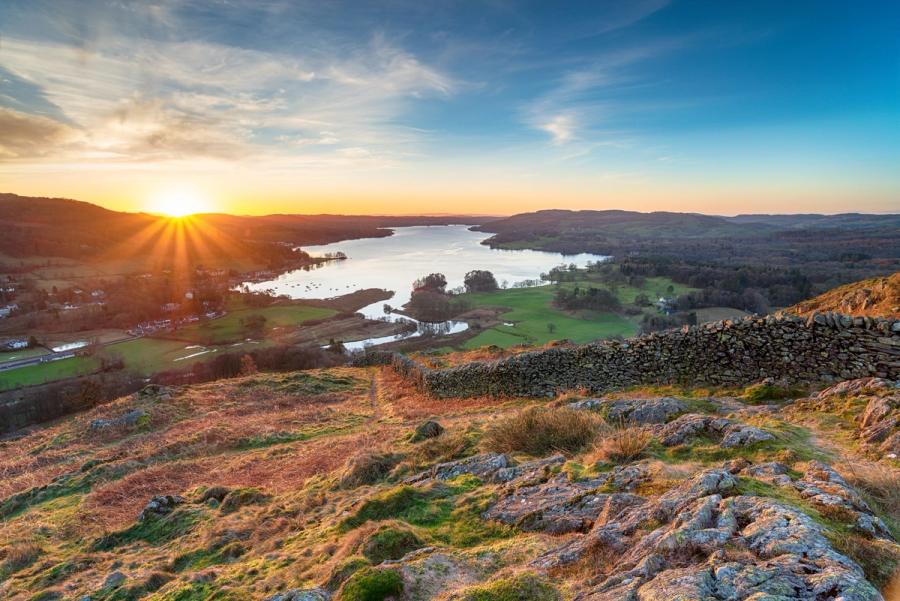
Lakes, high fells and centuries of sheep farming shape the Lake District's landscape. Windermere, England's longest lake, stretches about 10.5 miles (17 km), while smaller tarns sit among the hills. The national park in northwest England was established in 1951. Its appeal lies in the contrasts: open ridges above wooded valleys, stone-walled fields beside water, and villages that remain part of a working rural landscape.
98. Batu Caves, Malaysia
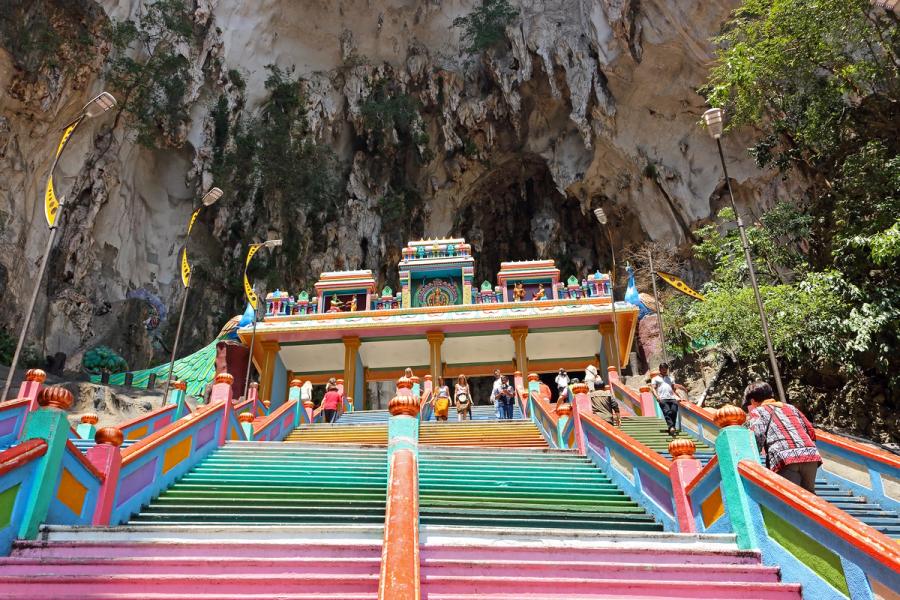
A staircase of 272 colorful steps climbs toward the Hindu temple inside Batu Caves, in Selangor near Kuala Lumpur. The painted stairs and golden statue of Lord Murugan stand against a limestone cliff, making the approach as striking as the cavern itself. Above the entrance, the rock gives way to a lofty chamber containing shrines. This is an active place of worship, with religious architecture set directly within the natural cave system.
97. Dark Hedges, United Kingdom
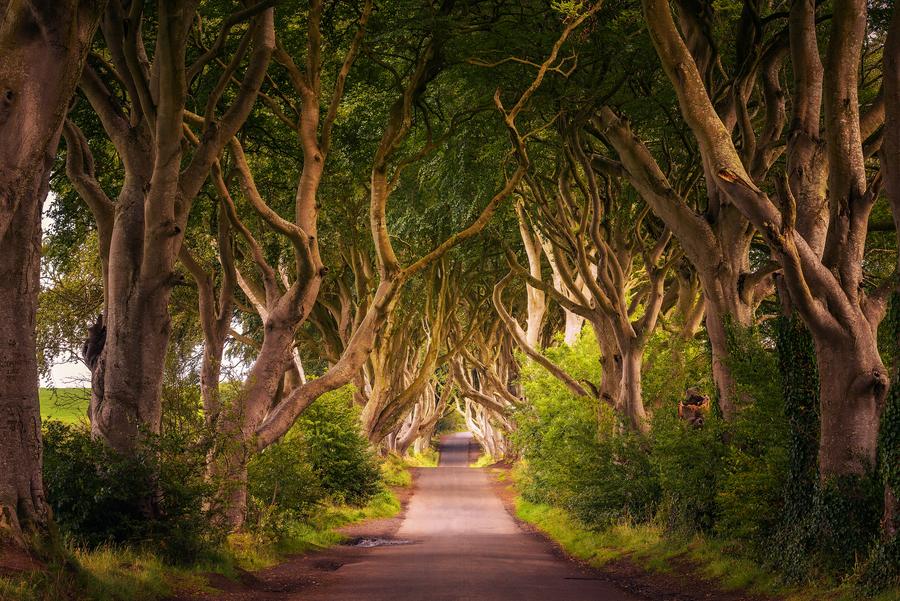
Interlocking beech branches form the Dark Hedges, an avenue planted by the Stuart family in the 18th century. It originally welcomed visitors to Gracehill House in County Antrim, Northern Ireland. Today, the twisting trunks and canopy give this stretch of Bregagh Road its distinctive tunnel-like appearance. The avenue also appeared as the Kingsroad in Game of Thrones, but its strongest feature is simpler: the way trees frame the road and change its atmosphere with the seasons.
96. Arashiyama Bamboo Grove, Japan
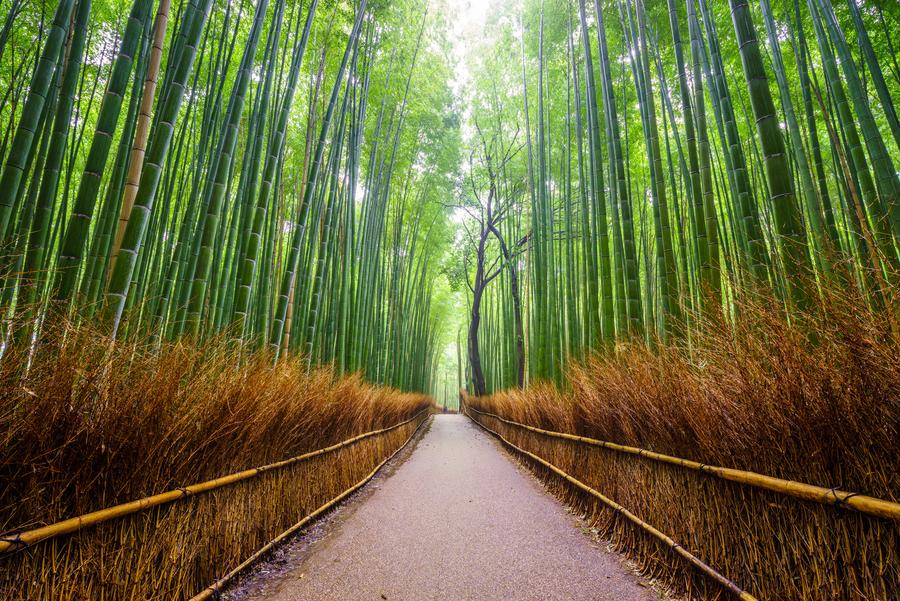
Tall bamboo stems crowd around a short walking path in Arashiyama, on Kyoto's western side. Sunlight filters through the leaves, turning the grove into a layered scene of green, gold and shadow. Also known as the Sagano Bamboo Forest, it sits near Tenryu-ji Temple and Nonomiya Shrine, making it easy to combine nature with Kyoto's religious heritage. Japan's tourism organization places the grove about a ten-minute walk from Saga-Arashiyama Station.
95. Huacachina, Peru
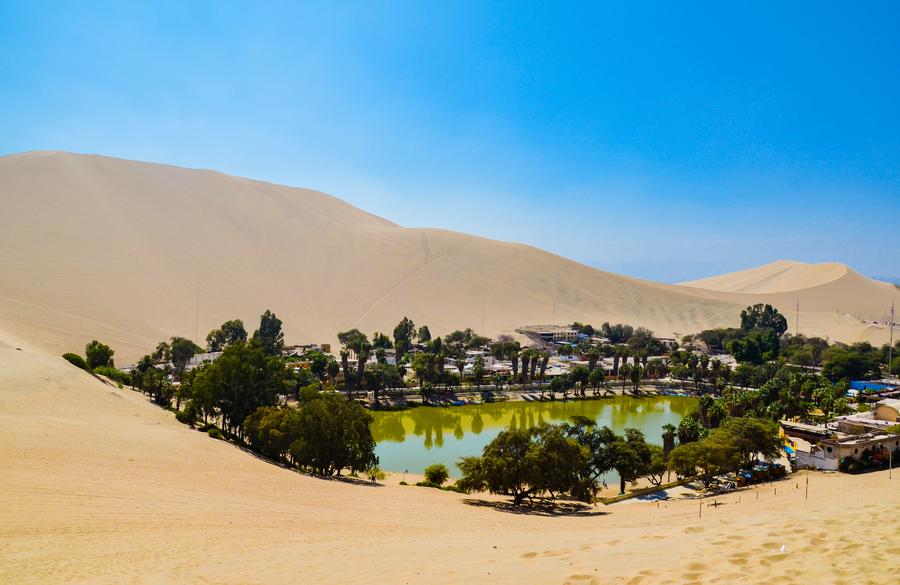
A palm-fringed lagoon surrounded by sand dunes makes Huacachina one of Peru's most distinctive desert scenes. The oasis lies near Ica, in the country's southern coastal desert, with paths and buildings gathered around the water. Its greenery stands out sharply against the dunes, especially when low sunlight brings out their ridges. Visitors can explore the sand by buggy or try sandboarding, while the lagoon offers a quieter place to walk and watch the sunset.
94. Ik Kil Cenote, Mexico
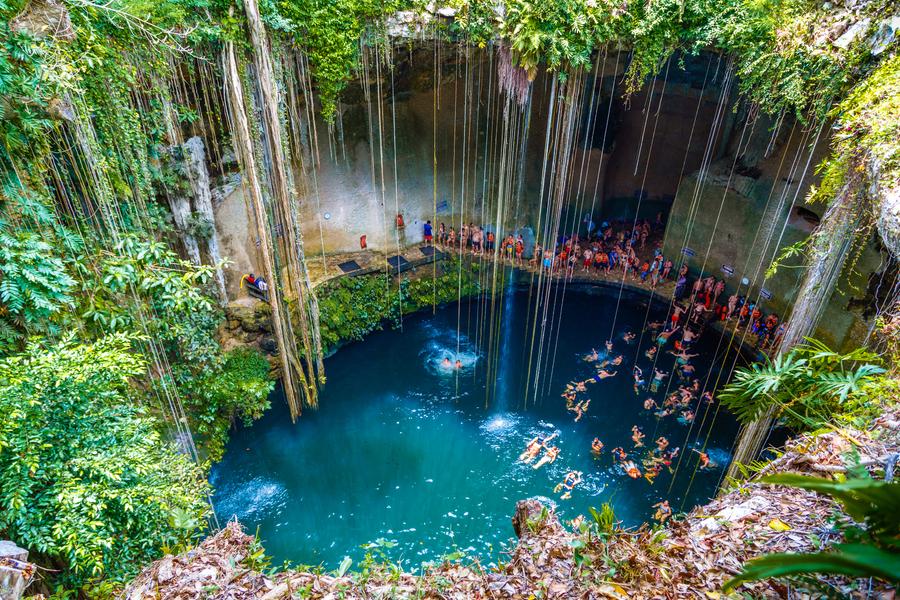
Hanging roots and vegetation frame Ik Kil's open pool, a cenote near Chichén Itzá in Mexico's Yucatán Peninsula. Looking down from the rim, the circular opening feels like a window into the limestone landscape. The surrounding park has tropical plants and trees, and swimming is one of its main visitor activities. It makes a natural companion to the nearby archaeological site, combining a view from above with the experience of entering the sinkhole.
93. Sutherland Falls, New Zealand
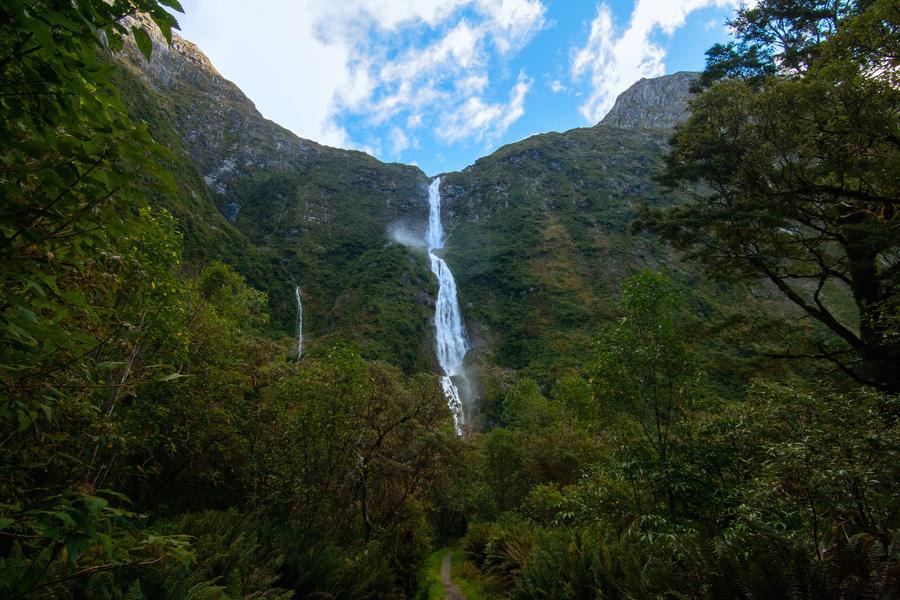
Sutherland Falls drops about 1,900 feet (580 m) in three stages, carrying water from Lake Quill into the Arthur Valley. The waterfall lies in Fiordland on New Zealand's South Island, where steep mountains and frequent rain create a landscape of forests and falling water. The Milford Track offers views of the falls on the way toward Dumpling Hut. Its scale comes from the full sequence of drops, rather than one uninterrupted plunge.
92. Laguna Verde, Bolivia
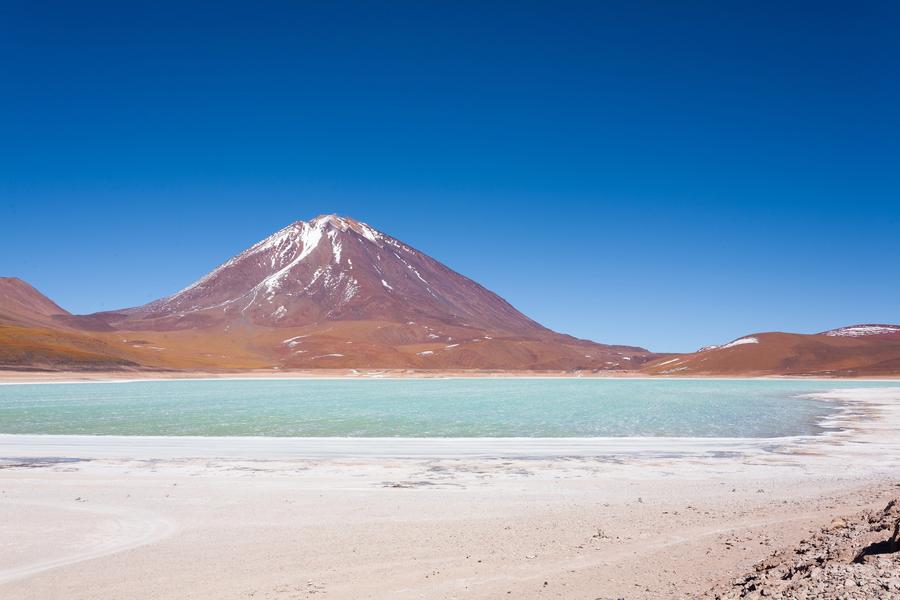
Laguna Verde lies at roughly 14,100 feet (4,300 m) near the foot of Licancabur volcano, in Bolivia's southwestern Andes. The lake and its neighboring Laguna Blanca sit in an exposed high-altitude landscape, with bare slopes rising beyond the water. Researchers have studied these lakes as environments where life faces extreme conditions. For visitors, the attraction is the scene itself: colored water, pale shores and a volcanic backdrop, far removed from the greenery of a lowland lake.
91. Tiger's Nest Monastery, Bhutan
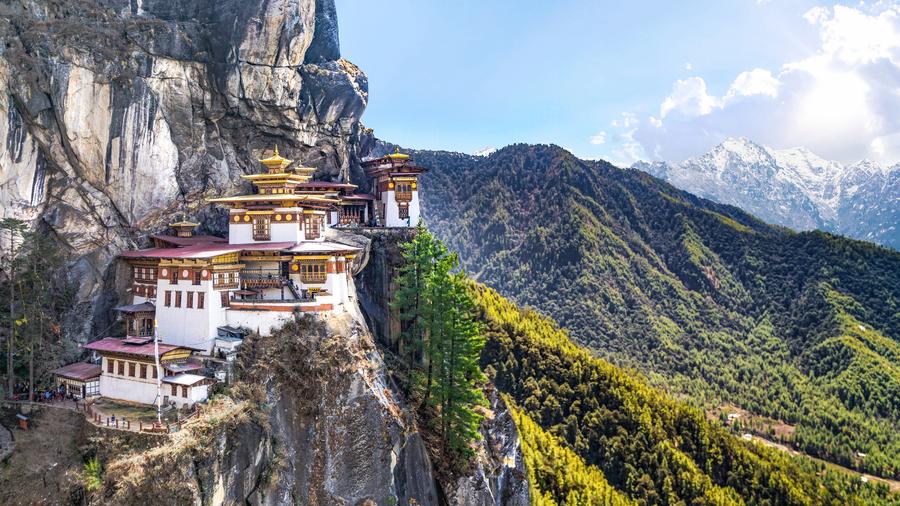
Tiger's Nest clings to a cliff about 2,950 feet (900 m) above the Paro Valley. Known as Paro Taktsang, the Bhutanese monastery combines white walls and ornate roofs with a seemingly improbable mountainside setting. The complex was first built in 1692 around caves associated with Guru Rinpoche. Reaching it is part of the experience: Bhutan's tourism department lists the Paro Taktsang hike as a five- to six-hour outing, rather than a quick roadside stop.
90. Verdon Gorge, France
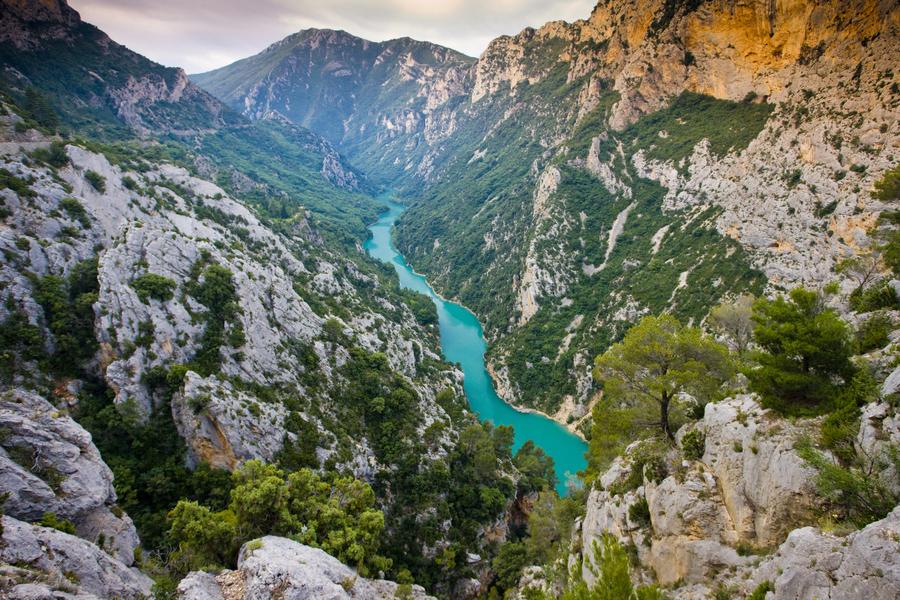
Pale limestone walls rise above the turquoise Verdon River, reaching roughly 2,300 feet (700 m) in the deepest parts of this gorge in southeastern France. The contrast between water, rock and wooded slopes makes the scenery striking from both the rim and the river. The Route des Crêtes offers a series of high viewpoints along a loop near La Palud-sur-Verdon, revealing bends and cliffs that disappear from sight at water level.
89. Socotra, Yemen
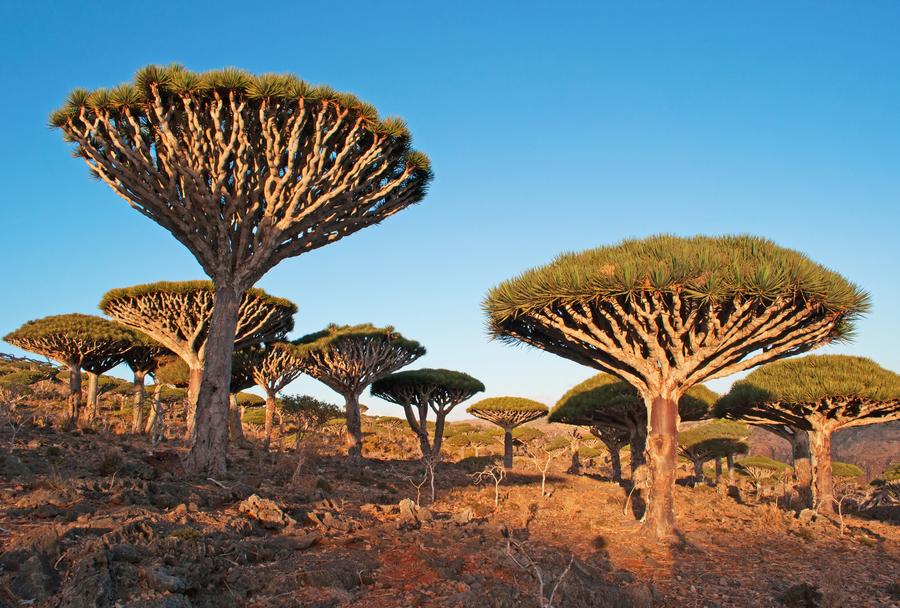
Umbrella-shaped dragon’s blood trees give Socotra a landscape found nowhere else. The island belongs to a Yemeni archipelago whose long isolation produced extraordinary wildlife: UNESCO reports that 37% of its 825 plant species occur nowhere else in the world. Rocky mountains, pale dunes and clear coastal water add to its appeal. This is a wishlist entry, however: as of October 2026, the UK advises against all travel to Yemen, including Socotra.
88. Saint Lucia
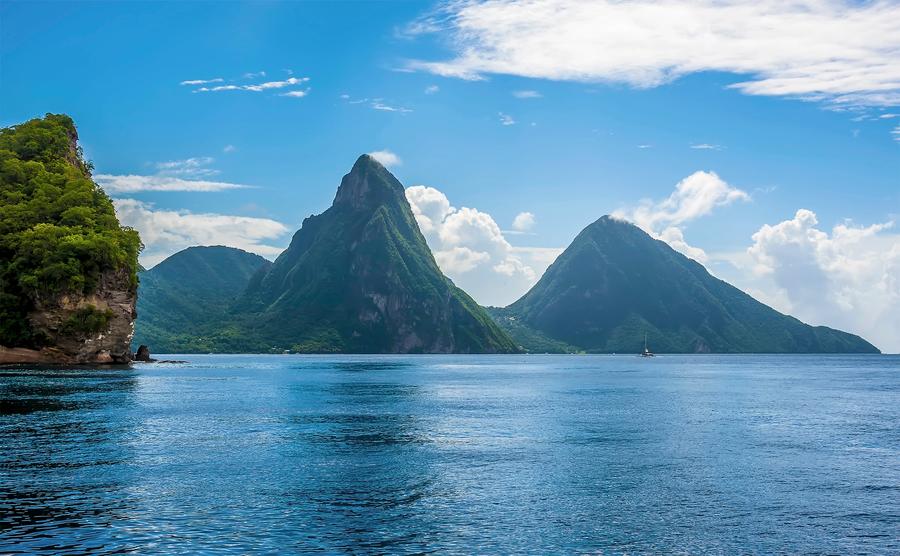
The twin volcanic peaks called the Pitons rise steeply above Saint Lucia’s southwest coast, framing one of the Caribbean’s most recognizable views. Their World Heritage setting includes tropical forest and marine habitats around Soufrière, so the scenery extends well beyond the two summits. You can appreciate the mountains from the bay, nearby beaches or the Tet Paul Nature Trail without climbing them. Boat views bring the steep green slopes and blue water into the same frame.
87. Keukenhof, Netherlands
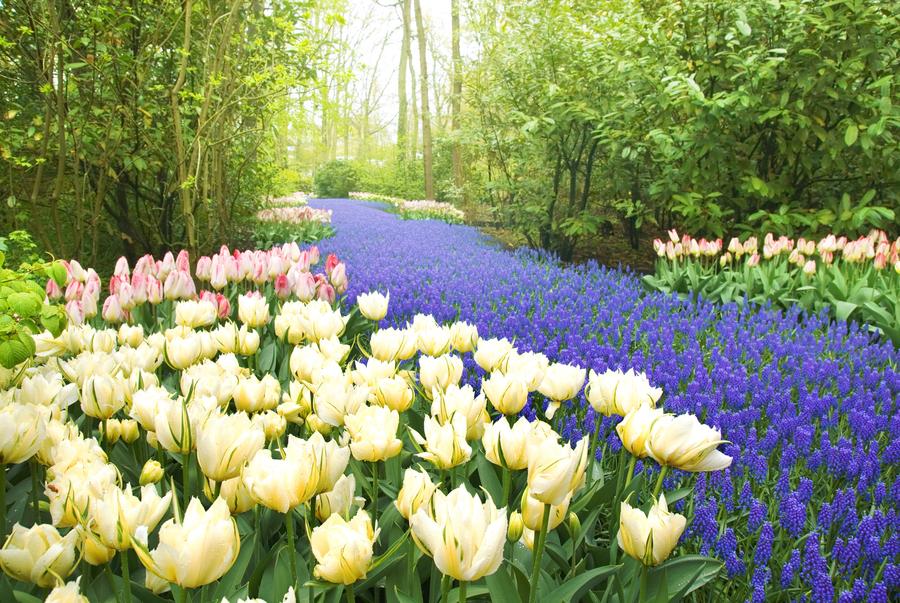
Around seven million flower bulbs turn Keukenhof into a changing display of color each spring. This landscaped garden in Lisse covers about 79 acres (32 hectares), with tulips, daffodils and other bulbs arranged around paths, mature trees and water. The planting designs change annually, while different flowering times help extend the display across its short season. It is a spring attraction rather than a year-round flower garden, so check the park’s opening dates before planning a visit.
86. Faroe Islands
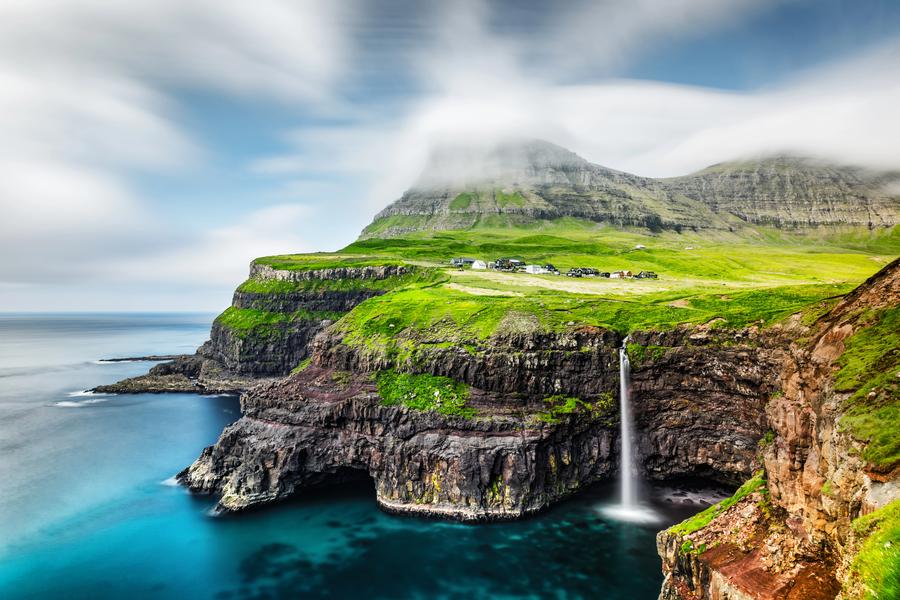
Eighteen islands form this North Atlantic archipelago, where steep mountains, sea cliffs and small villages meet open ocean. The Faroe Islands are a self-governing part of the Kingdom of Denmark, with a landscape shaped by wind, water and generations of island life. Grass-covered slopes give way abruptly to rock and surf, while houses cluster around sheltered harbors. Exploring different islands reveals quiet settlements as well as the dramatic coastal views that draw photographers here.
85. Perito Moreno Glacier, Argentina
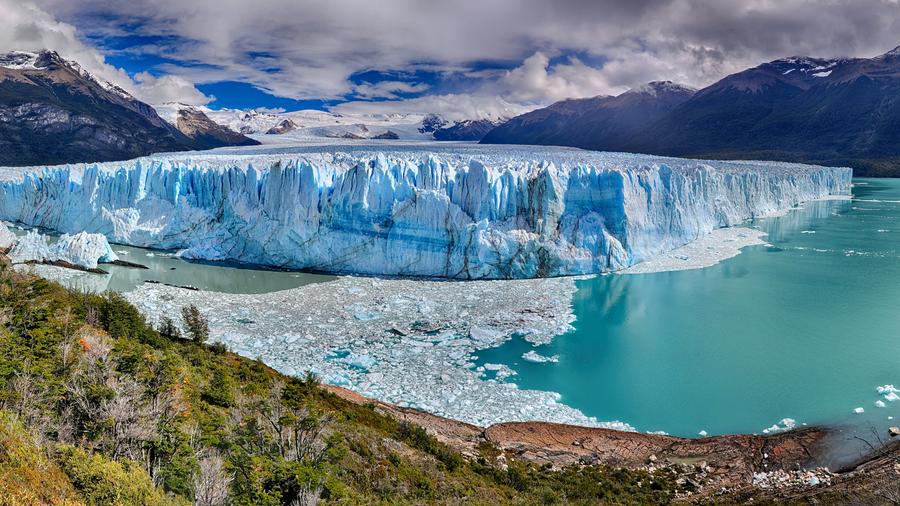
A wall of blue-white ice rises above the water at Perito Moreno Glacier, one of the great sights of Los Glaciares National Park in Argentine Patagonia. The glacier’s broken surface and deep crevasses give the ice a sculpted appearance, while occasional calving sends chunks into the lake. Walkways opposite the glacier provide several viewing angles without setting foot on the ice. El Calafate is the usual base for reaching this part of the park.
84. Freudenberg, Germany
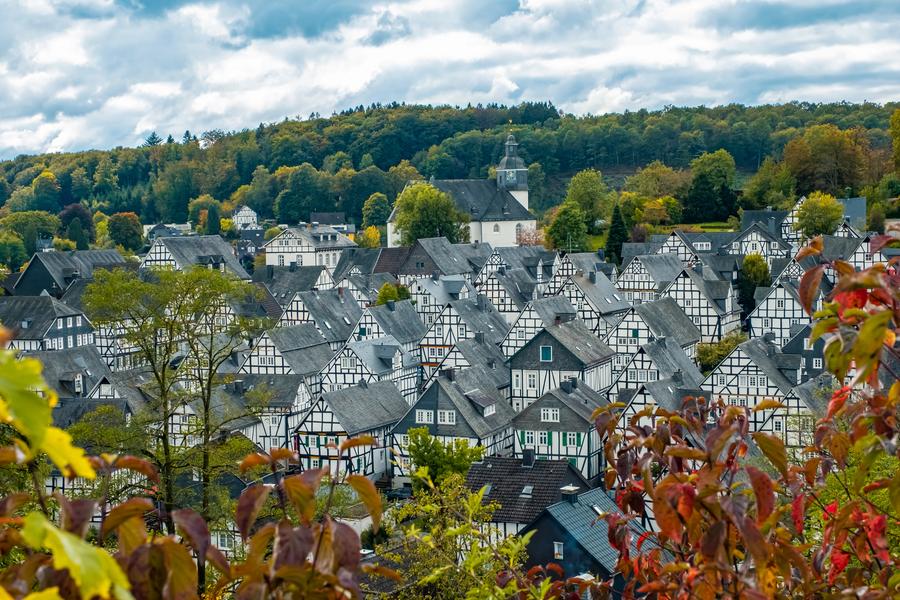
Rows of black-and-white timber-framed houses make Freudenberg’s Alter Flecken old town look unusually orderly. Much of this appearance followed rebuilding after a devastating fire in 1666, with the earlier street layout retained. The dark beams, white walls and slate roofs form a repeating pattern against the surrounding green hills. A view from the park above town shows that pattern most clearly; walking the lanes afterward reveals the individual doors, windows and small details within it.
83. Tasiilaq, Greenland
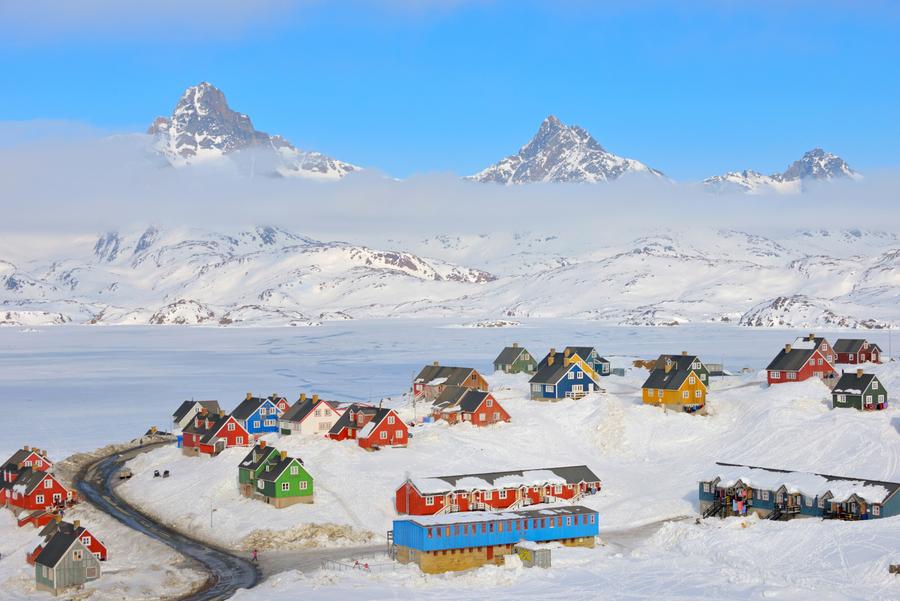
Mountains and sheltered water surround Tasiilaq, a hilly town on Ammassalik Island in East Greenland. Its setting combines a living Inuit community with access to fjords, icebergs and open mountain country. The Flower Valley offers a gentler walk near town, while longer trips into the surrounding wilderness are best arranged with local guides. Visit Greenland recommends June through September for hiking and sailing, and the colder months for activities such as dog sledding.
82. Neelum Valley, Pakistan-administered Kashmir
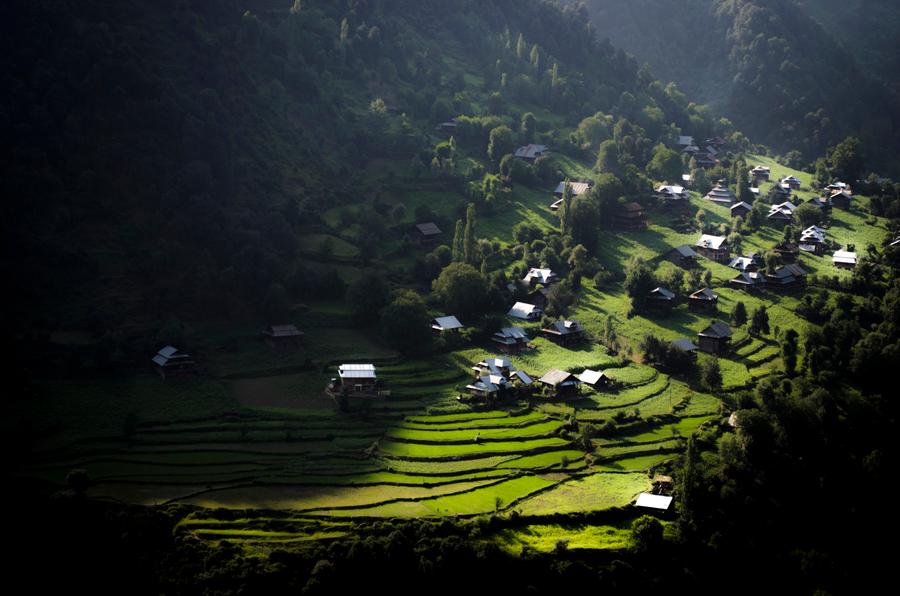
Forested slopes, mountain streams and villages follow the Neelum River through this valley northeast of Muzaffarabad. Around places such as Sharda and Kel, green hillsides rise toward snow-covered peaks, with tributaries opening into smaller valleys along the way. The river gives the scenery a continuous thread, from quiet bends to rushing water below steep slopes. Parts of the valley lie close to the Line of Control; check current access information with the tourism authorities before traveling.
81. Lofoten Islands, Norway
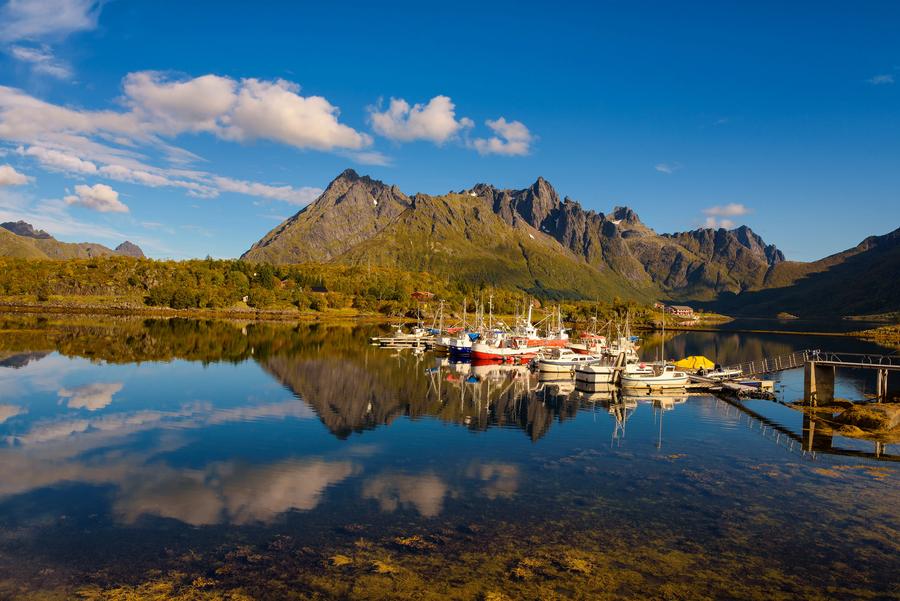
Sharp mountains rise almost straight from the sea in Lofoten, an island chain above the Arctic Circle. Fishing villages such as Reine and Nusfjord add red cabins and small harbors to the fjords, beaches and rocky peaks. The landscape changes dramatically with the light: long summer days give way to winter’s blue tones and dark skies. From September to March, clear nights can also offer a chance to see the northern lights.
80. Matterhorn, Switzerland–Italy
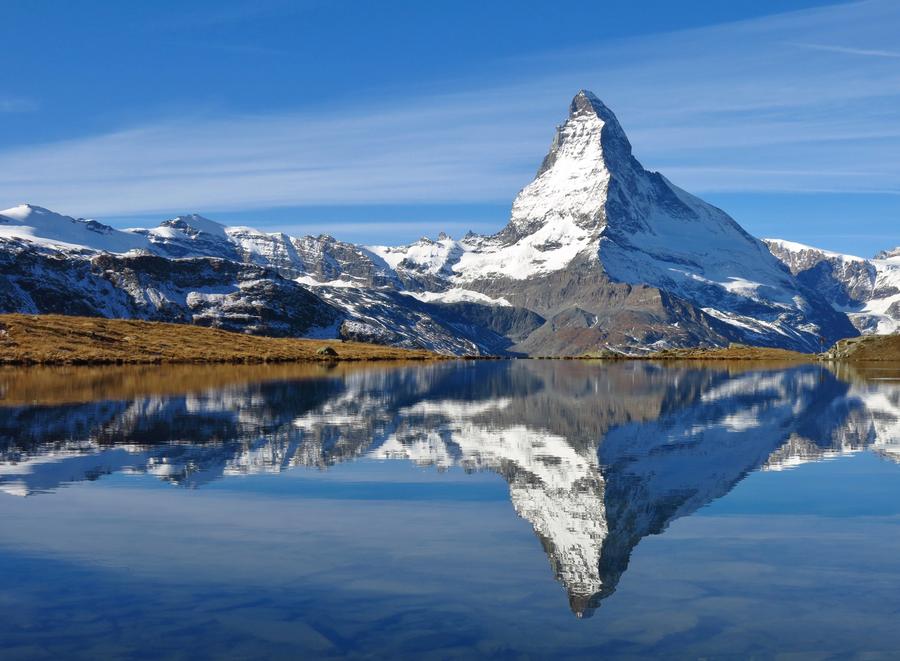
The Matterhorn’s sharply angled summit rises to 14,692 feet (4,478 m), making it one of the Alps’ most recognizable silhouettes. Straddling the Swiss–Italian border, it towers above the Zermatt area, where village viewpoints and mountain excursions offer different perspectives on its ridges. Gornergrat is a favorite place to appreciate the surrounding peaks, while Sunnegga and Rothorn provide other views. Enjoying the mountain does not require climbing it; the summit is for experienced alpinists.
79. Mu Cang Chai Rice Terraces, Vietnam
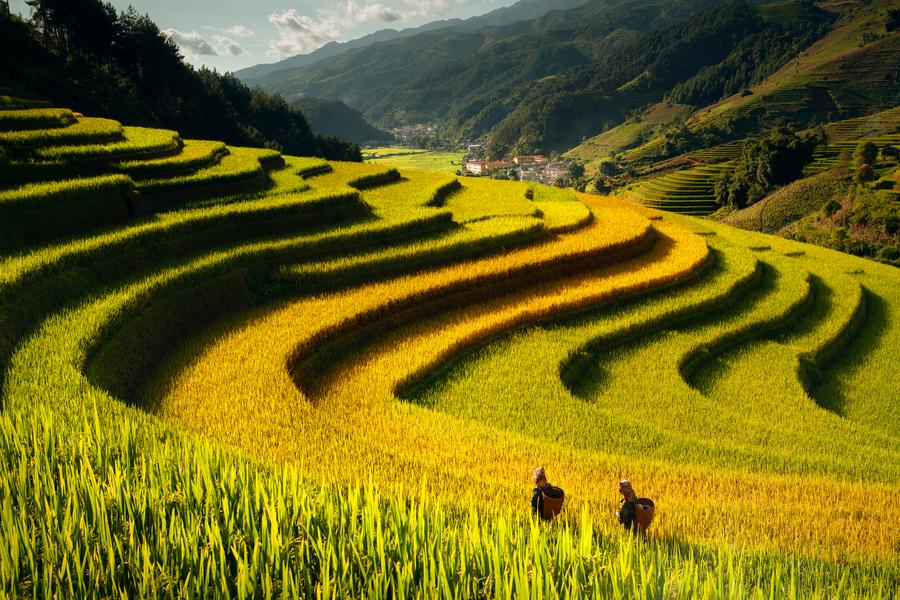
Rice terraces curve around the mountains of Mu Cang Chai, turning steep slopes into layered ribbons of farmland. These landscapes in northwestern Vietnam reflect generations of cultivation by Hmong communities, and their appearance changes with the crop. Green summer fields become golden around harvest, while flooded terraces catch reflections of the sky. September and October are the main harvest period. The terraces around Mam Xoi are especially well known for their rounded, tightly stacked curves.
78. Beachy Head, United Kingdom
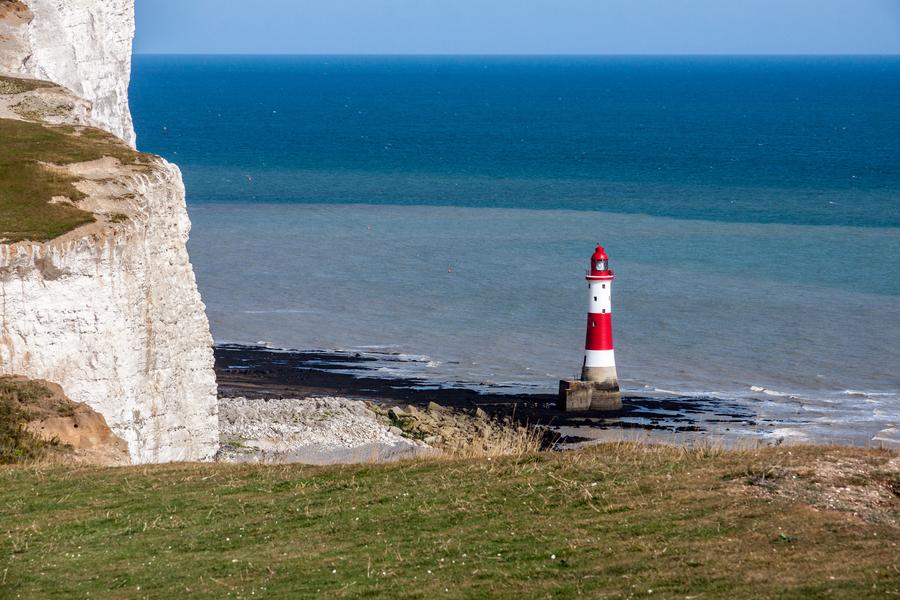
The white chalk cliffs of Beachy Head rise about 530 feet (162 m) above the English Channel near Eastbourne. Green downland meets an abrupt pale edge here, with the red-and-white lighthouse standing below in the sea. The combination of open sky, rolling grass and sheer cliffs gives this stretch of the South Downs its distinctive beauty. Paths provide broad coastal views, but the cliffs erode: keep well back from the edge.
77. Cape Town, South Africa
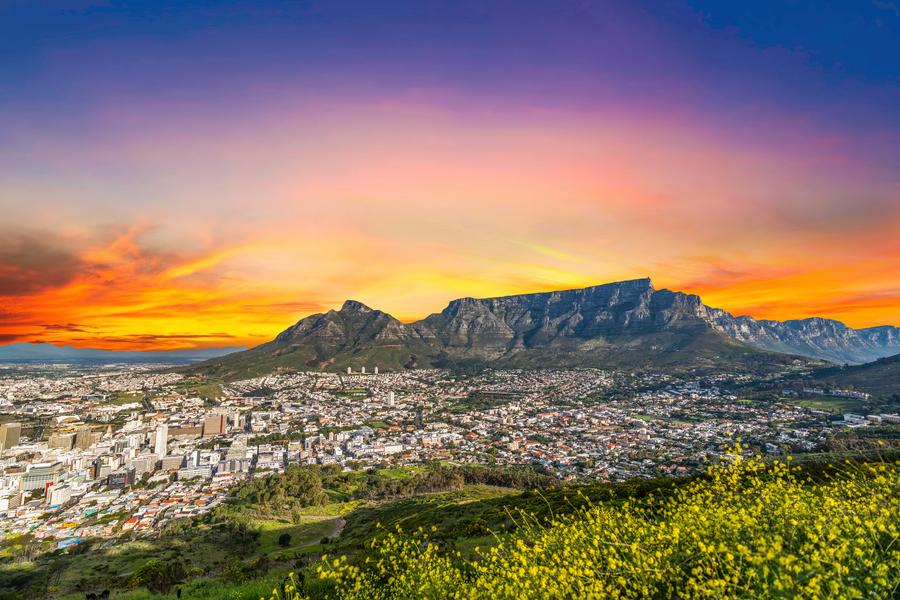
Table Mountain gives Cape Town a skyline unlike almost any other city: a broad, flat summit above neighborhoods, beaches and ocean. The mountain’s viewpoints look toward Lion’s Head, Camps Bay and the Twelve Apostles, bringing the city’s setting into focus. A rotating cable car offers a way up without a strenuous hike. Along the coast, Sea Point and Signal Hill offer different perspectives as evening light changes the water and mountain slopes.
76. Rapa Nui (Easter Island), Chile
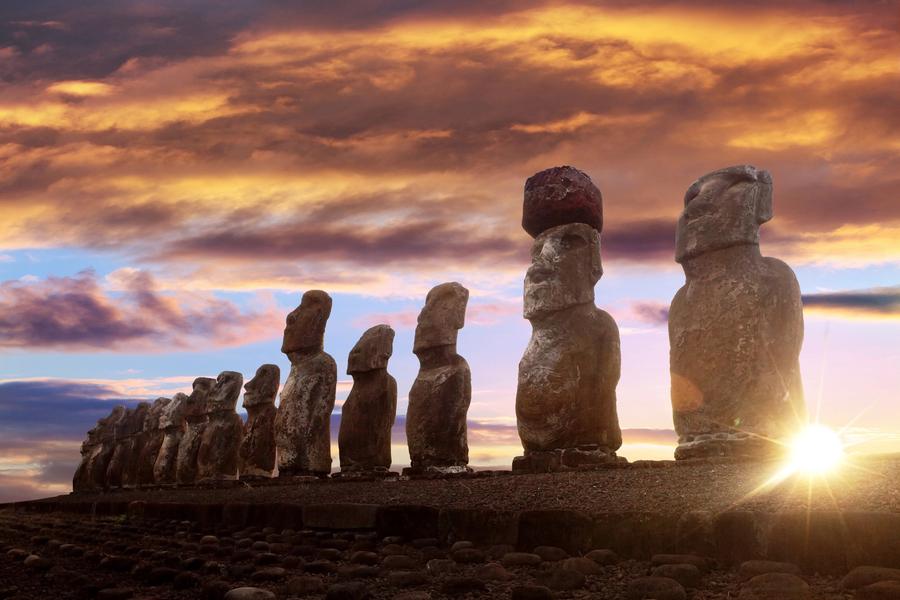
The carved stone figures called moai make Rapa Nui one of the Pacific’s most distinctive cultural landscapes. Created by the island’s Polynesian people to represent ancestors, they stand on ceremonial platforms or remain at quarry sites that reveal how they were made. Ahu Tongariki’s row of 15 figures is particularly striking against the open sky. This Chilean island’s beauty lies in the relationship between those monuments, volcanic terrain and ocean, rather than in statues viewed apart from their setting.