Thorncrown Chapel tops our selection of unusual churches: its 425 windows bring the Ozark woods into a room framed by slender timber beams. These ten churches stand out for their setting, materials or form, from a sanctuary inside a Colombian salt mine to a medieval bell tower standing apart from its church in Kent.
Some of their most striking features began with practical decisions. Thorncrown’s builders carried structural pieces through the trees, while Helsinki’s Temppeliaukio Church was excavated into solid rock. Elsewhere, modern church design produced a concrete cone, a crown of curved columns and a row of sharp metal spires.
How we chose these
This is an editorial selection, with the countdown reflecting our choices rather than a measured ranking of uniqueness. We kept churches with distinctive settings, materials or forms and checked their histories against church, heritage and other primary sources.
10. Chapel on the Rock, Colorado, USA
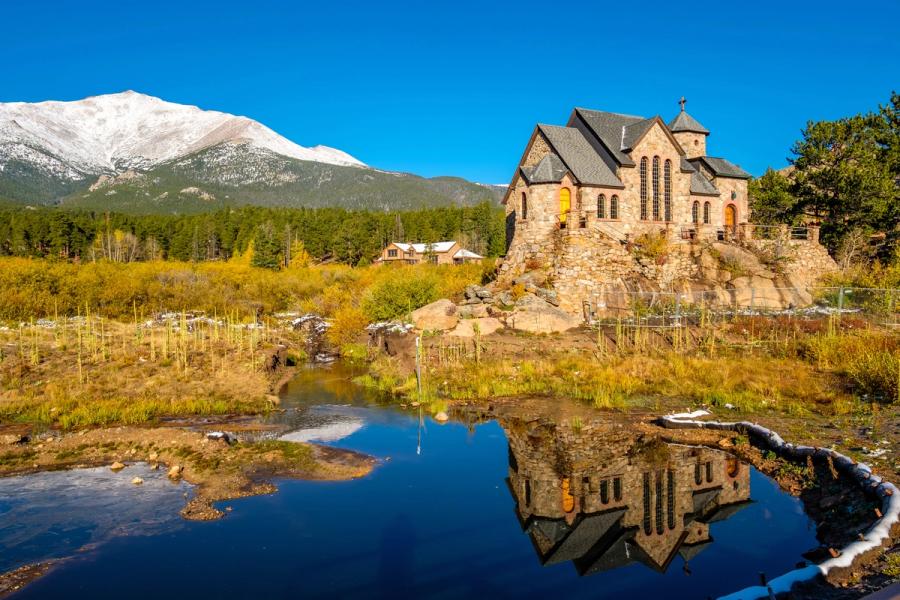
A stone outcrop serves as the pedestal for the Chapel on the Rock in Allenspark, Colorado, dedicated on June 14, 1936. Its formal name is Saint Catherine of Siena Chapel. The Malo family funded the building, whose stone walls rise straight above the rough rock below.
That rock nearly became road material. Camp St. Malo’s history records a dispute with highway officials who wanted to blast it for road base; engineers from the department later attended the chapel’s dedication. Pope John Paul II prayed here in August 1993. A fire destroyed the neighboring conference center in 2011, and flooding and a mudslide damaged the grounds in 2013, but the chapel survived both.
9. St Augustine’s Church, Brookland, England
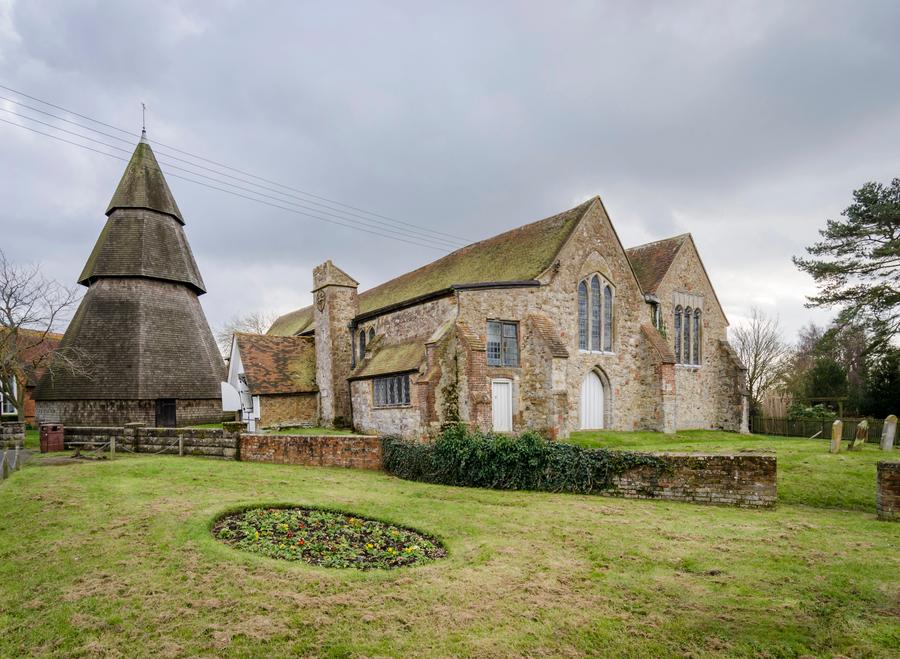
In Brookland on Romney Marsh, Kent, the bell tower stands beside St Augustine’s Church as a separate wooden building, its three shingled stages narrowing toward a point. Historic England dates the timber frame to the late 12th or 13th century. The octagonal covering came later, in the mid-15th century, enclosing what had been an open frame. A dragon-shaped weathervane, dated 1797, sits at the top.
Inside St Augustine’s is another small object with a long history: a lead font made around 1200. Its cylindrical sides carry signs of the zodiac and scenes of seasonal work in two rows of little arches. A surviving wall painting depicts the murder of Thomas Becket.
8. Hallgrímskirkja, Reykjavík, Iceland
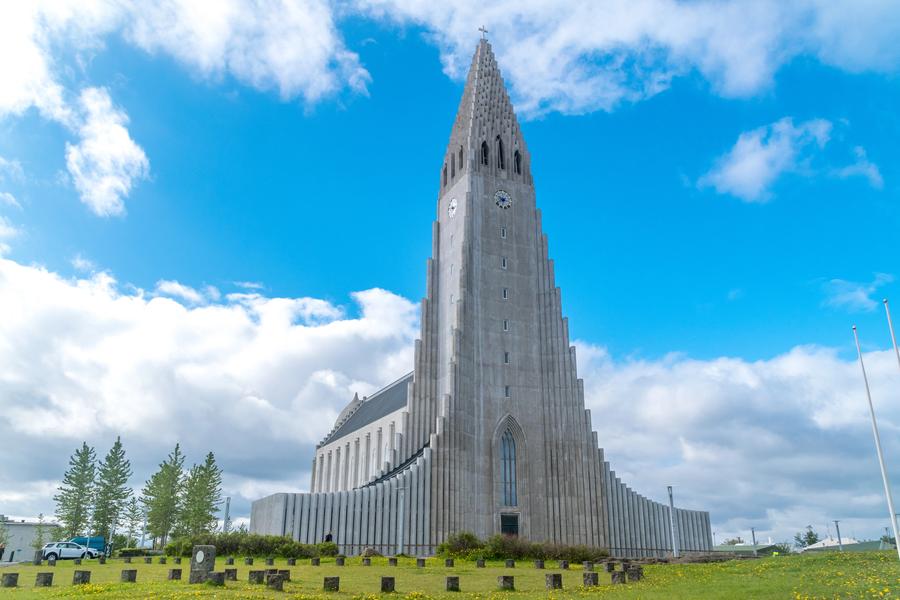
Hallgrímskirkja’s stepped concrete facade rises to a tower and cross about 244 ft (74.5 m) high. Guðjón Samúelsson received the commission in 1937, but construction stretched from 1945 to the church’s dedication in 1986. The tower opened to visitors before the rest of the church was finished, helping raise money for further work.
The church honors the hymn writer Hallgrímur Pétursson. Inside, another set of vertical lines belongs to the Klais organ, installed in 1992 with 5,275 pipes. Supporters helped pay for it by sponsoring individual pipes.
7. Cathedral of Brasília, Brazil
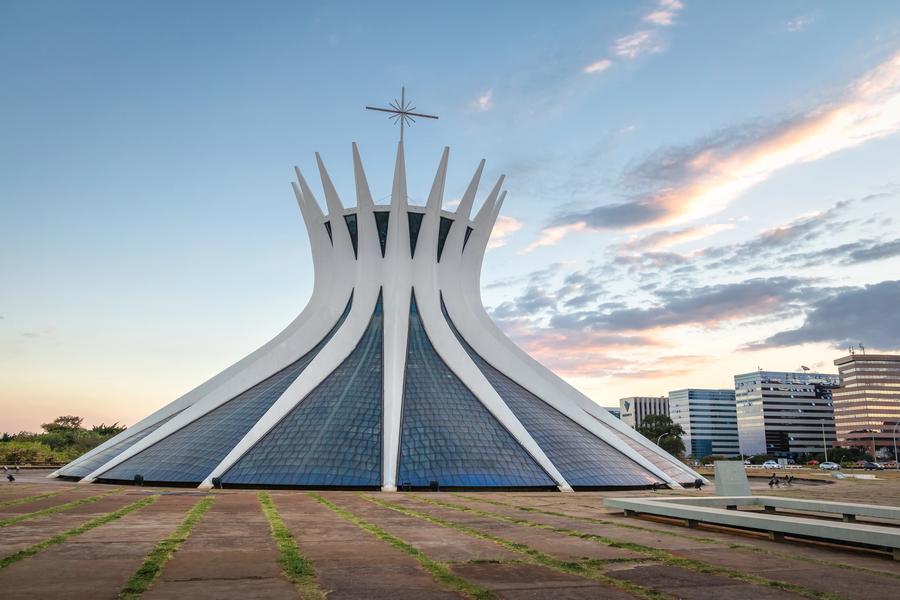
Sixteen curved concrete columns form the crown of Oscar Niemeyer’s modernist cathedral in Brasília. The structure was finished in 1960, but the cathedral did not open until May 31, 1970. Its white supports sweep inward and then flare out above the glass, giving the building its shape without a conventional tower or spire.
Visitors descend through a dark passage before reaching the light-filled nave, a contrast Niemeyer deliberately designed. Overhead, three angels by Alfredo Ceschiatti, made with Dante Croce, hang from steel cables. Their metal bodies appear to float beneath the colored glass.
6. Borgund Stave Church, Norway
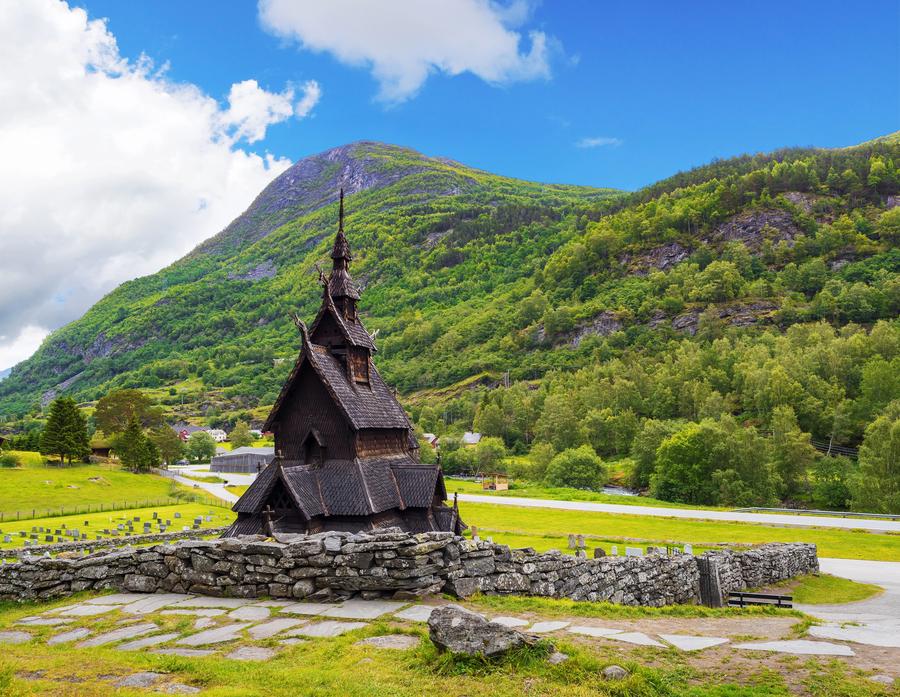
Dragon heads project from the layered roofs of Borgund Stave Church, built around 1180. The dark timber building has a raised central space, carved portals and roof after roof stepping upward. Its name comes from the upright wooden posts, or staves, that carry the structure.
The interior is largely unpainted, leaving the wooden construction exposed. Later furnishings include a mid-16th-century pulpit and a 1654 altarpiece showing the Crucifixion. A separate medieval wooden bell tower stands to the south. Norway’s National Trust, Fortidsminneforeningen, has owned the church since 1877 and preserves it as a museum.
5. Metropolitan Cathedral of Rio de Janeiro, Brazil
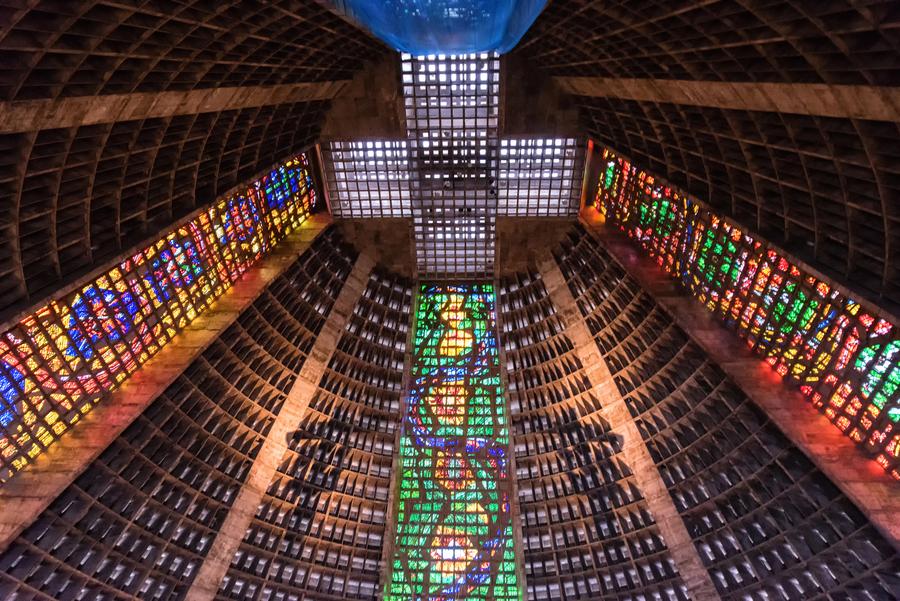
Rio’s Metropolitan Cathedral is a concrete cone rising about 246 ft (75 m) on the outside. The cathedral’s own account identifies the Maya monuments at Chichén Itzá as an inspiration for architect Edgar de Oliveira da Fonseca. Construction began in 1964, the first Mass was celebrated at Christmas in 1972, and the formal opening followed in 1979.
Inside, four walls of stained glass rise toward the cross-shaped opening overhead. The circular floor has no internal columns interrupting the congregation’s view. Dedicated to Saint Sebastian, the cathedral can hold about 20,000 people standing or 5,000 seated, according to its published figures.
4. US Air Force Academy Cadet Chapel, Colorado, USA
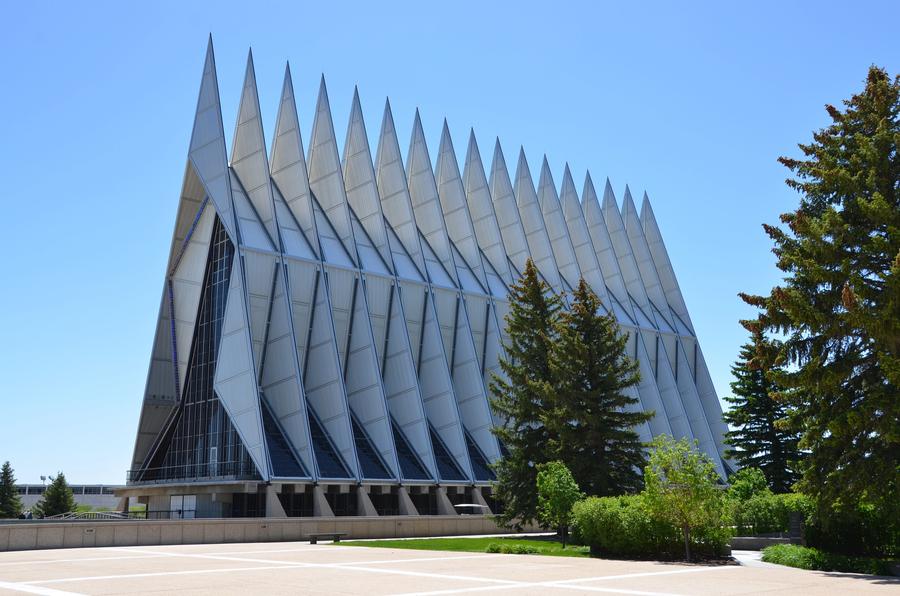
Seventeen pointed spires, each rising 150 ft (46 m), give the Cadet Chapel its serrated outline. Walter Netsch of Skidmore, Owings & Merrill designed the building, completed in 1962, for the US Air Force Academy near Colorado Springs. Beneath that single roof are separate spaces for Protestant, Catholic, Jewish and Buddhist worship, along with an All Faiths Room.
The chapel has been closed for restoration since 2019. Persistent leaks led to the project, and extensive asbestos removal and repairs to the steel structure prolonged the work. It is expected to reopen in 2028, according to the Air Force’s October 2026 update.
3. Salt Cathedral of Zipaquirá, Colombia
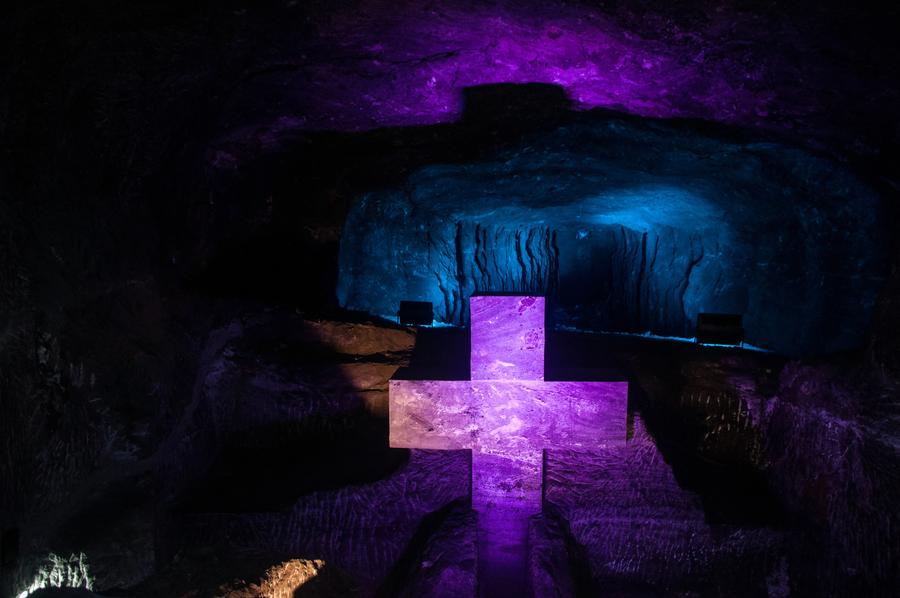
The route into Zipaquirá’s Salt Cathedral runs through a mine about 590 ft (180 m) underground. Fourteen Stations of the Cross are cut into the salt along the approach to the sanctuary. Colored lighting picks out crosses and rough walls, leaving the excavated rock visible around them.
The present sanctuary opened in 1995, replacing a 1954 church that closed in 1992 because of structural problems. Architect Roswell Garavito Pearl designed the replacement. The devotion grew out of the miners’ veneration of Our Lady of the Rosary of Guasá. Despite its familiar name, the underground church is not the bishop’s seat: Zipaquirá has a separate diocesan cathedral in the city.
2. Temppeliaukio Church, Helsinki, Finland
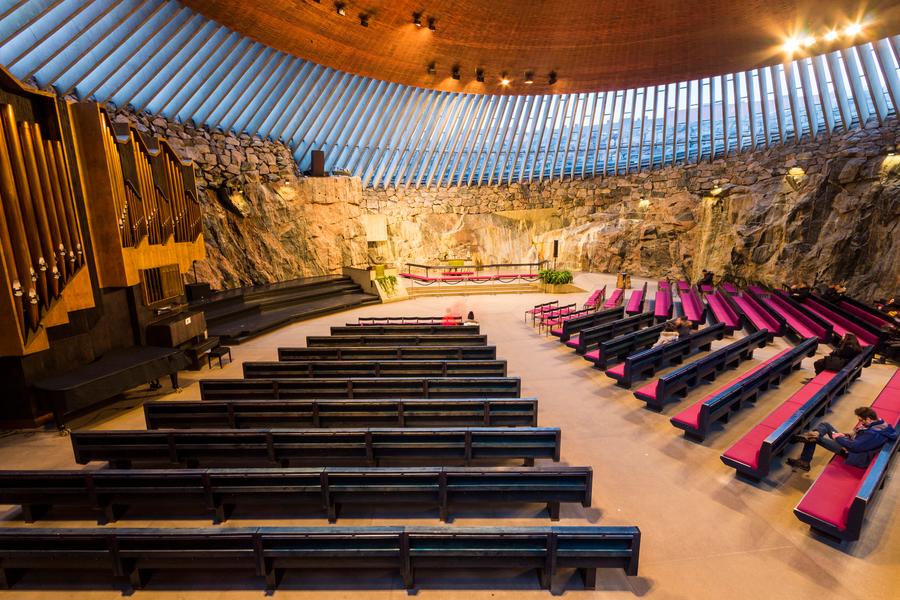
Temppeliaukio’s rough rock walls are the hill itself, excavated to make a church that opened in 1969. Brothers Timo and Tuomo Suomalainen placed a copper-lined dome above the hall, supported by reinforced concrete beams. Around it, 180 skylights admit daylight between the stone and the roof.
The dome contains about 13.7 miles (22 km) of copper lining. Below it, the walls retain their uneven surfaces, and a crevice left by the Ice Age serves as the altarpiece. The city of Helsinki highlights the hall’s acoustics as a reason for its regular use for concerts.
1. Thorncrown Chapel, Arkansas, USA
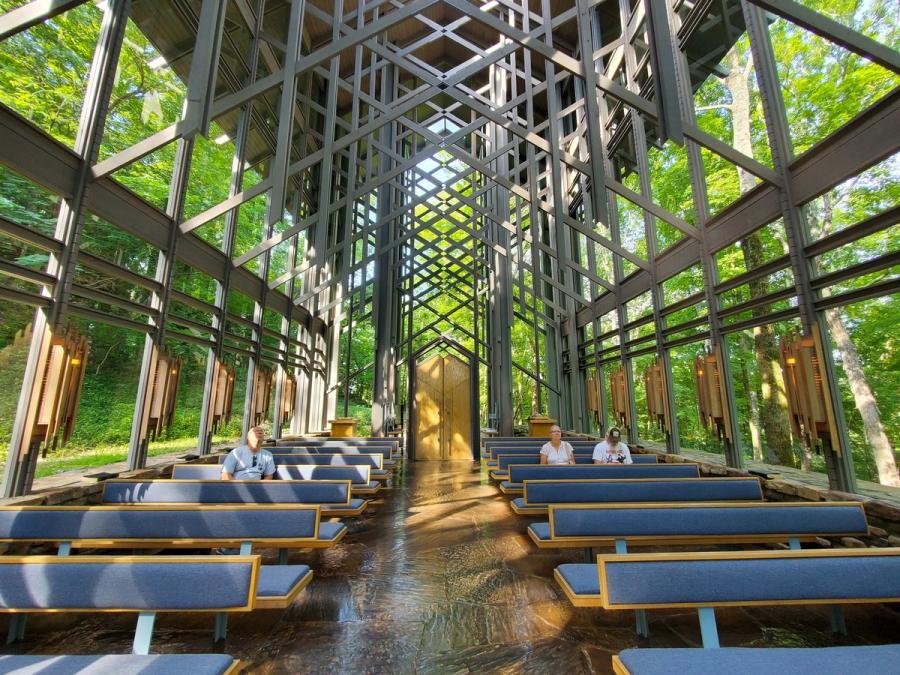
Thorncrown’s 425 windows and more than 6,000 sq ft (557 m²) of glass leave the surrounding woods visible between slender timber supports. E. Fay Jones designed the 48-ft (15 m) chapel near Eureka Springs for Jim Reed, who had originally bought the land for a retirement home. The glass chapel opened in 1980.
Building among the trees shaped the construction. Jones limited the structural elements carried through the woods to pieces two people could manage; larger trusses were assembled on the chapel floor and raised into place. Inside, the repeated beams cross above a flagstone floor, with leaves visible beyond the glass. The chapel still holds Sunday services.