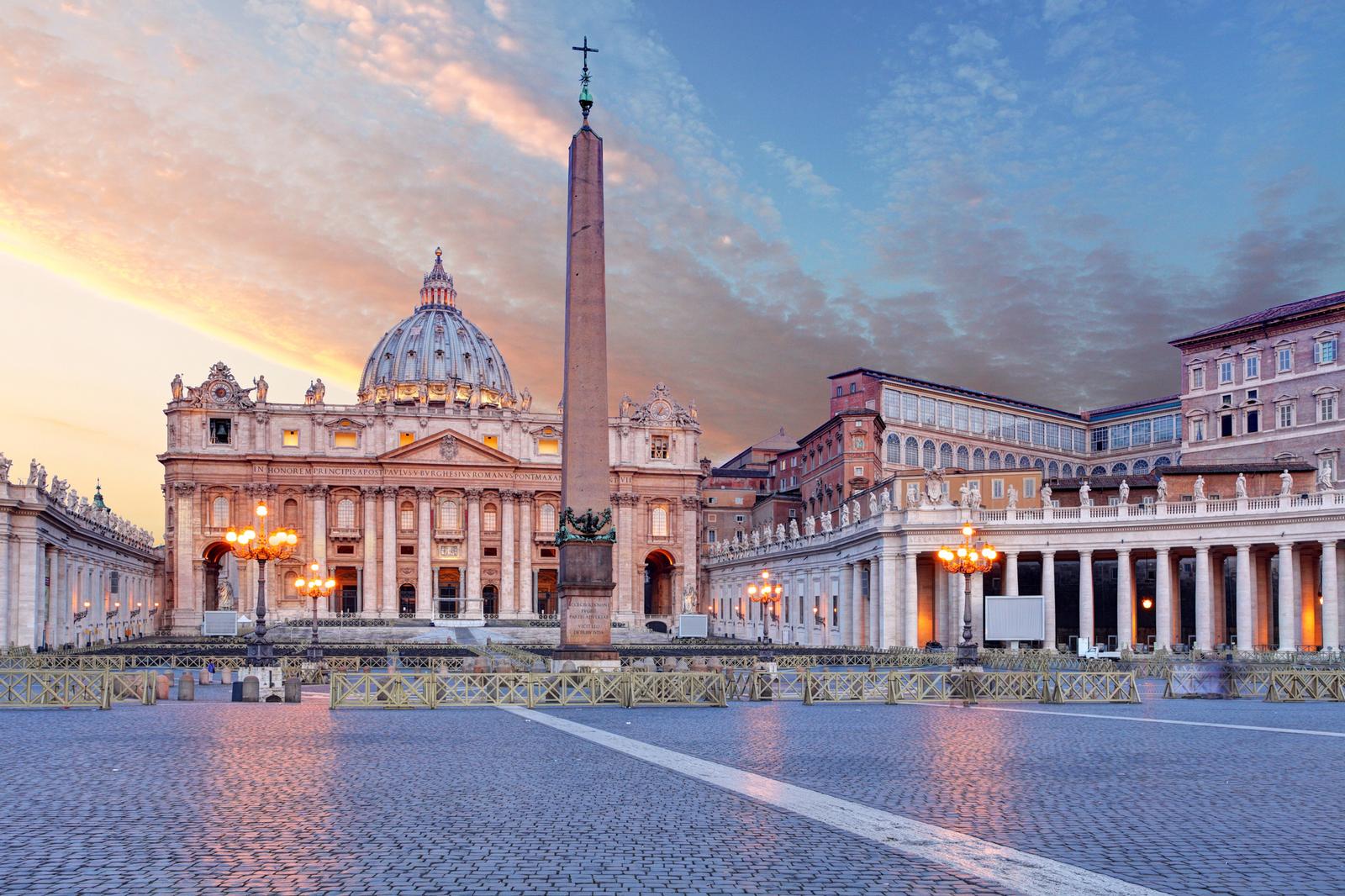
St Peter’s Basilica is widely listed as the largest church by interior area, at about 163,200 square feet (15,160 m²). Aparecida in Brazil and the Basilica of St Pius X in Lourdes share the next commonly published figure, about 129,200 square feet (12,000 m²), although Aparecida’s own ground-floor figure is larger.
Guinness names the Basilica of Our Lady of Peace in Yamoussoukro the largest church by total area: about 322,900 square feet (30,000 m²). That total includes a rectory, a villa, and a colonnade, so it is not the interior-floor measure used below.
How we ranked this
We rank these churches by commonly cited published interior-floor areas from church authorities, official tourism bodies, Guinness World Records, and GCatholic’s church database; the figures are estimates, not a uniform architectural survey, and Aparecida’s conflicting official measurement is explained in its entry. Aparecida and St Pius X have the same published figure here and are placed alphabetically by heading name, a display order rather than a size difference. We leave out Córdoba’s Mosque–Cathedral, whose interior incorporates the former mosque’s prayer hall, and keep Yamoussoukro’s total-area record separate.
| Rank | Church | Location | Interior area, sq ft (m²) |
|---|---|---|---|
| 1 | St Peter’s Basilica | Vatican City | 163,200 (15,160) |
| 2 | Basilica of Our Lady of Aparecida | Aparecida, Brazil | 129,200 (12,000) |
| 3 | Basilica of St Pius X | Lourdes, France | 129,200 (12,000) |
| 4 | Milan Cathedral | Milan, Italy | 125,900 (11,700) |
| 5 | Seville Cathedral | Seville, Spain | 124,000 (11,520) |
| 6 | Cathedral of St John the Divine | New York City, United States | 120,986 (11,240) |
| 7 | Basilica of Our Lady of Licheń | Licheń Stary, Poland | 108,600 (10,090) |
| 8 | Liverpool Cathedral | Liverpool, United Kingdom | 104,300 (9,687) |
| 9 | Basilica of the Most Holy Trinity | Fátima, Portugal | 93,600 (8,700) |
| 10 | Basilica of Saint Paul Outside the Walls | Rome, Italy | 91,700 (8,515) |
10. Basilica of Saint Paul Outside the Walls
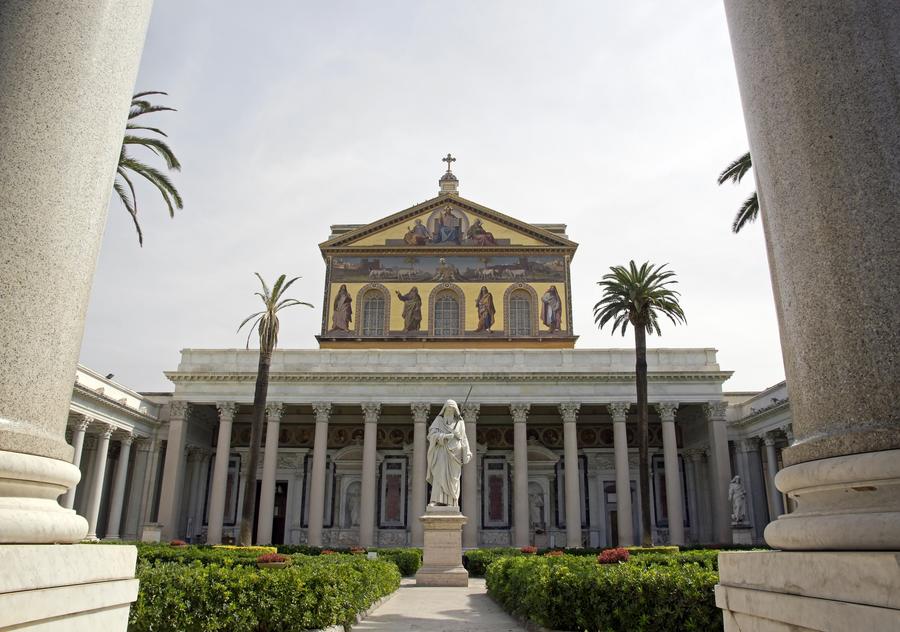
The Basilica of Saint Paul Outside the Walls is commonly listed at about 91,700 square feet (8,515 m²). One of Rome’s major papal basilicas, it grew around the traditional burial place of St Paul. A fire devastated the earlier church in 1823; the basilica’s official history says it was rebuilt to the same dimensions and dedicated on December 10, 1854.
Inside, four rows of twenty granite columns separate the nave and its four side aisles. Above them, portraits of the popes form a long sequence beneath the windows, while the richly decorated ceiling draws the eye along the central space. The reconstruction preserved the earlier basilica’s layout and style, giving the nineteenth-century building the proportions of its ancient predecessor.
9. Basilica of the Most Holy Trinity
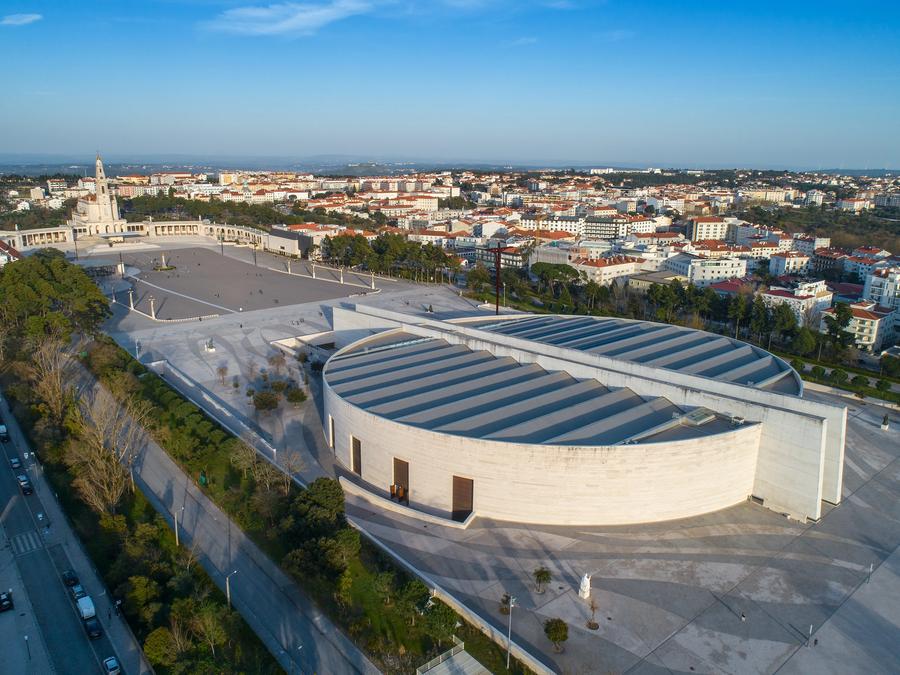
Fátima’s Basilica of the Most Holy Trinity is commonly listed at about 93,600 square feet (8,700 m²). The sanctuary gives a diameter of about 410 feet (125 m) and 8,633 seats. Its circular interior has no internal supports interrupting the space. This is the modern church at the sanctuary, distinct from the older, towered Basilica of Our Lady of the Rosary across the prayer area.
The sanctuary needed a larger covered church for the pilgrims who came to worship. Greek architect Alexandros Tombazis designed the new building, which was dedicated on October 12, 2007, and received the title of basilica in 2012. A movable partition allows the interior to be divided. Its low, broad form shows a different approach to housing a large congregation from the tall Gothic churches elsewhere on this list.
8. Liverpool Cathedral
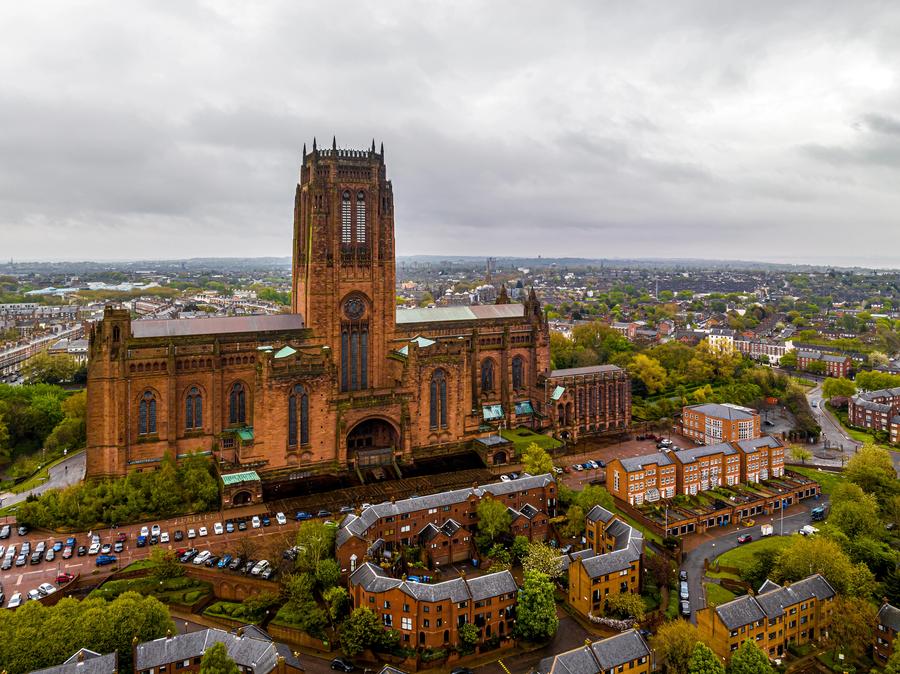
Liverpool Cathedral is commonly listed with a floor area of about 104,300 square feet (9,687 m²). Its official site calls it Britain’s largest cathedral. The monumental sandstone building belongs to the Anglican church and is distinct from Liverpool’s Metropolitan Cathedral. Its central tower rises above long Gothic spaces leading toward the altar.
The building took much of the twentieth century to complete. Architect Giles Gilbert Scott won the design competition in 1903 when he was 22, and the foundation stone followed in 1904. The cathedral was consecrated in 1924 while construction continued. Its completion was celebrated on October 25, 1978, after delays that included both world wars. Worship had already begun in the Lady Chapel in 1910.
7. Basilica of Our Lady of Licheń
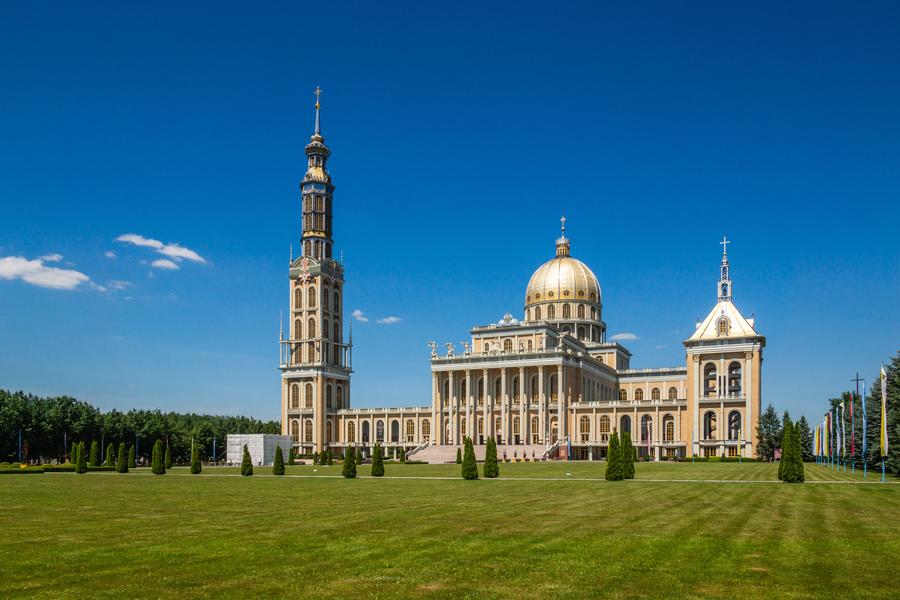
The Basilica of Our Lady of Licheń is commonly listed at about 108,600 square feet (10,090 m²). Its gold dome and separate tower dominate the pilgrimage site at Licheń Stary. A regional cultural guide gives dimensions of about 456 feet long by 253 feet wide (139 × 77 m) and a tower height of about 464 feet (141.5 m).
The sanctuary identifies it as Poland’s largest church, built between 1994 and 2004. It was consecrated on June 12, 2004, and received the title of minor basilica the following year. The sanctuary describes the church as a gift from pilgrims honoring Our Lady of Licheń. Its relatively recent construction is a reminder that enormous churches are still being built alongside Europe’s much older cathedrals.
6. Cathedral of St John the Divine
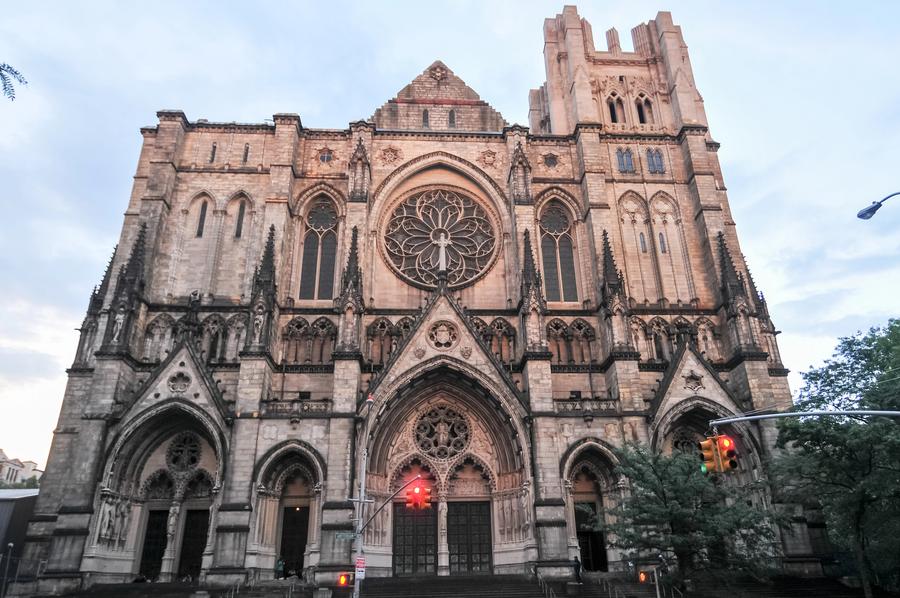
Guinness records the floor area of New York’s Cathedral of St John the Divine as 120,986 square feet (11,240 m²). Its 601-foot (about 183 m) length makes the scale particularly striking when looking along the interior. The cathedral serves the Episcopal Diocese of New York.
The cathedral remains unfinished, yet it has served worshippers for generations. Its full length was consecrated on November 30, 1941. One of its most recognizable features is the Great Rose Window, about 40 feet (12 m) across. The large circular window provides a useful focal point when taking in the long nave and the layered architecture around it.
5. Seville Cathedral
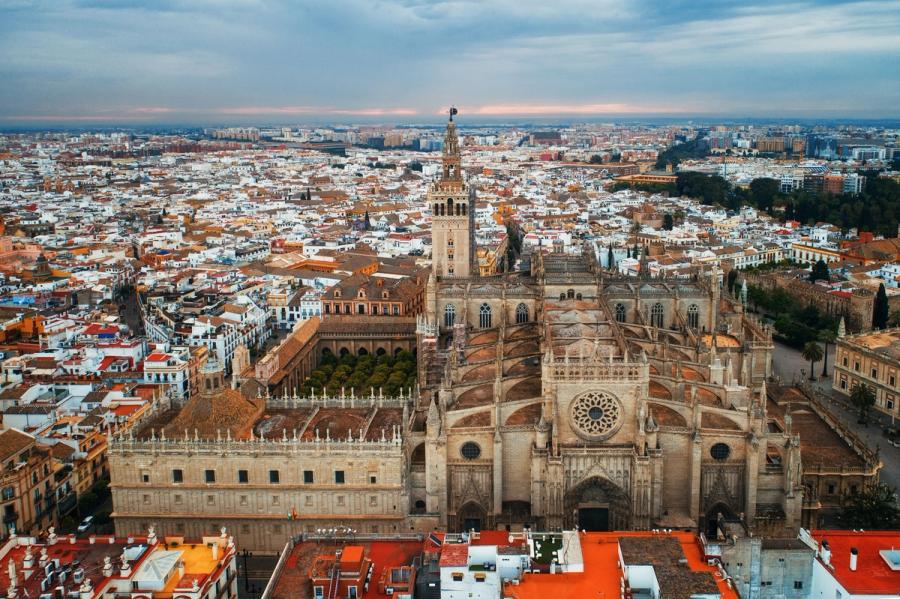
Seville Cathedral is commonly listed with an interior area of about 124,000 square feet (11,520 m²). Its official visitor leaflet gives about 253,000 square feet (23,500 m²) for the total building, a broader measure than the church interior. The leaflet separately describes the Gothic portion as about 413 feet long by 272 feet wide (126 × 83 m).
The cathedral describes itself as the world’s largest Gothic cathedral. Its setting also preserves older layers: the Giralda began as the mosque’s minaret, while the orange-tree courtyard recalls the earlier religious complex. Seville belongs among the UNESCO-listed churches, with its cathedral, Alcázar, and Archive of the Indies recognized together as a World Heritage site.
4. Milan Cathedral
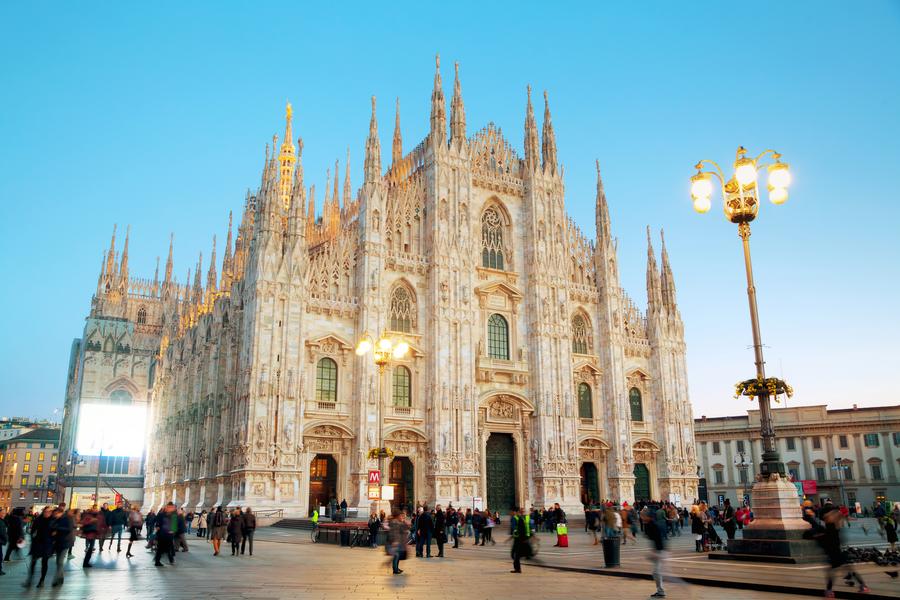
Milan Cathedral has an interior area of about 125,900 square feet (11,700 m²). The Duomo’s pale marble facade fills one side of Piazza del Duomo, while its main spire rises to roughly 356 feet (108.5 m). Construction began in 1386 and continued through generations of work.
The cathedral’s own guide counts 135 spires and more than 3,400 statues. Its roof terraces let visitors see this carved detail close up, rather than only looking upward from the square. The golden Madonnina stands above the main spire. For readers exploring church architectural styles, Milan is a striking example of how Gothic height and sculpture work together.
3. Basilica of St Pius X
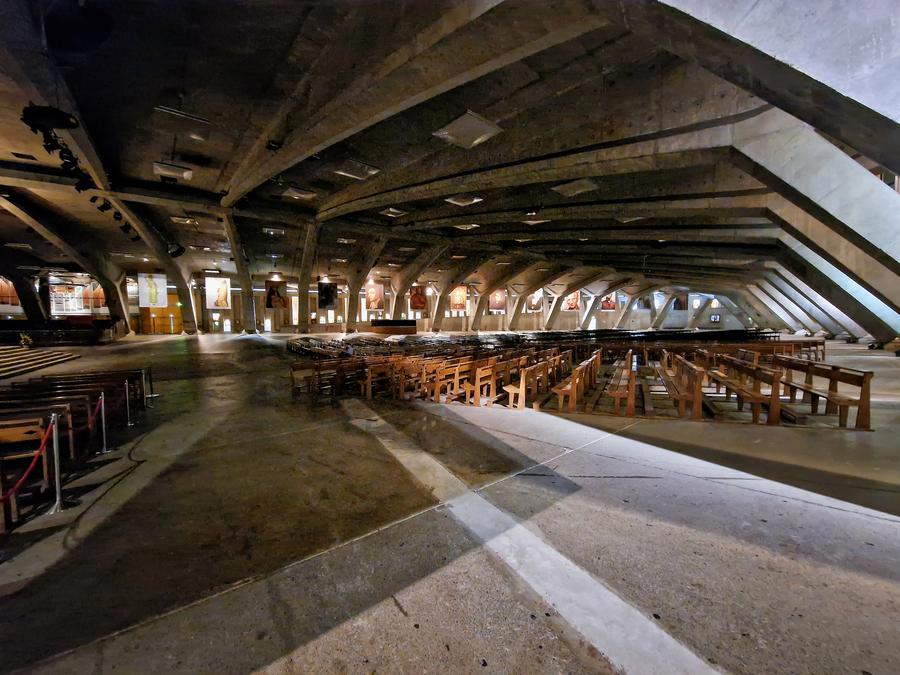
The Basilica of St Pius X covers about 129,200 square feet (12,000 m²), according to the Sanctuary of Lourdes. It shares the published figure used for Aparecida at #2. Almost entirely underground, the church extends beneath the sanctuary’s procession esplanade. Its long, low interior has the shape of an ellipse or an overturned boat, with concrete ribs spanning the space above the congregation.
Architect Pierre Vago and engineer Eugène Freyssinet designed the basilica, which was consecrated on March 25, 1958, the centenary year of the reported Lourdes apparitions. It measures about 659 feet long by 266 feet wide (201 × 81 m). The sanctuary uses it for international Masses and large gatherings, including the blessing of the sick after Eucharistic processions.
2. Basilica of Our Lady of Aparecida
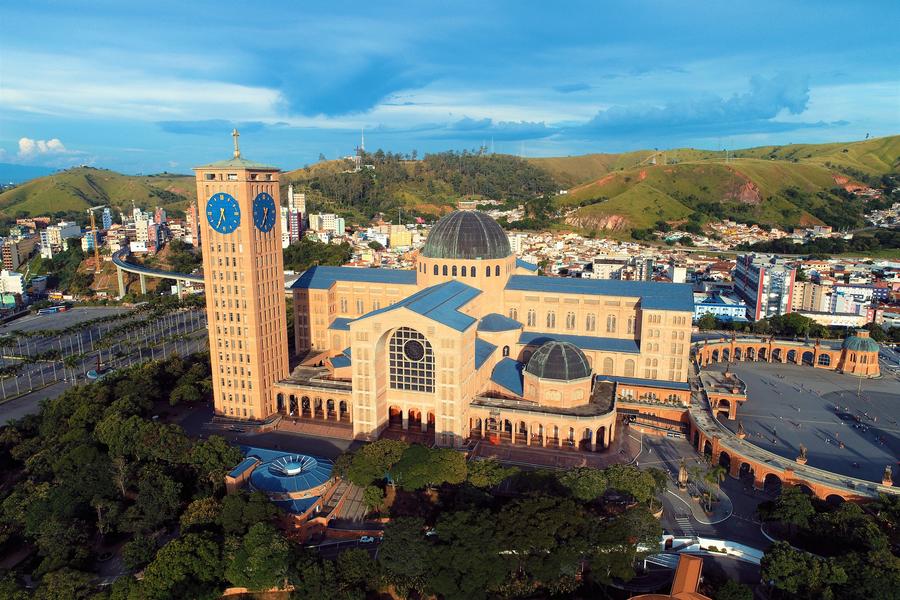
Aparecida is commonly listed at about 129,200 square feet (12,000 m²), sharing that published figure with the Basilica of St Pius X in Lourdes. The sanctuary’s own press kit gives about 269,100 square feet (25,000 m²) for the ground floor inside the basilica. Published figures differ; this ranking uses the commonly listed 12,000 m².
The sanctuary says celebrations can gather 30,000 people around the central altar. Its tower reaches about 358 feet (109 m), including the cross, while the dome rises about 230 feet (70 m). The broad floor around the altar is the setting for worship; the tower and dome give the building its recognizable outline.
1. St Peter’s Basilica
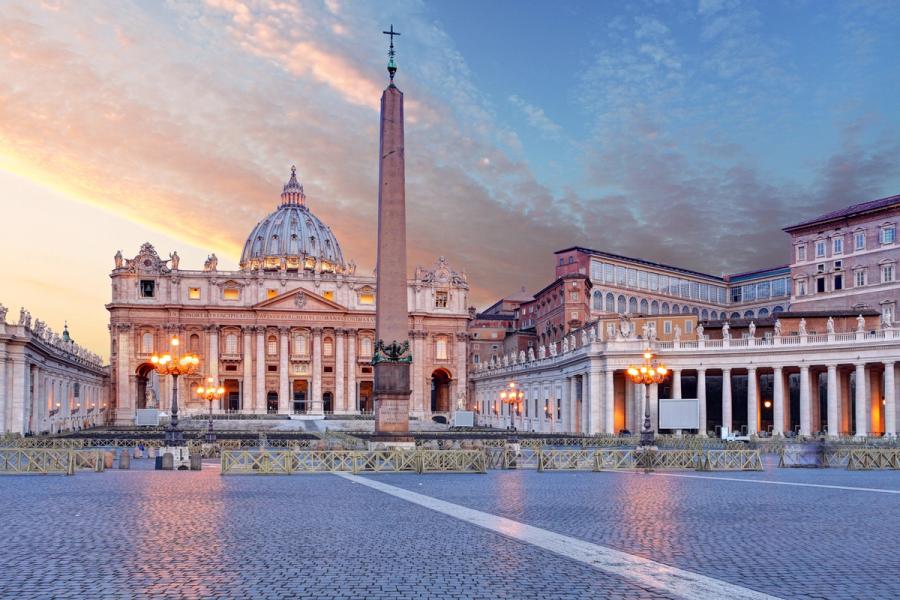
St Peter’s Basilica is widely listed with an interior area of about 163,200 square feet (15,160 m²). Its immense nave and dome make it one of the defining sights of Vatican City. The basilica’s official dimensions give a length of about 614 feet (187 m) and a dome height of roughly 446 feet (136 m).
The present basilica was built between 1506 and 1626, replacing the church commissioned by Emperor Constantine in the fourth century. Its construction brought together generations of architects, including Michelangelo, whose work shaped the dome. St Peter’s place among the world’s most famous churches rests on that combination of scale, art, and religious importance.