The Church of St George in Lalibela tops our list of amazing churches: its cross-shaped form was carved down into solid rock. Here, ‘amazing’ means architecture with an extraordinary structure, material or setting, from that Ethiopian rock-cut church to Colombia’s Las Lajas Sanctuary above a river gorge.
Some of these buildings took generations to finish; others belong firmly to the modern age. Their appeal lies in the details as much as the silhouette: stained glass in Paris, polished bricks in Copenhagen and sculpted marble high above Milan.
How we chose these
We chose churches for distinctive structures, materials and settings across different centuries, architectural styles and continents. This selection avoids the buildings in our separate Unique Churches list. The countdown reflects editorial judgment, not a measured ranking of size, age or beauty.
10. Ulm Minster, Germany
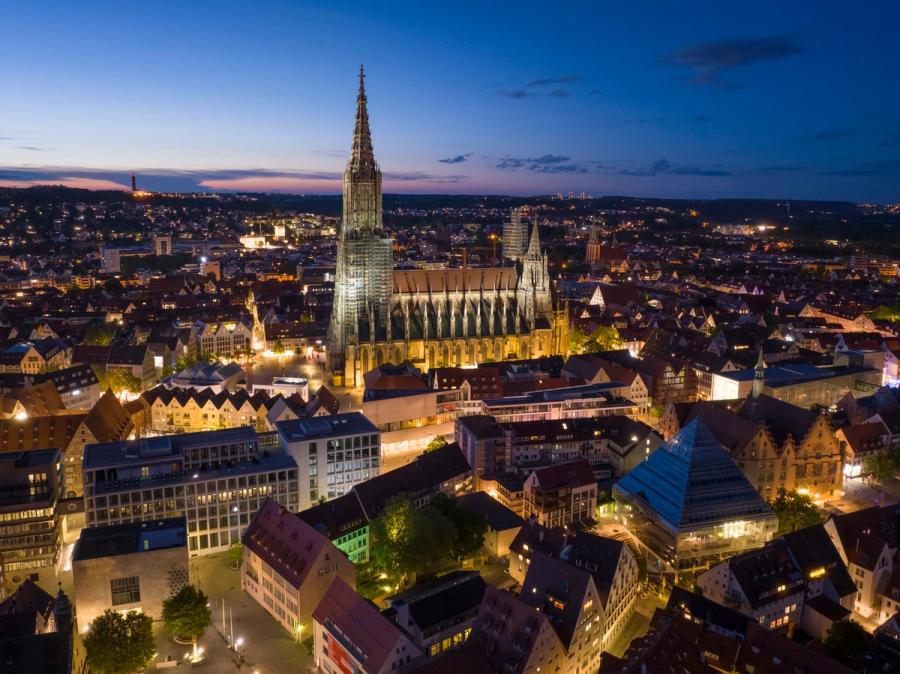
Ulm Minster’s 530-foot (161.53 m) steeple is still Germany’s tallest, rising above the city in a tapering web of Gothic stonework. It held the world record from its completion in 1890 until Barcelona’s Sagrada Família overtook it in October 2025. Seen from the surrounding streets, the openwork spire seems almost too delicate for its enormous height.
The church’s story began much earlier, with the laying of its foundation stone in 1377. Ulm’s citizens financed the project, but construction stopped in 1543 and resumed only in the 19th century. Inside, the intricately carved 15th-century choir stalls by Jörg Syrlin reward attention at eye level. The tower may dominate the skyline, but those wooden figures reveal another side of the building’s craftsmanship.
9. Stykkishólmur Church, Iceland
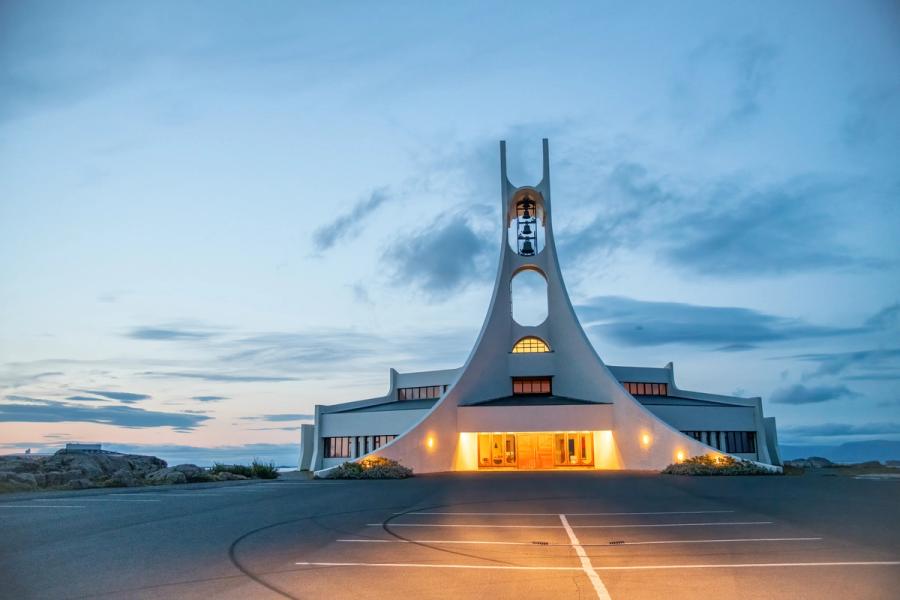
Stykkishólmur Church turns a sweeping white bell tower into a landmark above this Icelandic harbor town. Designed by Jón Haraldsson, the concrete church was consecrated on May 6, 1990, and seats 300 people. Its curved front rises around a tall, narrow opening, giving the building a striking outline against the sky without a forest of spires or elaborate surface decoration.
The interior has a quieter focal point: Kristín Gunnlaugsdóttir’s altarpiece of Mary and the infant Jesus, added in 1999. Music is another part of the church’s identity. The municipality highlights its good acoustics and frequent concerts, while a Klais organ installed in 2012 adds to the sound. The contrast between the bold exterior and the intimate worship space makes this small church especially memorable.
8. Church of the Savior on Spilled Blood, Russia
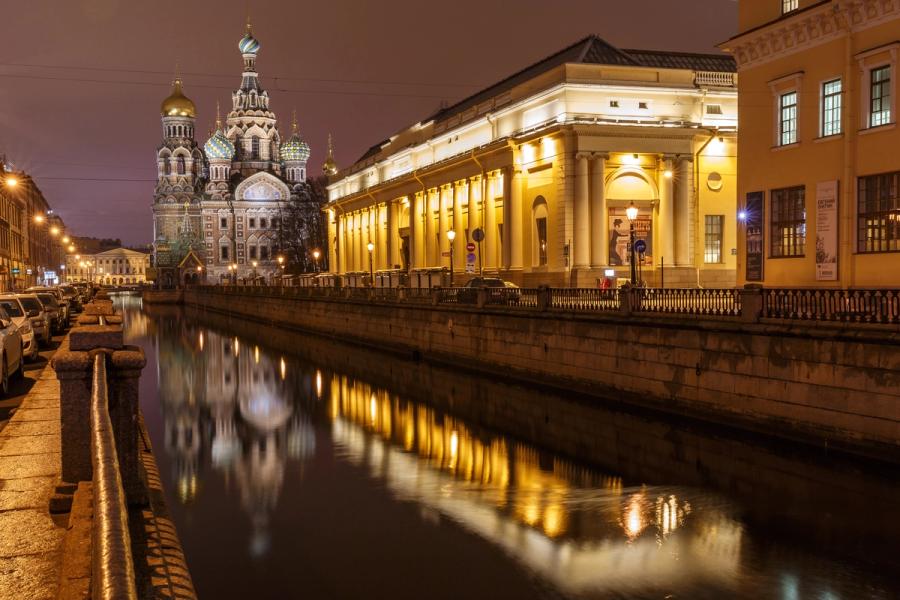
The Church of the Savior on Spilled Blood contains roughly 75,000 square feet of mosaics (over 7,000 m²), according to its museum. Its patterned onion domes rise beside St Petersburg’s Griboyedov Canal, but the name recalls a violent event: the church marks the place where Tsar Alexander II was fatally wounded in 1881. He died later at the Winter Palace.
Construction ran from 1883 to 1907, with architect Alfred Parland drawing on Russian churches of the 16th and 17th centuries. The colorful exterior disguises some forward-looking engineering: the building had electric lighting from the start. Enamel covers five of its domes, while carved marble and mosaics fill the interior. The result combines a memorial’s solemn purpose with an unusually rich display of color and workmanship.
7. Church of Paraportiani, Greece
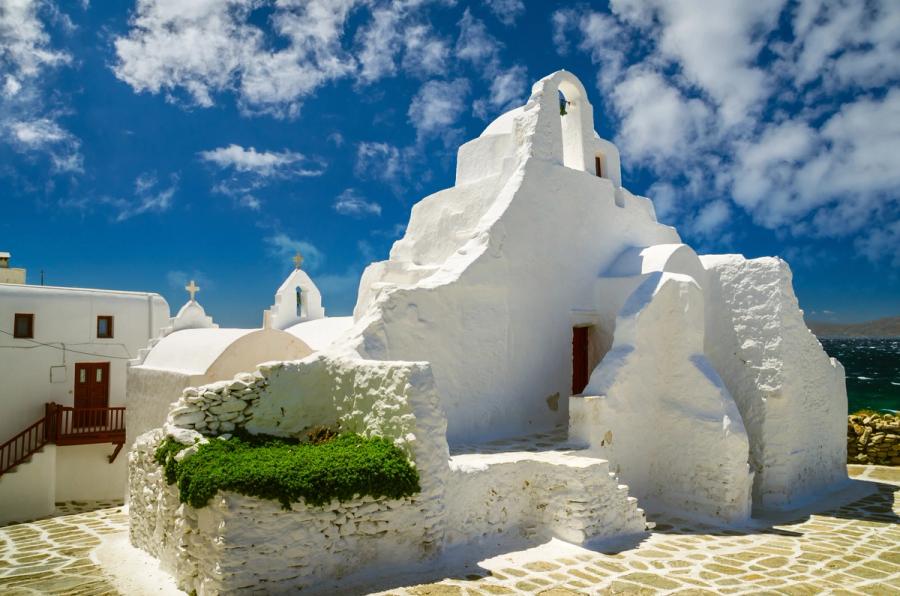
Paraportiani is five chapels joined into one whitewashed complex, assembled over several centuries on Mykonos. Four occupy the lower level, with a fifth perched above them. Rounded walls, uneven rooflines and a small bell opening give the whole building the appearance of a sculpture, especially where bright sunlight picks out the edges against the blue sky.
Its shape also preserves a piece of the island’s defensive history. The complex stands where a tower of the medieval castle once stood, and its name comes from a nearby side gate, or paraporti. At ground level, the chapels honor Agios Efstathios, Agioi Anargyroi, Agios Sozon and Agia Anastasia. What looks like a single flowing form from outside is a gathering of smaller places of worship.
6. Sainte-Chapelle, France
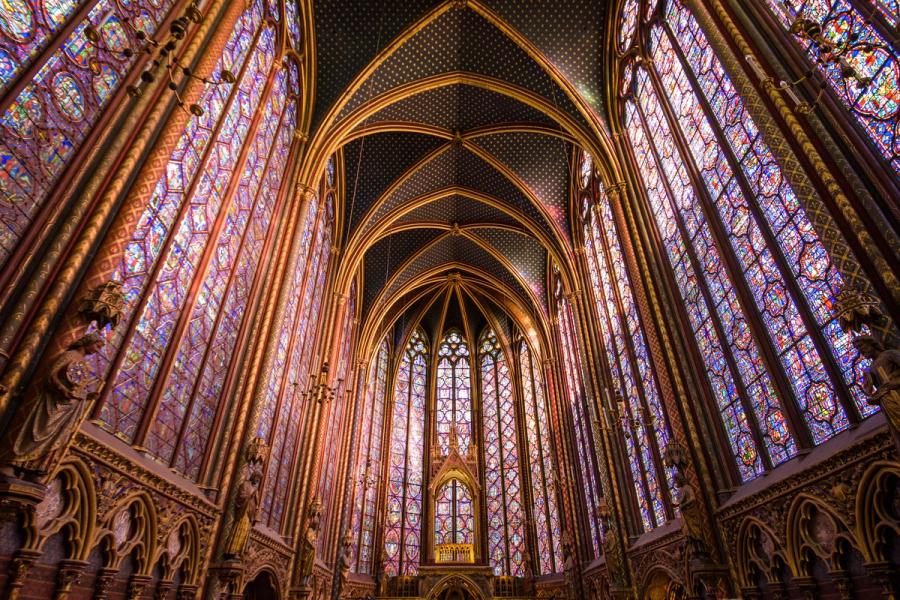
Sainte-Chapelle’s upper chapel surrounds you with 15 stained-glass windows telling 1,113 scenes; about two-thirds of its glass dates from the Middle Ages. Slender stone supports leave most of the walls to the windows, making color the room’s dominant feature. Reds and blues spread across biblical stories, royal symbols and figures that seem to climb toward the vaulted ceiling.
Louis IX commissioned this chapel within his Paris palace to house relics including the Crown of Thorns. Built in less than seven years in the 13th century, it joined religious devotion to royal prestige. Look for the fleurs-de-lis and images of kings among the biblical scenes: the glass tells a story about monarchy as well as faith. It is an especially vivid example of how Gothic church architecture uses height and light.
5. Grundtvig’s Church, Denmark
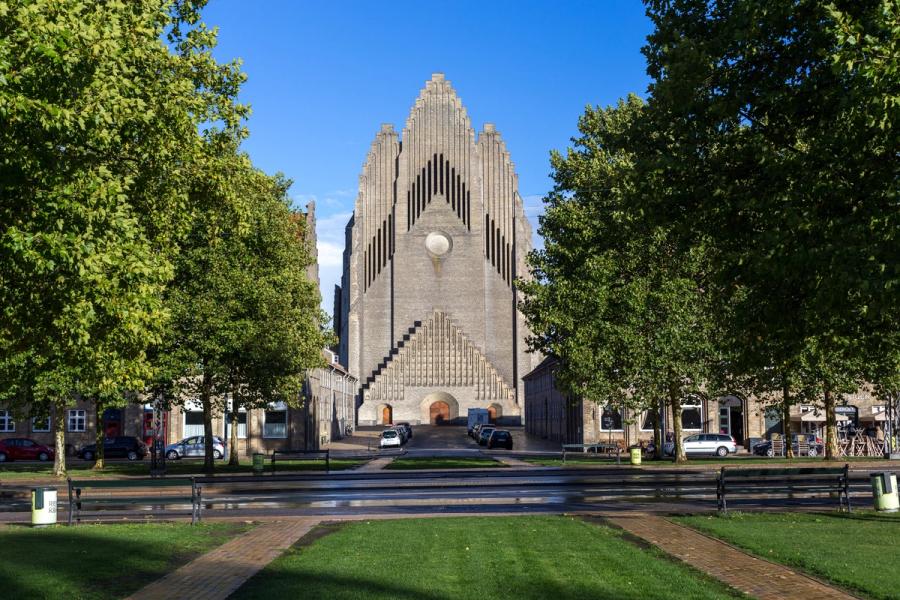
Grundtvig’s Church turns about five million bricks into a Copenhagen landmark whose west front resembles a bank of organ pipes. The church says each brick was hand-polished. Yellow brick continues inside, where tall columns and pointed vaults create a remarkably unified space. Even the entrance plays a part: the porch admits little daylight, making the nave feel brighter as you step through.
Architect Peder Vilhelm Jensen-Klint began the project in 1921; after his death, his son Kaare Klint carried it through to completion in 1940. The design draws on Danish village churches, enlarged into something far more monumental. Construction happened in stages: the tower opened as a temporary church in 1927, before the nave was ready. That history explains an unusual feature of the finished building—two pulpits and two organs.
4. St Michael’s Golden-Domed Monastery, Ukraine
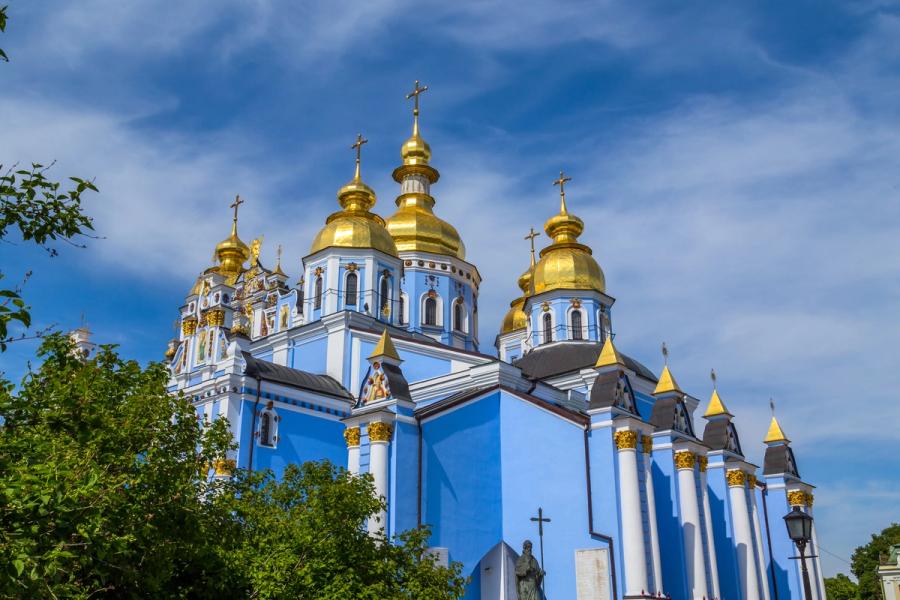
St Michael’s blue walls and gold domes are the result of a late-1990s reconstruction of a cathedral destroyed in the 1930s. The monastery stands in Kyiv on the site of a church founded in 1108 by Prince Sviatopolk. Its name preserves the defining feature of that earlier building: the golden domes that made it stand out in medieval Kyiv.
Soviet-era plans for a government district led to the demolition of most of the complex. The rebuilt cathedral and bell tower restored its presence on the city’s skyline, while some much older art also came home. Original 12th-century frescoes rescued before the demolition were returned in the early 2000s. The bell tower adds a modern sound to the historic setting, with an electric chime clock and a carillon capable of playing melodies.
3. Las Lajas Sanctuary, Colombia
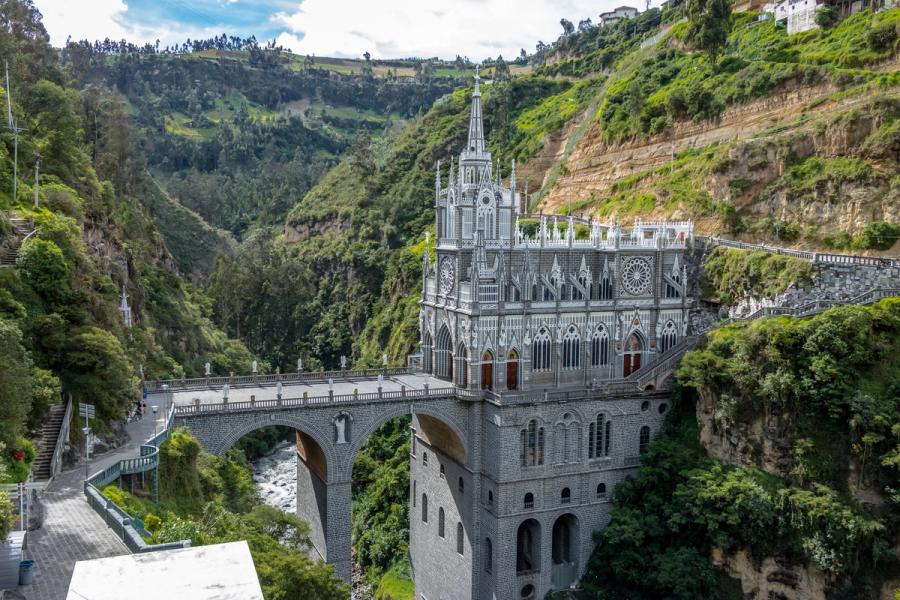
Las Lajas Sanctuary stands on a bridge across the Guáitara River gorge, its pointed towers rising between steep green slopes. Near Ipiales in southern Colombia, the neo-Gothic basilica makes the canyon part of its architecture. The present church was built from 1916 to 1949, with Lucindo Espinosa and J. Gualberto Pérez named as its architects by the government of Nariño.
The pilgrimage tradition is older than the building. Colombia’s tourism authority recounts a reported apparition of the Virgin Mary in 1754, associated with a woman and her daughter sheltering near the river. Plaques giving thanks for favors line the approach, showing how strongly that devotion continues. From the opposite side of the gorge, the bridge, church and cliffs fit into one view—a setting as distinctive as the stonework itself.
2. Milan Cathedral, Italy
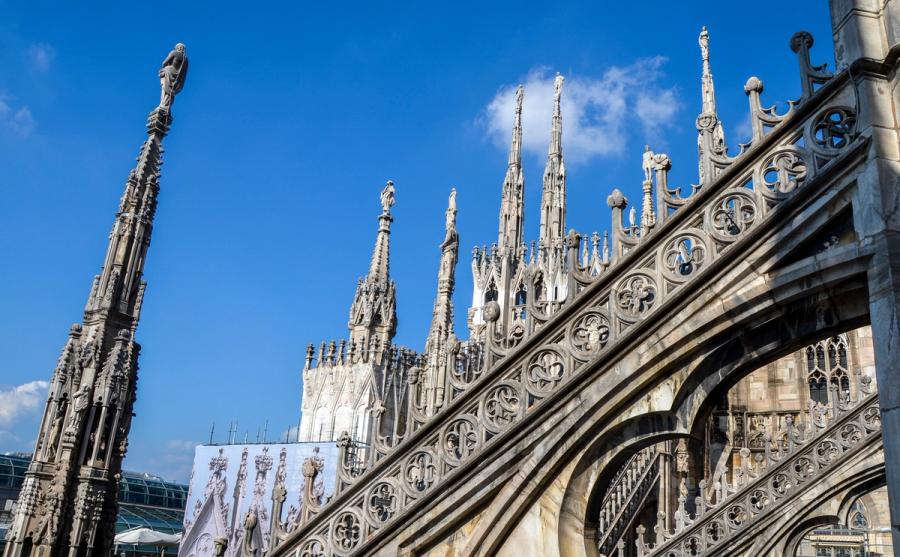
Milan Cathedral carries 135 spires and more than 3,400 statues, turning its roof into a dense landscape of carved stone. The rooftop terraces bring you close to the figures, arches and flying buttresses that are hard to distinguish from the square below. Above them stands the Madonnina, a gilded copper statue placed on the main spire in 1774.
Construction began in 1386, and generations of architects and craftspeople shaped the building over the following centuries. Candoglia marble replaced the brick originally planned, helping define its pale, intricately worked exterior. One of the largest churches in the world, the Duomo rewards a change of scale: after taking in the vast building from the piazza, look closely at the individual faces and ornaments along its roof.
1. Church of St George, Ethiopia
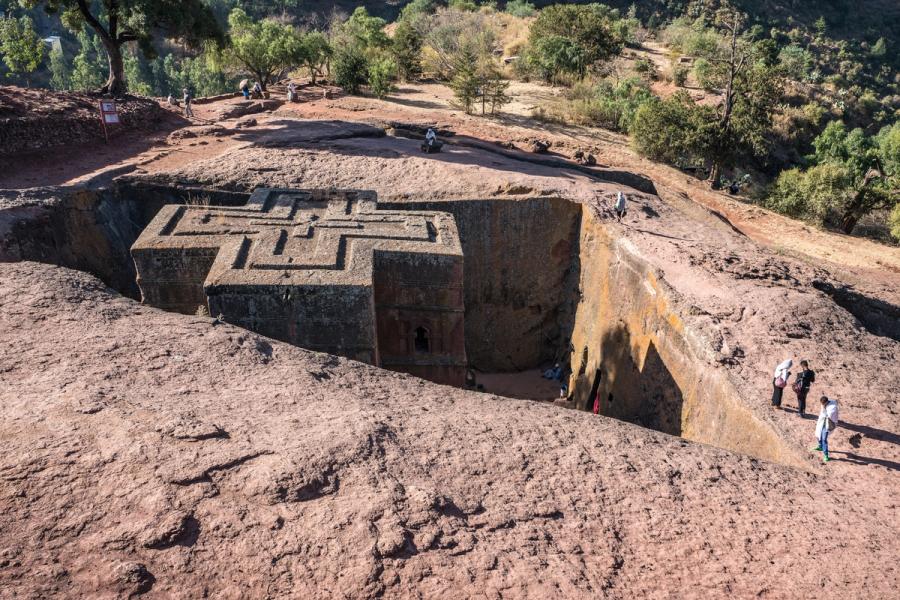
The Church of St George, or Bete Giyorgis, was carved downward into solid rock, leaving a cross-shaped building inside a deep courtyard at Lalibela. It stands about 40 feet (12 m) high, with its roof close to the surrounding ground level. From above, the cross is immediately clear; below, windows and doorways reveal a complete church cut from the same rock beneath your feet.
It is one of Lalibela’s 11 medieval rock-hewn churches, traditionally attributed to King Lalibela’s plan for a New Jerusalem. St George stands apart from the two main groups, connected by a system of trenches. The churches became a World Heritage Site in 1978 and remain places of Ethiopian Orthodox worship and pilgrimage. Among the world’s UNESCO-listed churches, this one makes the method of construction inseparable from the experience of seeing it.