The Church of Jesus Christ of Latter-day Saints has the largest figure in this list: US$60.8 billion in securities reported by its investment manager, Ensign Peak Advisors, for June 30, 2026. Next comes the Church of England, with about US$15.6 billion (£11.6 billion) in its Church Commissioners' endowment at the end of 2025.
Yet a portfolio, a cathedral and a year's tax receipts tell very different stories about money. We have not established a reliable worldwide ranking of church net worth. Each profile below explains what its figure measures, or why no comparable total is given.
How we compared their finances
These ten profiles cover a parish, national churches and church-related bodies. Their figures measure investments, net assets or annual income. Entries 5 to 1 follow the US-dollar value of the amount quoted, using reports available in 2026. Entries 10 to 6 have no comparable totals here; their positions do not mean they have less wealth.
Dollar conversions use European Central Bank rates: December 31, 2025 reference rates for the year-end investment and net-asset figures (€1 = US$1.1750, £0.87260 or SEK 10.8215), and the 2025 annual average for Germany's yearly tax receipts (€1 = US$1.1300). Converted amounts are approximate, rounded to three significant figures; the original currencies appear in brackets.
10. Church of Scientology

The Church of Scientology says it relies mainly on member donations, including contributions associated with auditing and training.
That leaves a different question: what does it own, and what does it owe? A funding model cannot answer that. No current, consolidated worldwide asset figure is established here, so Scientology's place in this list carries no estimate of its total wealth.
9. Opus Dei

Opus Dei's regions manage their finances independently, with no consolidated worldwide accounts, according to its 2024 financial disclosure. The Catholic organization's report also separates the prelature's own expenses from the finances of independent educational and charitable initiatives.
Those boundaries matter more than the prominence of its buildings. An institution receiving pastoral support from Opus Dei does not automatically become an asset of the prelature. Adding such institutions together would blur the distinction between religious ties and ownership, leaving no sound basis for a single worldwide valuation here.
8. Trinity Church, New York
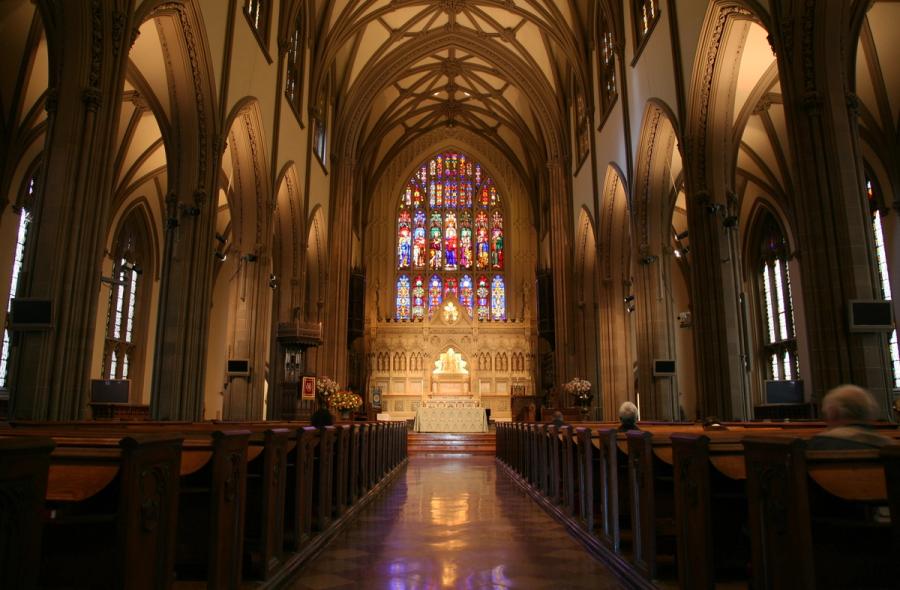
Historic Manhattan landholdings help Trinity Church fund its ministry and community work, as its 2024 annual report explains. Property development is part of that approach. This is one New York parish, making it a different financial story from the national churches elsewhere in the list.
Land and buildings can generate income, but their value is not the amount available to spend on worship, maintenance or grants.
The church's vaulted nave offers another way to explore the building: our guide to church architectural styles explains the designs behind spaces like this.
7. Catholic Church in Australia
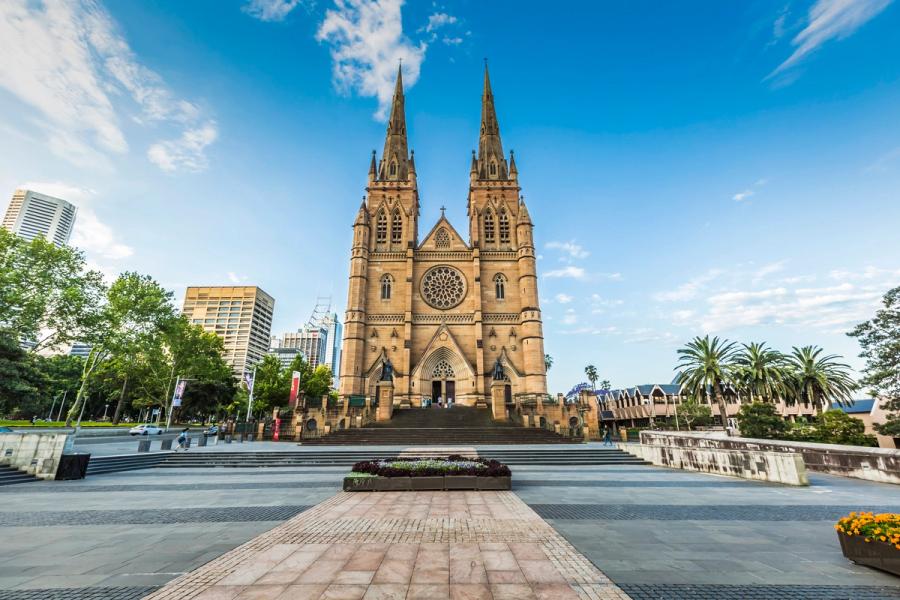
Australia's Catholic Church operates through dioceses and parishes, whose separate administration matters when considering claims about national wealth. A cathedral such as St. Mary's in Sydney is a visible part of that network; it cannot stand for the finances of the whole.
Melbourne's parish administration guidance makes the distinction concrete: the archbishop is responsible for archdiocesan goods, while a parish priest administers parish assets. A national total would need to specify which entities it includes, account for their liabilities and explain how their assets were valued. No comparable total is established here.
6. Catholic Church in France
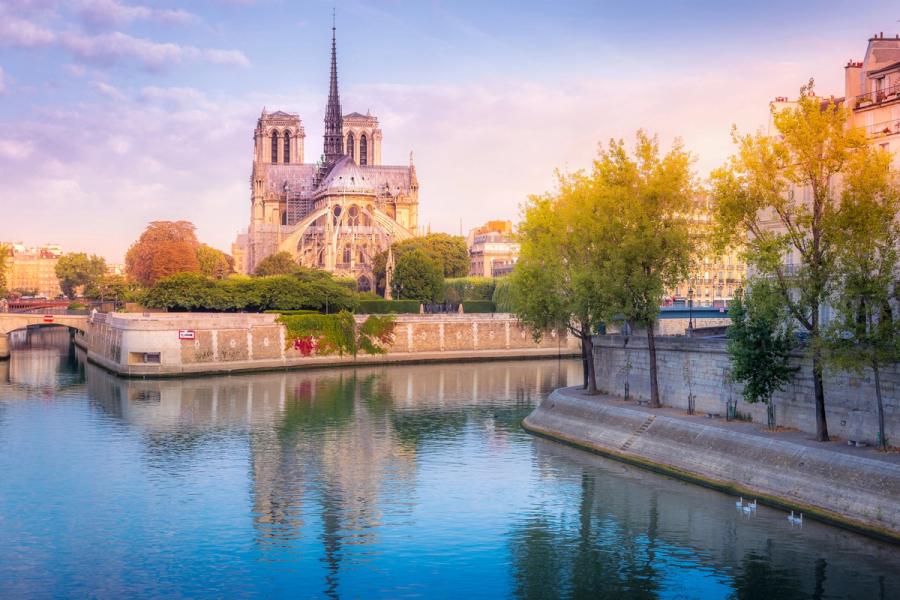
A historic church in France may host Catholic worship without belonging to the Catholic Church: many parish churches are municipal property, and many cathedrals belong to the state. The French bishops' religious heritage overview sets out this distinction between use and ownership.
It changes the financial picture. These buildings can remain places of worship without being assets the church is free to sell. Counting every historic church as Catholic-owned property would turn an architectural inventory into a misleading wealth estimate.
Notre-Dame belongs to that wider story of religious architecture. Our guide to UNESCO-listed churches explores other places valued for their history and design.
5. Church of Sweden
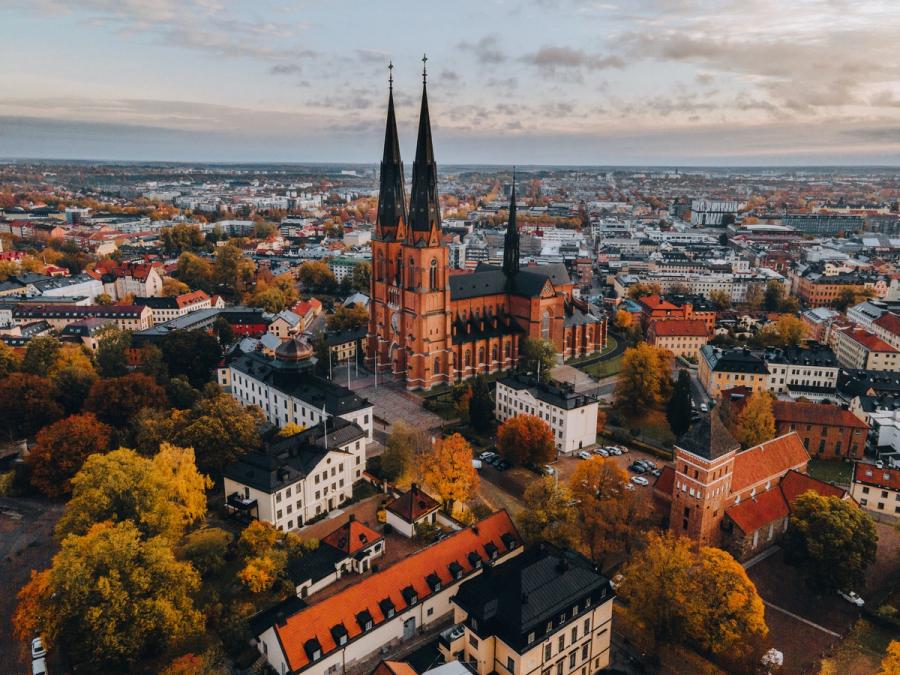
The Church of Sweden's national investment portfolio was worth about US$1.28 billion (SEK 11.766 billion) on December 31, 2025, according to its sustainable investment report. That is the market value of assets managed at the national level.
Investment management by dioceses, parish groups and individual parishes is excluded. The figure gives a useful view of one portfolio, rather than a valuation of everything the church owns.
For the architecture behind these institutions, explore Uppsala Cathedral and other beautiful churches in Europe.
4. Catholic Church and the Vatican
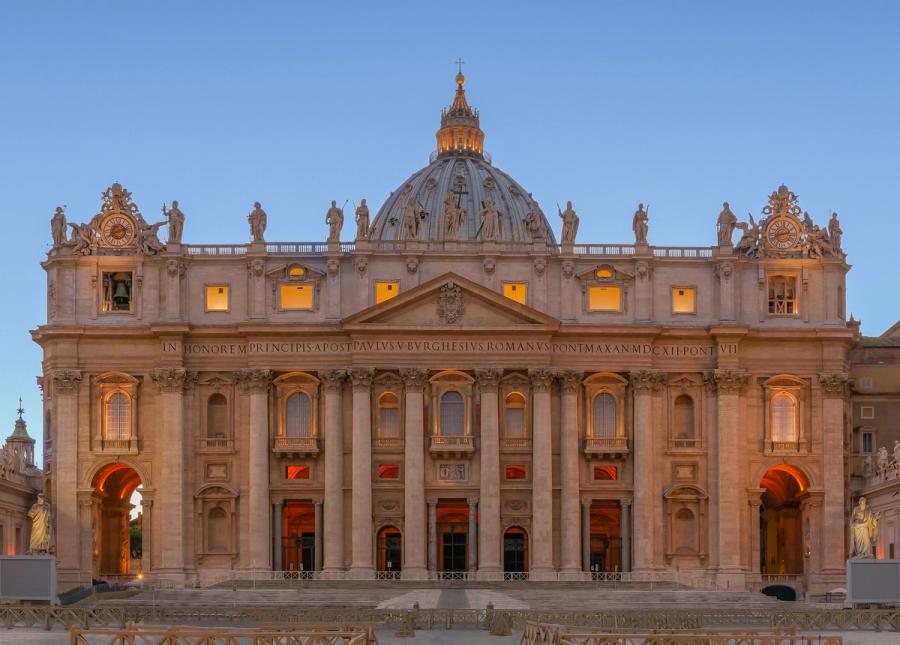
APSA, the Holy See's property and investment manager, held about US$3.16 billion (€2.686 billion) in net assets at the end of 2025. Vatican News reported the figure in July 2026. Its full name is the Administration of the Patrimony of the Apostolic See, and its responsibilities include 4,281 real-estate units in Italy and around 1,200 abroad. Those overseas units are in London, Paris, Geneva and Lausanne.
This is APSA's balance sheet, not the combined wealth of the Holy See, Vatican City State, the Vatican Bank and Catholic communities worldwide.
For a comparison of physical scale, St. Peter's Basilica also appears among the largest churches in the world.
3. Catholic Church in Germany
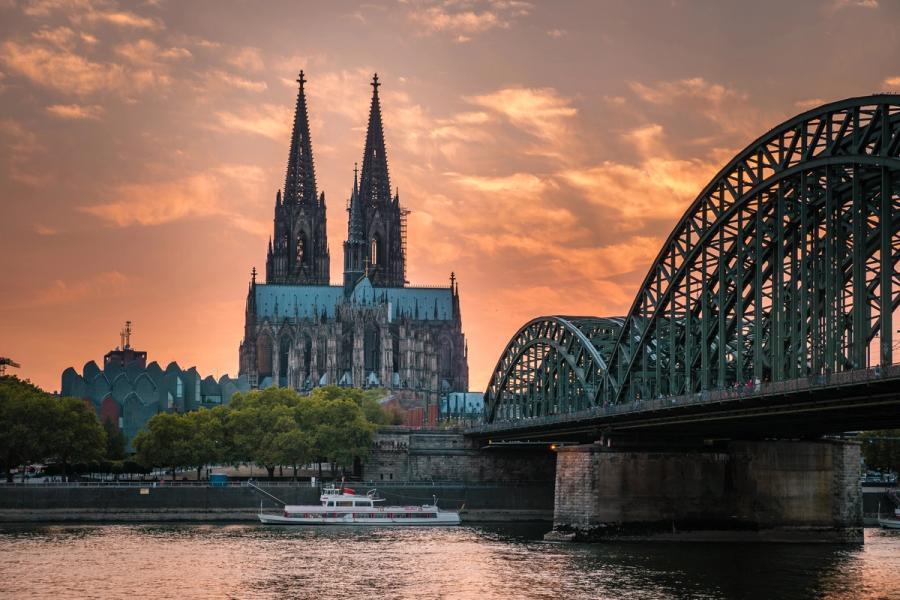
Catholic church-tax receipts in Germany reached about US$7.63 billion (€6.751 billion) in 2025, according to the German Bishops' Conference. The size of that annual income puts it high in this comparison, but it measures money collected over a year, not accumulated wealth. Receipts rose 1.9% from 2024.
The tax applies to qualifying members, not all Christians, and receipts go to the diocese where the taxpayer lives. It is therefore neither a centrally held fortune nor a valuation of church property.
2. Church of England
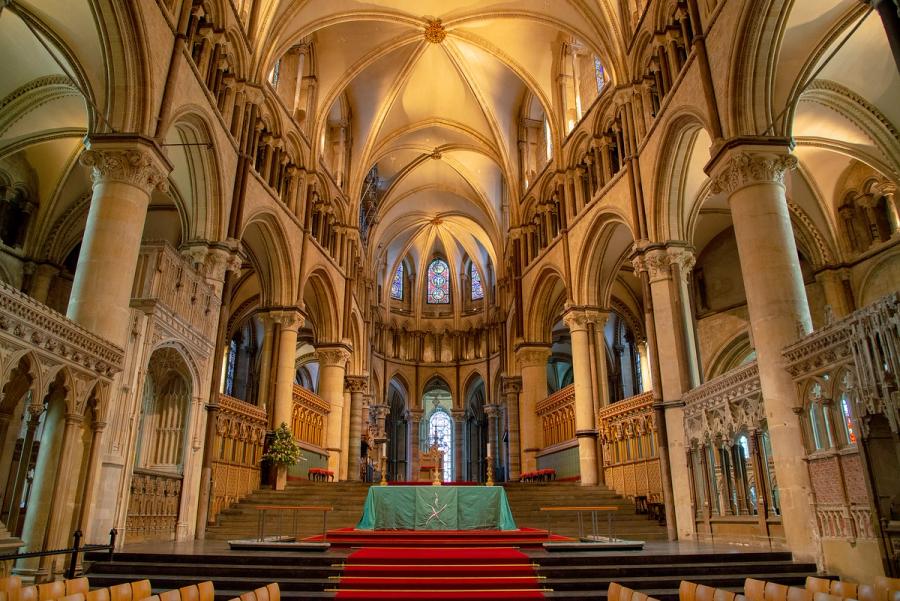
The Church Commissioners ended 2025 with an endowment worth about US$15.6 billion (£11.6 billion) to support the Church of England's mission and ministry. Their investment results show an 8% return for the year. The fund helps finance work across parishes, dioceses and cathedrals. It contributes about a fifth of the Church of England's annual running costs.
Its value does not include every parish or cathedral's finances, and it is not a balance sheet for the worldwide Anglican Communion.
1. The Church of Jesus Christ of Latter-day Saints

Ensign Peak Advisors reported US$60,816,389,385 (about US$60.8 billion) in securities for June 30, 2026, the largest quoted figure here. The SEC identifies Ensign Peak as the investment manager for the Church of Jesus Christ of Latter-day Saints. Its Form 13F, filed on August 14, 2026, provides a view of specified holdings in that portfolio.
The precision of the dollar total does not make it a complete account of church wealth. A 13F does not cover all assets and liabilities, so this filing alone cannot establish the church's net worth or prove a worldwide first-place ranking.