St. Peter’s Basilica leads our selection of the world’s most famous churches, with a dome designed by Michelangelo and a building that took 120 years to complete. These ten landmarks are known for different reasons: royal coronations, pilgrimage, extraordinary architecture, and the survival of buildings through fire and rebuilding.
The list spans rooftop terraces, royal ceremonies and sacred sites beneath church floors, from Milan’s spires to Bethlehem’s grotto and the restored Notre-Dame.
How we chose these
The countdown reflects our editorial selection of churches with enduring religious, historical or architectural significance, not a ranking by visitor numbers or a measurable fame score. We checked their histories with the churches, their custodians, museums and UNESCO, and distinguish religious traditions from documented building history.
10. Milan Cathedral, Milan, Italy
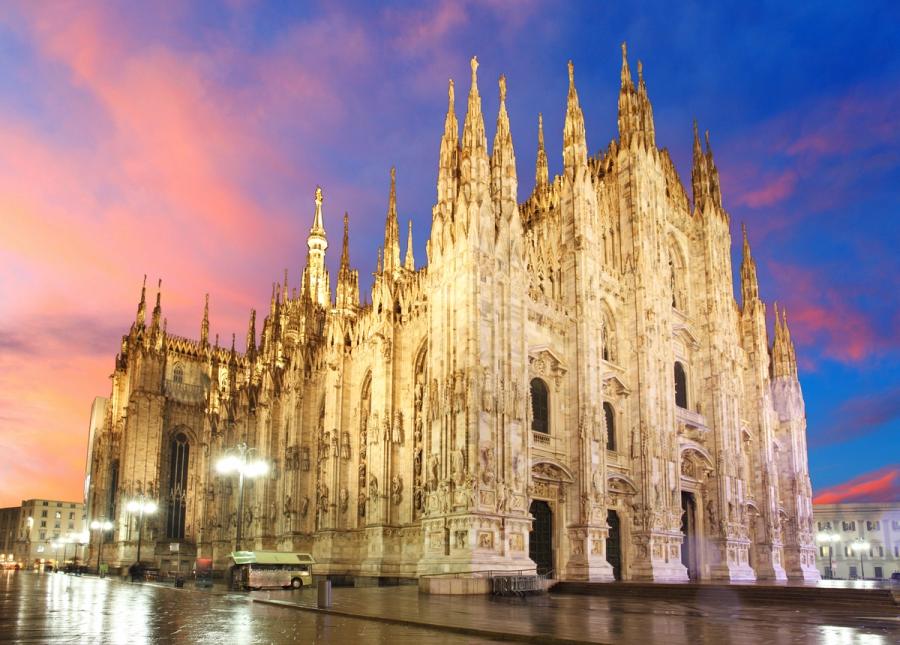
Milan Cathedral’s 135 spires and more than 3,400 statues turn its exterior into a crowd of carved figures and pointed stonework. The rooftop terraces let you move among details that are difficult to make out from the square below. Stairs or an elevator bring visitors up to walkways beside the spires, high among its Gothic architecture.
Above it all stands the Madonnina, the gilded copper figure of Mary placed on the main spire in 1774.
9. St Paul’s Cathedral, London, UK
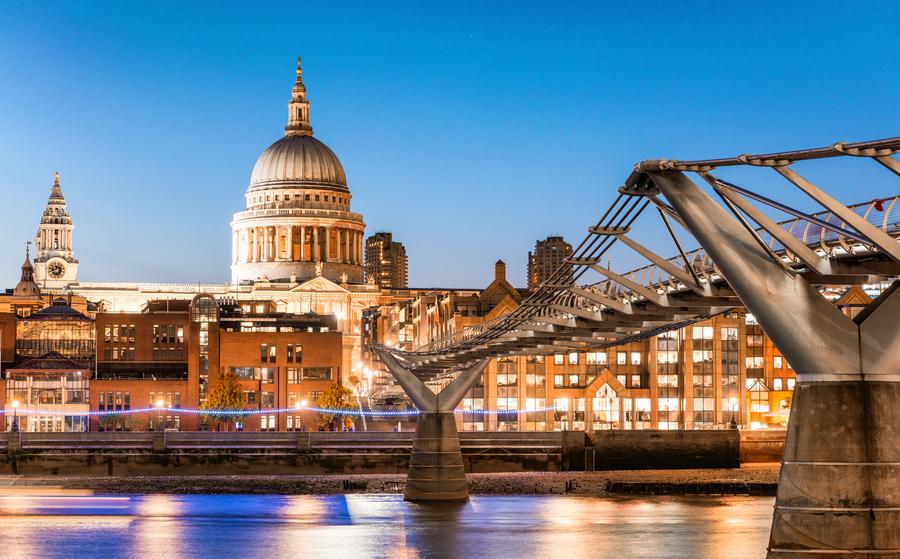
St Paul’s was formally declared complete on Christmas Day, 1711, though worship had begun there fourteen years earlier. Christopher Wren’s cathedral rose after the Great Fire of London destroyed its predecessor in 1666. Its dome has a less obvious structure beneath the familiar outline: an inner brick cone reinforced at its base with iron chains.
The building’s size helped bring a royal wedding here in 1981. Charles and Diana chose St Paul’s over Westminster Abbey partly because it could hold more guests. The longer route between the cathedral and the royal residences also gave more people a chance to see them.
8. Sagrada Família, Barcelona, Spain
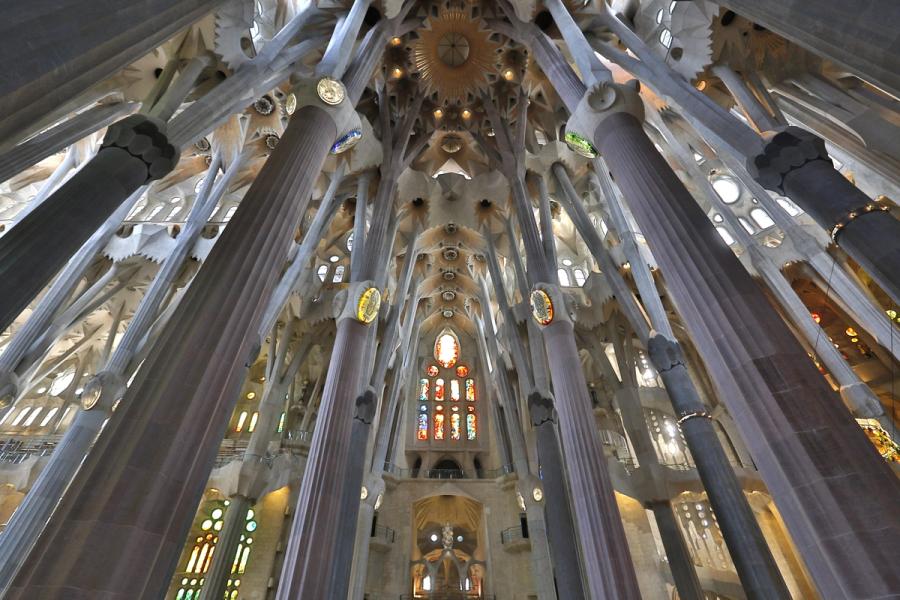
The Sagrada Família’s tower of Jesus Christ reached its full height of about 566 feet (172.5 m) on February 20, 2026, 144 years after work on the basilica began. The final upper arm of its cross completed the tower’s exterior. That milestone did not mean the whole church was finished: interior work in the tower was scheduled to continue through 2027 and 2028.
Antoni Gaudí took over the project in 1883, a year after construction started. Inside, columns divide into branches beneath the vaults, while colored glass lights the stone around them.
7. Saint Basil’s Cathedral, Moscow, Russia
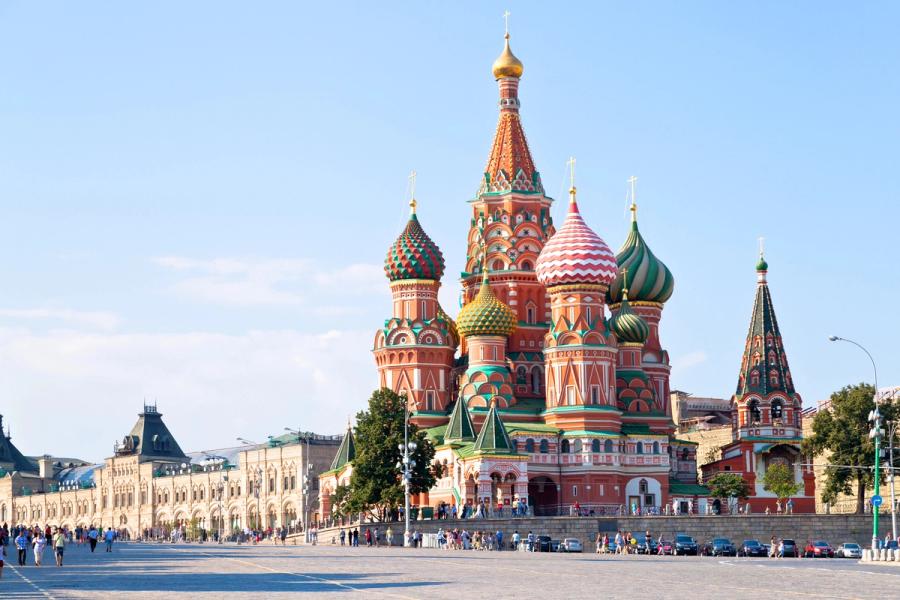
Behind Saint Basil’s brightly patterned domes is an ensemble of eleven churches, each with its own icon screen. The original cathedral was built in 1555–1561 on Ivan the Terrible’s orders to commemorate the conquest of Kazan. Its central church is dedicated to the Intercession of the Virgin, which gives the complex its formal name.
Its familiar name comes from a later addition. A church built over the burial place of Basil the Blessed was added in 1588; another, dedicated to John of Moscow, followed in 1672.
6. Basilica of Our Lady of Guadalupe, Mexico City, Mexico
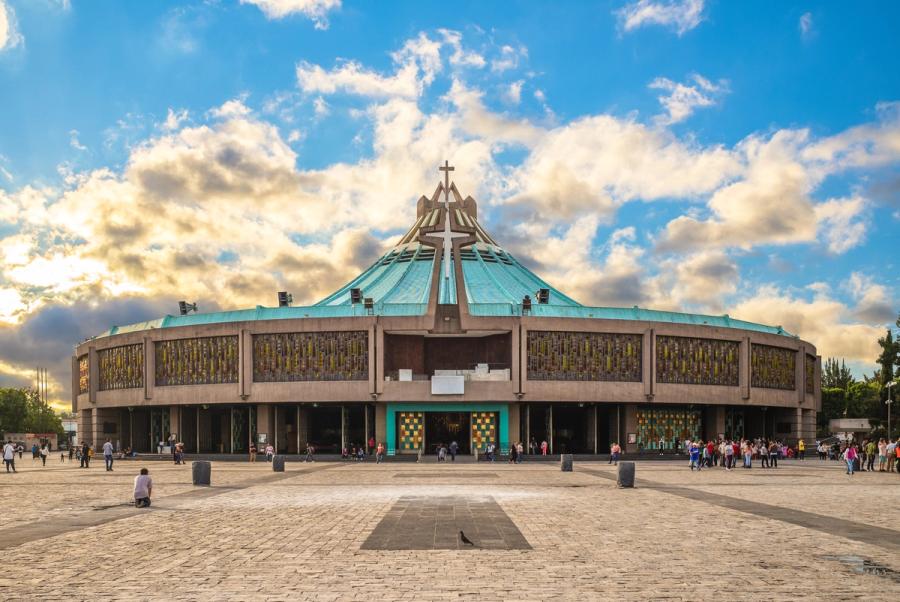
The image of Our Lady of Guadalupe moved into its present basilica on October 12, 1976, after more than 260 years in the older church nearby. The modern sanctuary’s broad, curved front and green roof look very different from the stone towers of its predecessor.
The move answered two practical problems. More space was needed for pilgrims, and unstable ground had left the old basilica in a dangerous condition. The new building’s shape allowed worshippers to see the revered image from around the interior. At this major pilgrimage destination, the design keeps attention on one object: the image traditionally associated with Juan Diego’s encounter with the Virgin Mary.
5. Westminster Abbey, London, UK
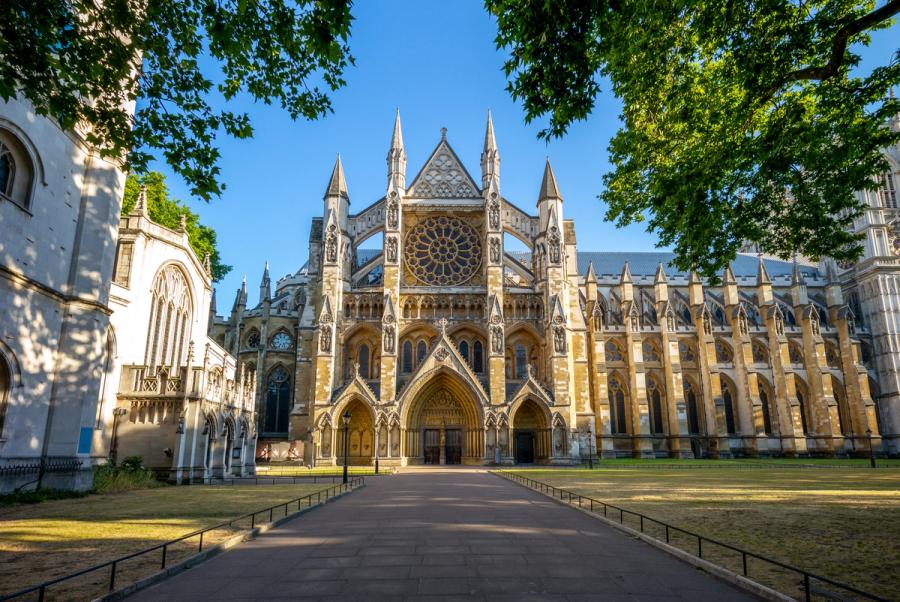
Forty reigning monarchs have been crowned at Westminster Abbey, most recently Charles III in May 2023. William the Conqueror’s coronation on Christmas Day, 1066, is the first documented ceremony here. When Henry III began rebuilding the abbey in 1245, the plan included a large ceremonial space between the choir and high altar.
One coronation required an unusual accommodation. William III and Mary II were crowned jointly in 1689, so a separate chair was made for Mary. It survives in the abbey’s Queen’s Diamond Jubilee Galleries.
4. Church of the Nativity, Bethlehem, West Bank
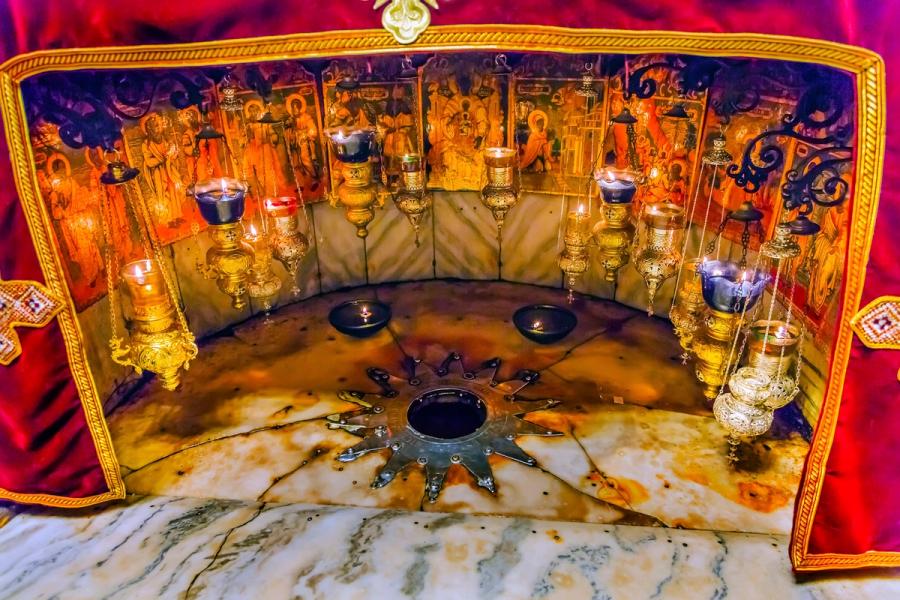
A church was first completed here in AD 339, above a site Christians had identified as Jesus’ birthplace since the second century. The present basilica largely dates from its sixth-century replacement after a fire. Below it lies the grotto that remains the focus of Christian devotion.
The building preserves traces of more than one era. Floor mosaics survive from the fourth-century church, while later generations added their own decoration and adjoining religious buildings. Among the world’s oldest churches, Bethlehem offers an unusually direct view of this layered history: an earlier church beneath a later one, both built around the same sacred place.
3. Church of the Holy Sepulchre, Jerusalem
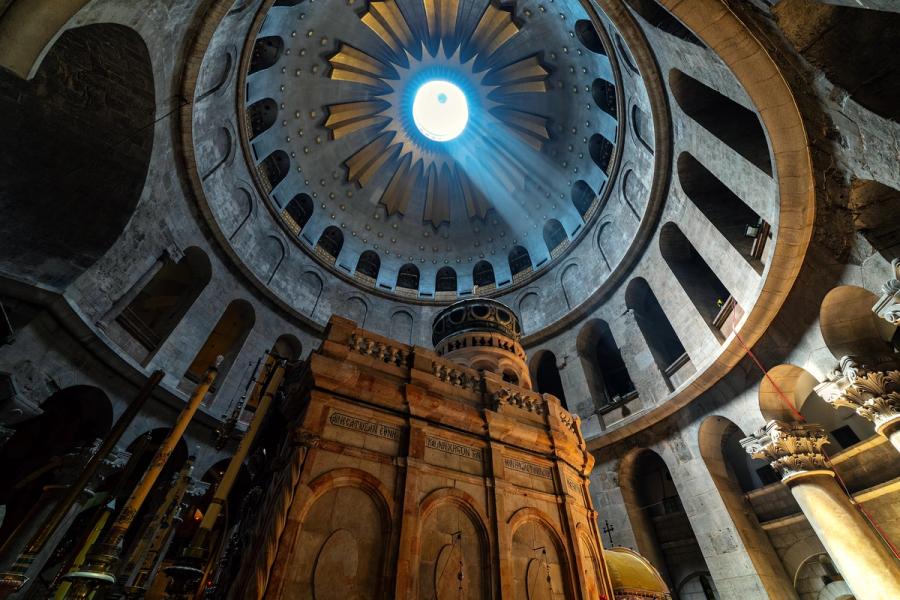
The Church of the Holy Sepulchre brings together the places Christians revere as Jesus’ crucifixion site and tomb. Constantine’s first church complex was dedicated in 335. The Crusaders later gathered its separate sacred places into a single building, a layout that still shapes the church today.
The tomb shrine stands beneath the rotunda, but the building has no single Christian custodian. Greek Orthodox, Armenian and Franciscan Catholic communities share principal responsibilities. Even opening its doors reflects a wider history: custody of the door and key belongs to two Muslim families, the Nuseibeh and Judeh families. Their role continues alongside the Christian communities’ arrangements for worship.
2. Notre-Dame Cathedral, Paris, France
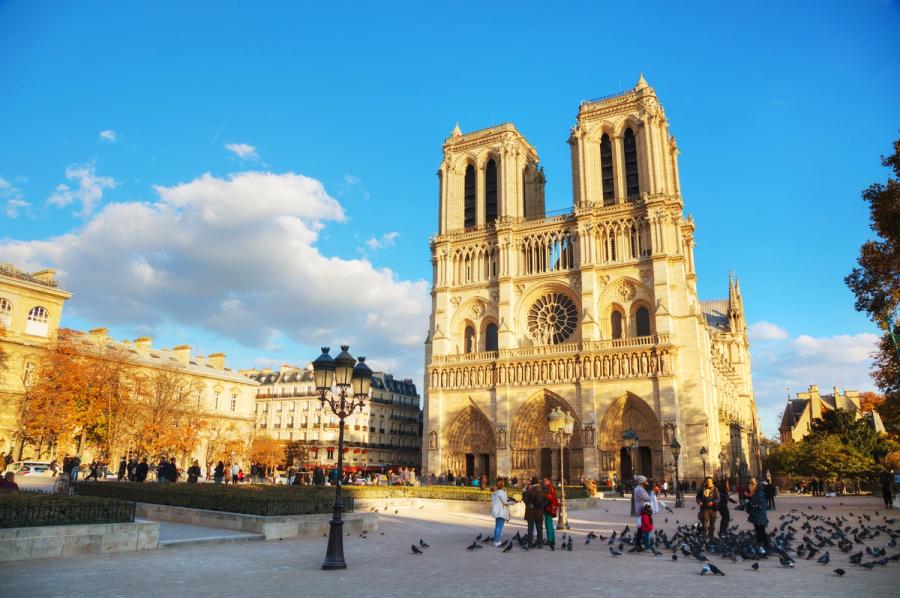
Notre-Dame reopened on December 7–8, 2024, after five years of restoration. At the opening service, the archbishop struck the closed doors with his crozier before entering. The ceremony returned worship to a cathedral whose nineteenth-century spire had collapsed in the 2019 fire.
Its carved creatures and sweeping arches have practical jobs as well as visual drama. The flying buttresses support the upper walls against the vaults’ weight, while gargoyles throw rainwater clear of the stonework.
1. St. Peter’s Basilica, Vatican City
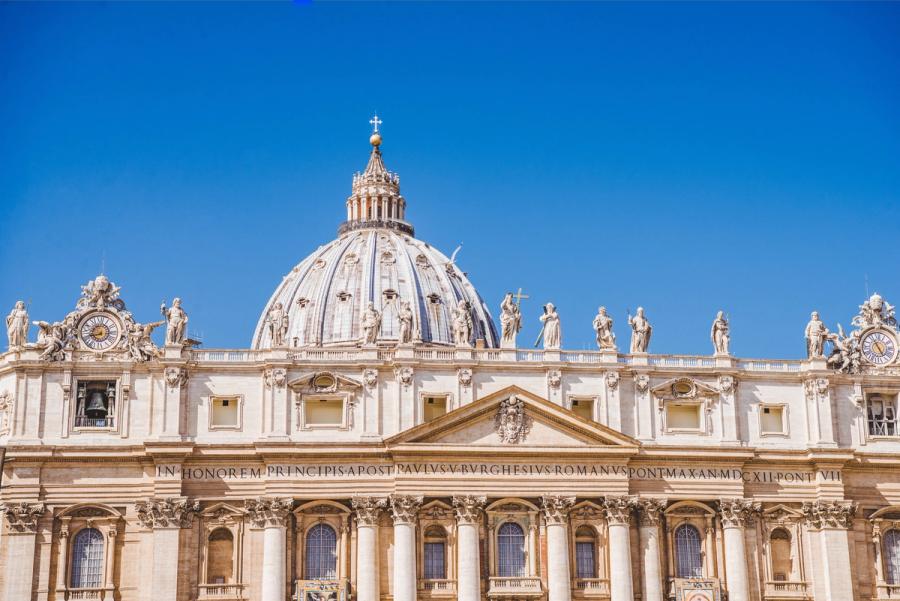
St. Peter’s Basilica took 120 years to build, from 1506 to 1626. Michelangelo designed its dome, which rises about 446 feet (136 m) above the ground. The basilica stands over the place Catholics believe Saint Peter was buried, making it a major center of pilgrimage as well as one of the world’s largest churches.
Several generations of artists shaped what visitors see. Michelangelo’s marble Pietà is inside; Bernini’s great canopy, the Baldacchino, rises over the altar. Outside, Bernini’s colonnades frame the square. For all its prominence, St. Peter’s is not Rome’s cathedral. That title belongs to the Basilica of St. John Lateran: a cathedral is the church containing a bishop’s seat.
SourcesSources are linked throughout the article. The main sources are listed below.
- Sagrada Família: February 2026 official guide — construction history, Gaudí’s role and the unfinished basilica
- UNESCO: Church of the Nativity and the Pilgrimage Route, Bethlehem — the surviving buildings and their historical layers