The superb bird-of-paradise tops our list for a transformation: a male raises his black cape and blue breast shield into a face-like display. The other nine birds have their own conspicuous features, from the shoebill’s enormous bill to the long-wattled umbrellabird’s dangling feathers. Some come into view only during courtship. Others are there all day, whether the bird is fishing in a swamp or sitting quietly on a forest branch.
How we chose these
This is our editorial selection of ten birds with striking bills, bare skin or display feathers. The countdown is a reading order, not a scientific measurement of strangeness. We explain the feeding or courtship role of a feature where research supports it; appearance alone does not tell us what it does.
10. California Condor
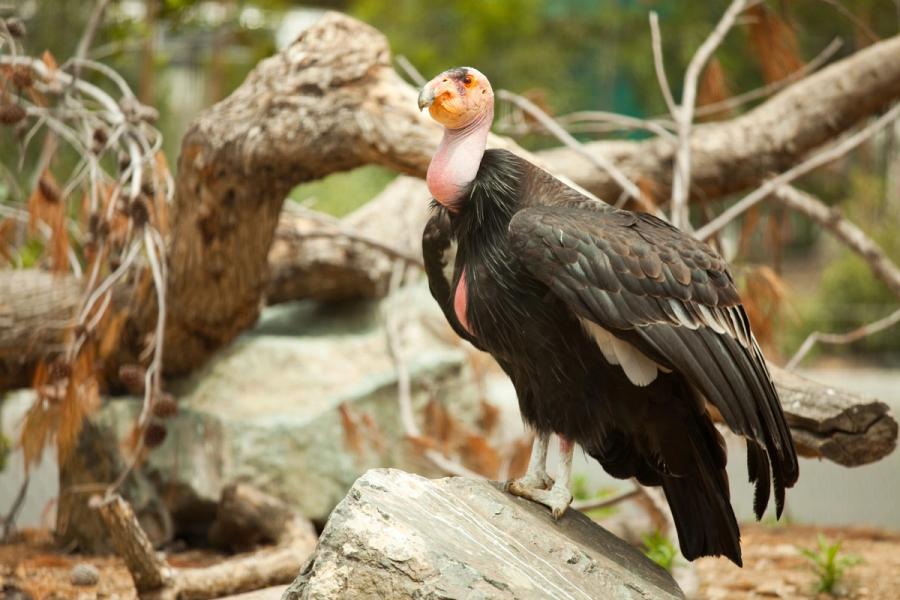
A California condor’s bare head can flush pink or orange when the bird is excited, above a ruff of black feathers. It has the scale to match that dramatic face: the US Fish and Wildlife Service gives its wingspan as about 9.5 feet (2.9 m), making it North America’s largest land bird.
This scavenger is still alive in the wild, thanks to a long-running recovery effort. The population report for December 31, 2025 counted 607 California condors: 392 wild and 215 in captivity. Wild flocks ranged across California, Arizona and Utah, and Baja California in Mexico. The separately counted Pacific Northwest flock began with Yurok Tribe releases at Redwood National and State Parks in far northern California in 2022.
9. Sri Lanka Frogmouth
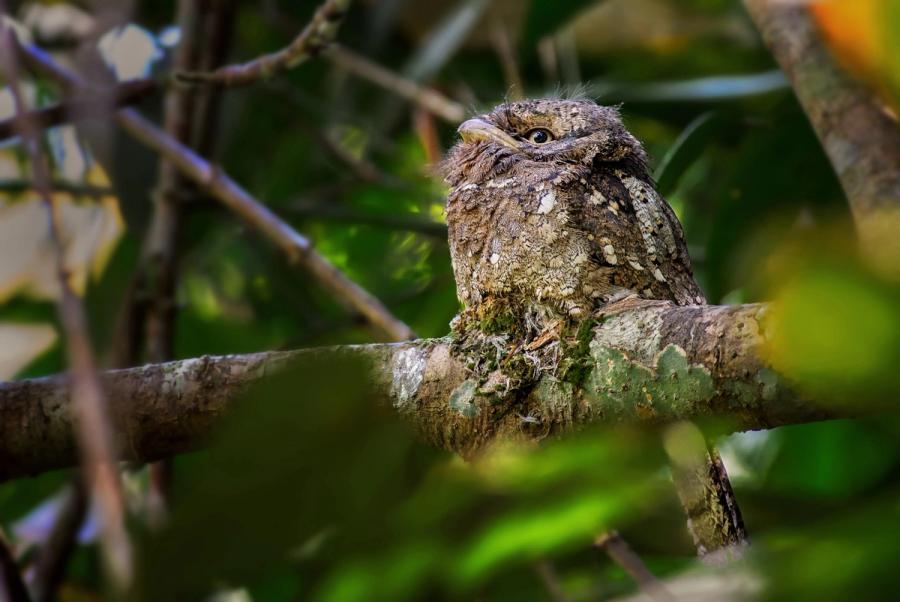
The Sri Lanka frogmouth has a broad, flat head, forward-facing eyes and a hooked bill above an unexpectedly wide mouth. Its mottled feathers make the resting bird look like part of the branch. Male birds are mainly gray-brown; females are more reddish, a difference described in field research on the species.
Despite its name, this forest bird also lives in the Western Ghats of India. It rests during the day and hunts insects at night, including beetles, grasshoppers and moths. Pairs may roost side by side, two broad heads tucked into the same patch of forest shade.
8. Long-wattled Umbrellabird
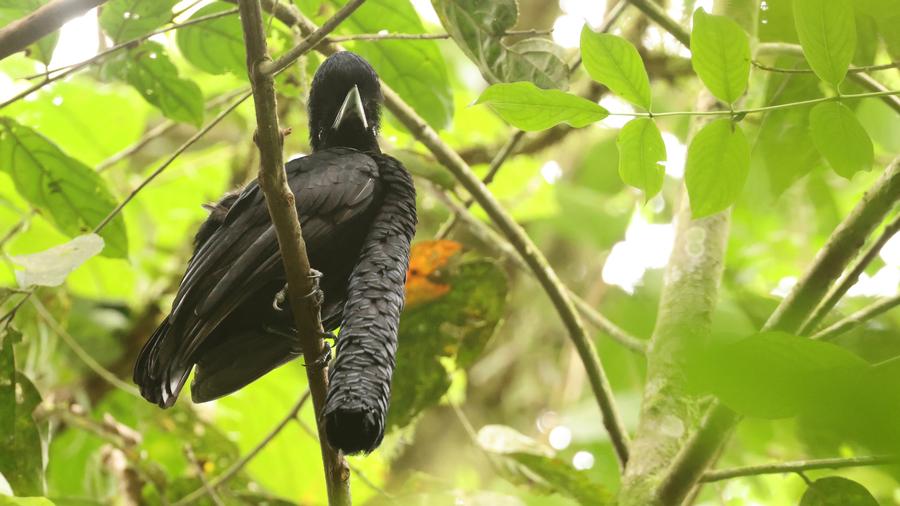
A male long-wattled umbrellabird carries a feathered wattle down the front of his chest, beneath a crest that overhangs the bill. The wattle normally measures about 11–14 inches (28–35 cm) when extended, and can stretch farther during display. Researchers observing the birds in Ecuador also recorded the opposite maneuver: the male draws it in when flying or preening.
It lives in humid forests of southwestern Colombia and western Ecuador. Males gather at display grounds called leks, where their low, booming calls carry through the forest. At Ecuador’s Buenaventura Reserve, the American Bird Conservancy describes the sound as mooing.
7. Marabou Stork
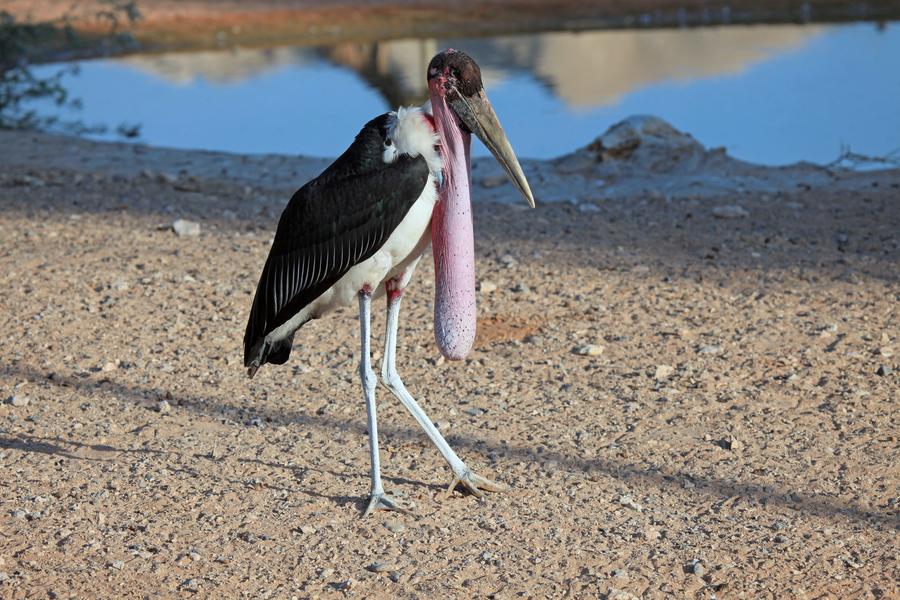
The marabou’s pink, largely bare head and neck rise from dark wings and a white chest, with a loose throat sac hanging below its heavy bill. It is an imposing bird on the ground: Woodland Park Zoo puts its height at 4–5 feet (1.2–1.5 m) and wingspan at up to 10 feet (3 m).
This African stork feeds on animal remains, but also takes fish and insects. Woodland Park Zoo credits its rapid consumption of carcasses with helping prevent the spread of disease.
6. Shoebill
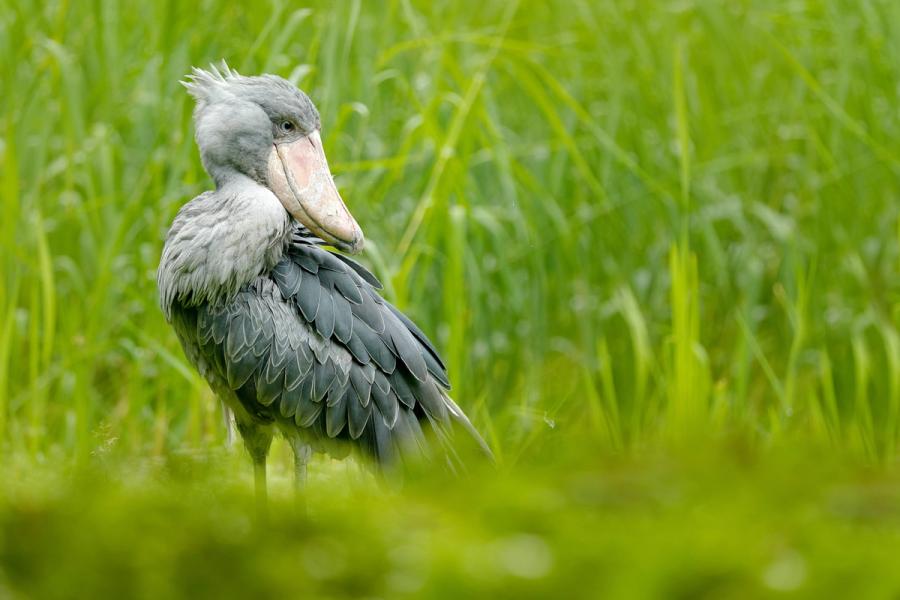
The shoebill’s broad bill ends in a sharp hook and measures more than 7 inches (19 cm) long, according to San Diego Zoo. On a bird standing 3.5–4.5 feet (110–140 cm) tall, it still dominates the head. It belongs in any discussion of unusual bird beaks, but its shape is only half the story.
In the wetlands of central and eastern Africa, a shoebill can stand motionless before suddenly pitching its whole body forward, bill first, to seize prey. Fish such as lungfish, catfish and tilapia make up much of its diet. It hunts mainly by day. The bill is also a sound-maker: shoebills clap it to drive away intruders and attract mates.
5. Magnificent Frigatebird
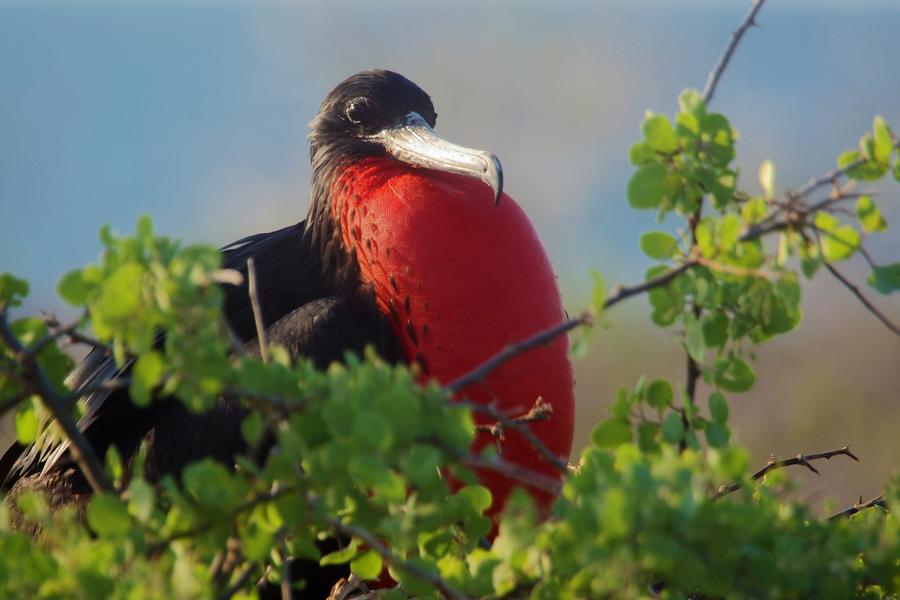
A breeding male magnificent frigatebird inflates his red throat pouch into a balloon beneath his bill. Against black feathers, the color is hard to miss. Females have a white breast instead of the male’s red display pouch.
Along coasts of the southern United States, Mexico and the Caribbean, these seabirds rarely land on the water. Rather than plunge beneath the surface, they snatch prey from it and chase other seabirds until the victims release food. The bird with the conspicuous red balloon at a colony is an agile food thief once airborne.
4. Andean Cock-of-the-rock
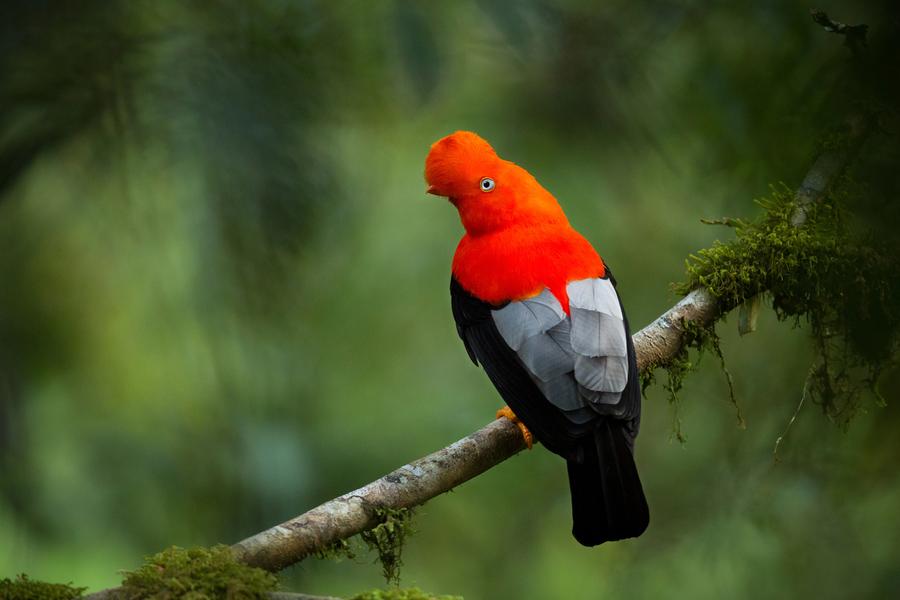
The male Andean cock-of-the-rock’s rounded crest almost hides his bill. Orange or scarlet plumage makes the head and chest stand out against dark wings, giving this cloud-forest bird one of the most distinctive crests in the bird world. Its home stretches along the Andes from Venezuela to Bolivia, according to the American Bird Conservancy.
At a lek, males display together while females choose a mate. The nesting work follows a different pattern: a female builds a cup of mud and plant material on a rocky surface and raises the young herself. The bright male supplies the spectacle, but it is the nesting site that explains the “rock” in the bird’s name.
3. Ribbon-tailed Astrapia
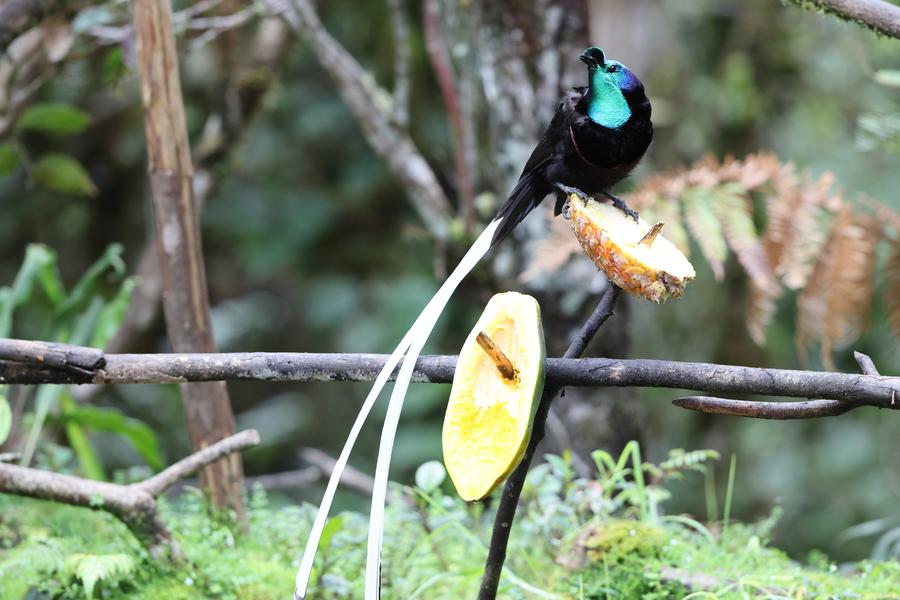
Two narrow white feathers trail far behind the male ribbon-tailed astrapia, a striking contrast with his dark body and iridescent head. The Australian Museum gives the male’s total length as about 4 feet 1 inch (125 cm), including the tail.
This bird-of-paradise lives in the high mountain forests of Papua New Guinea. Males display together, jumping between branches with their long tails raised and arched.
2. King of Saxony Bird-of-Paradise
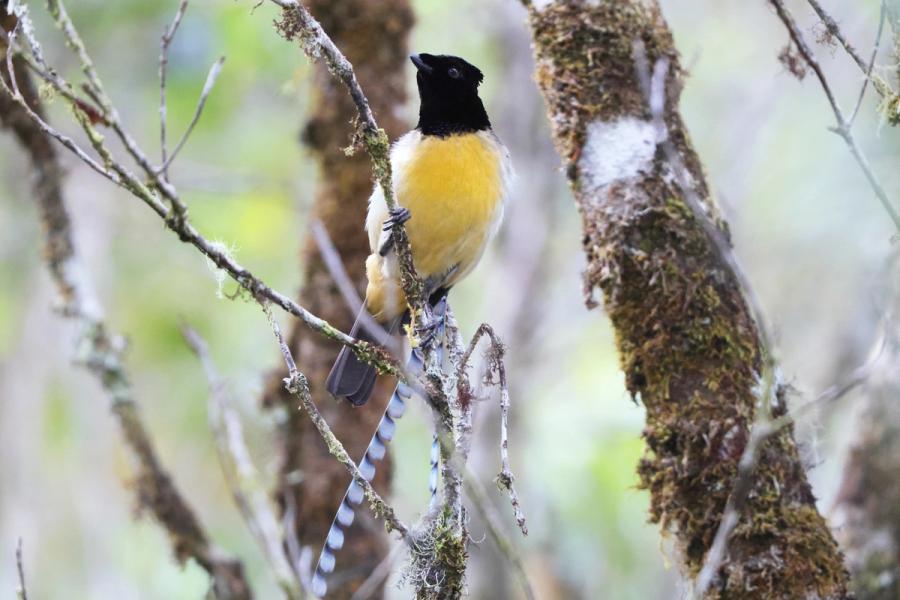
The King of Saxony bird-of-paradise wears two scalloped head plumes that look almost like strips of blue enamel. The male’s body measures about 8.7 inches (22 cm), excluding those ornaments, according to the Australian Museum. The plumes can reach up to twice his body length, as Cornell’s Birds-of-Paradise Project footage explains.
In New Guinea’s mountain forests, males sing from regular display perches. When a female approaches, a male can move to a vine and bounce beneath her while waving the plumes above his head.
1. Superb Bird-of-Paradise
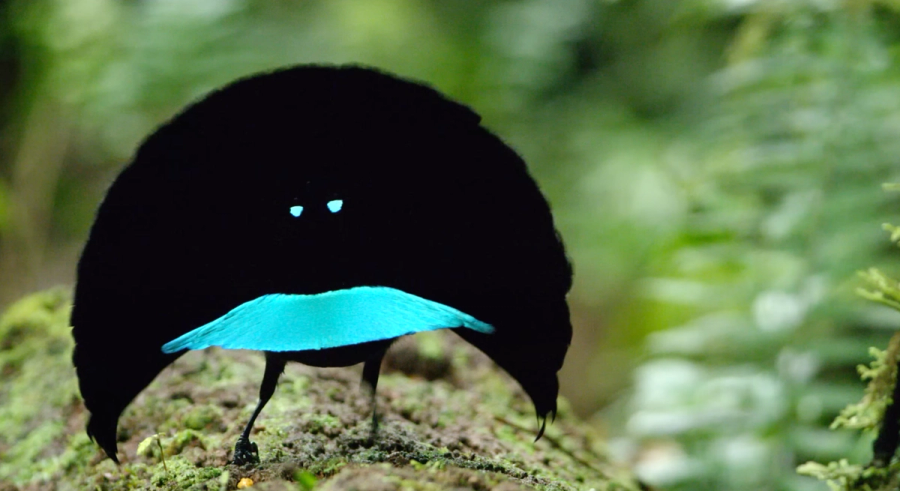
A male superb bird-of-paradise raises his black cape and spreads a brilliant blue breast shield until his outline becomes a face-like shape. The two blue “eyes” are feather ornaments, not his actual eyes. Yet the familiar display has more than one form: Scholes and Laman’s 2018 study documented differences that support recognizing separate species.
The pictured bird is the Vogelkop Lophorina (Lophorina superba). Its cape forms a crescent with pointed tips, and the downward-curving blue shield gives it a “frown.” The more widespread Greater Lophorina (Lophorina latipennis) forms a broad oval with a “smile.” On a display log, the Greater bounces around a female with rhythmic snaps; the Vogelkop sidesteps smoothly, snapping at a steadier beat.
SourcesSources are linked throughout the article. The main sources are listed below.
- US Fish and Wildlife Service: California Condor Recovery Program
- Cornell Lab: Birds-of-Paradise Project
- Australian Museum: Birds of Paradise
- Scholes, E., & Laman, T. G. (2018). Distinctive courtship phenotype of the Vogelkop Superb Bird-of-Paradise Lophorina niedda Mayr, 1930 confirms new species status. PeerJ 6:e4621.