Angkor Wat tops our list: Guinness World Records names it the largest religious structure on Earth, and its history of Hindu and Buddhist worship reaches back to the 12th century. These ten places show how faith can shape a temple, a city, or an entire landscape.
Some still hold daily ceremonies; others preserve traces of beliefs whose rituals are harder to reconstruct. From the Ganges riverfront to New Zealand's northern headlands, their stories offer more to notice than a beautiful view.
How we chose these
We chose places connected with living or ancient religious traditions, Indigenous beliefs, or modern spiritual practice, drawing on heritage authorities, site custodians, and research. The countdown is an editorial selection across different cultures, not a measure of spiritual importance or a promise of effects on visitors.
10. Spirits Bay and Cape Reinga, New Zealand
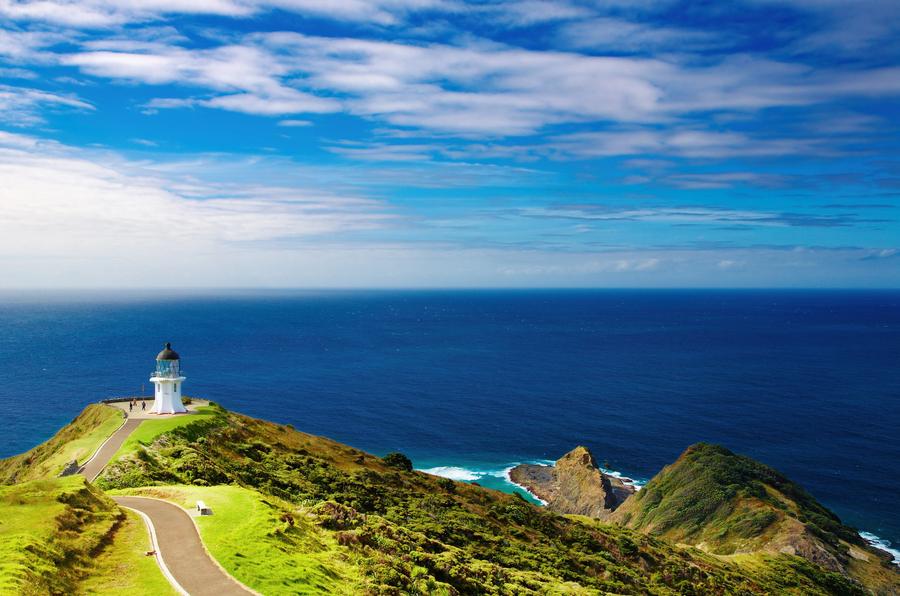
In Māori tradition, the far north of New Zealand is part of the spirits' journey after death. Spirits Bay, or Kapowairua, belongs to that landscape, but the pōhutukawa tree associated with their departure stands at nearby Cape Reinga, Te Rerenga Wairua. The Department of Conservation describes spirits descending its roots toward the sea before continuing toward their ancestral homeland.
The bay has its own story. Te Ara connects the name Kapowairua, meaning to catch the spirit, with the chief Tōhē's farewell before a journey to find his daughter. That history gives the beach and headland a meaning beyond their open ocean views. At Cape Reinga, follow DOC's request not to eat at the sacred site; drinking water is welcome.
9. Stonehenge, United Kingdom
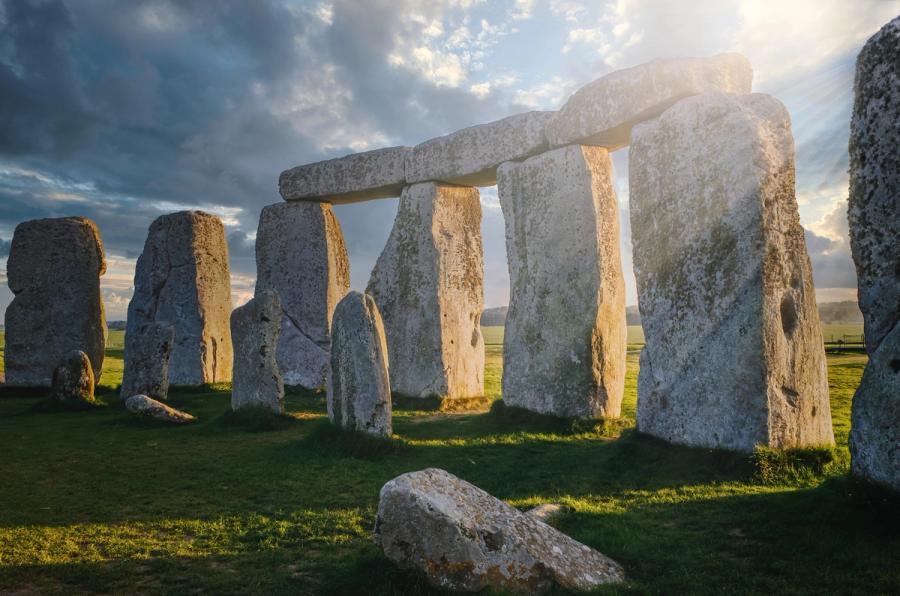
Stonehenge was built to face the turning points of the solar year: midsummer sunrise and midwinter sunset. Its builders left no written explanation of their ceremonies, but the alignment remains visible in the stones. The monument also grew over centuries. English Heritage dates the first earthwork to about 3000 BC and the main stone circle to about 2500 BC; the earlier site served as a cremation cemetery.
On Salisbury Plain in southern England, the upright stones and their horizontal lintels make a striking silhouette against the sky. One of the great architectural wonders of the ancient world, Stonehenge still draws people to modern solstice gatherings. The precise beliefs of its prehistoric builders remain harder to reconstruct.
8. Delphi, Greece
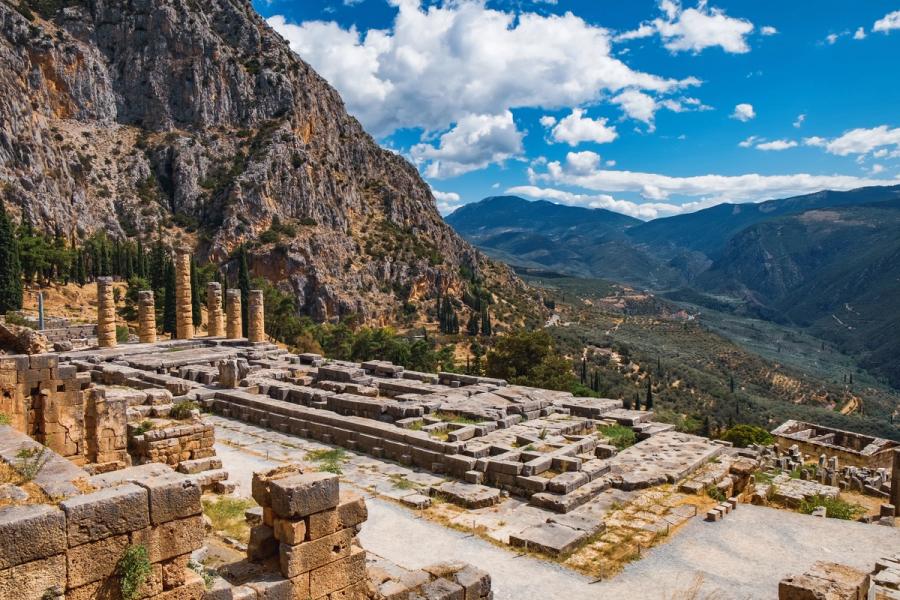
At Delphi, the priestess known as the Pythia delivered Apollo's oracle to people seeking guidance. UNESCO describes the sanctuary as a religious center with influence across the ancient Greek world. The Greeks also placed the omphalos, or navel of the world, here. In the associated myth, two eagles sent out by Zeus from opposite ends of the world met above Delphi.
The setting helps explain why the place still holds attention: Delphi climbs the slopes of Mount Parnassus, with mountain walls above and a valley opening below. Temple foundations, treasuries, and a theater survive among the ruins. Those buildings show how religious authority, offerings, and civic pride came together in one sanctuary. Walking through the site, you can trace the route past offerings toward the temple where the oracle once spoke.
7. Sedona, Arizona, USA
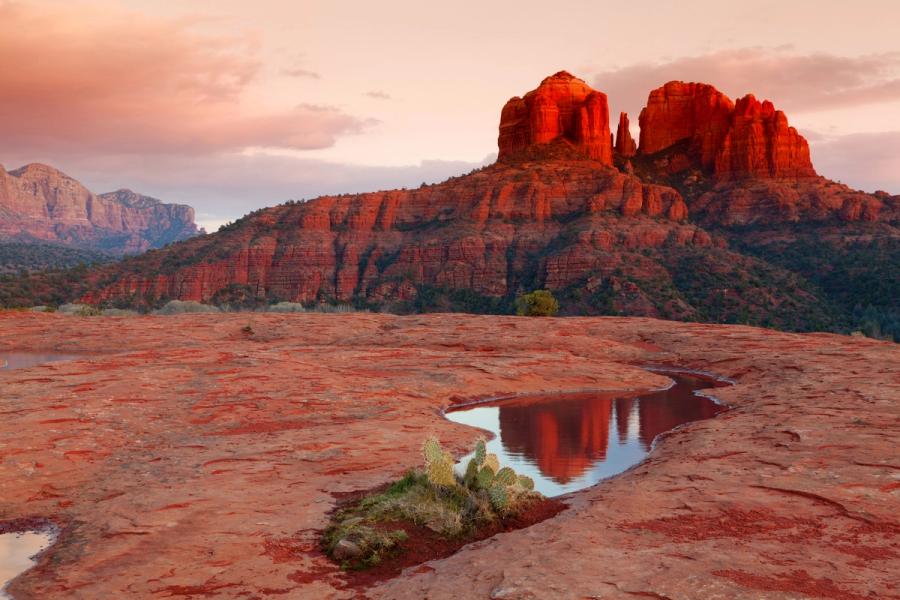
Sedona's spiritual tourism centers on its red-rock landscape and the modern New Age idea of “vortexes.” These are places believers associate with concentrated spiritual power, including Cathedral Rock and Bell Rock. The local tourism bureau credits Page Bryant with helping popularize the sites in the early 1980s.
The rocks also frame a very different place of worship. The Chapel of the Holy Cross, completed in 1956, grew from sculptor Marguerite Brunswig Staude's vision and sits among the sandstone formations. You can appreciate its architecture, join quiet reflection, or simply study the surrounding landscape without adopting vortex beliefs.
6. Nazca Lines, Peru
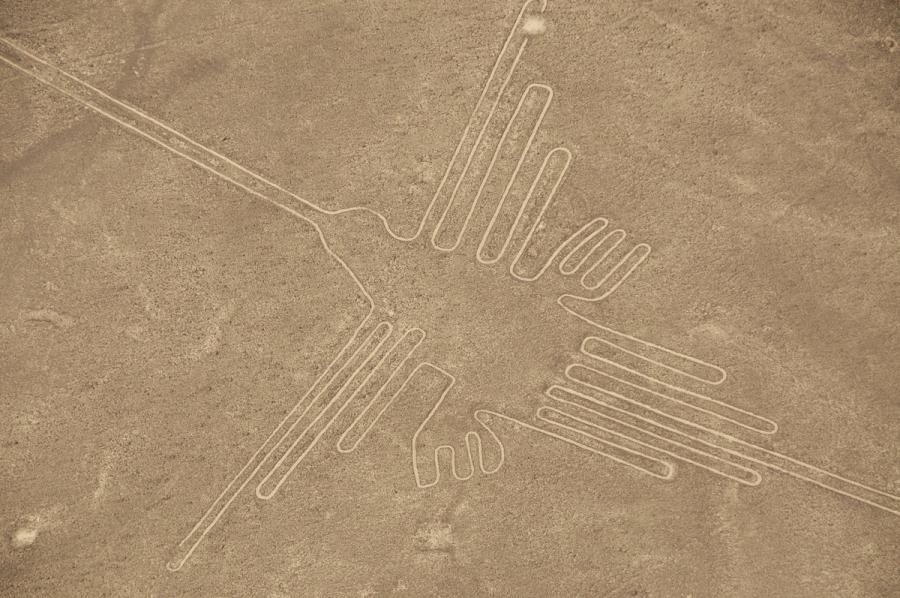
The Nazca Lines turn a stretch of Peruvian desert into an enormous field of drawings, geometric shapes, and paths. UNESCO dates the geoglyphs of Nasca and Palpa to roughly 500 BC–AD 500, spanning both Paracas and Nasca cultural traditions. Their makers removed dark surface stones to expose lighter ground. Seen from above, figures such as the hummingbird become easier to distinguish from the surrounding lines.
The landscape still produces discoveries. In 2024, Yamagata University reported 303 newly identified figurative geoglyphs from six months of AI-assisted fieldwork. The researchers linked larger line figures with community ritual and smaller figures near paths with individuals or small groups. These are interpretations of how people used the landscape, not a complete explanation of every design. The findings add human context to some of the world's most intriguing geoglyphs.
5. Ubud, Bali, Indonesia
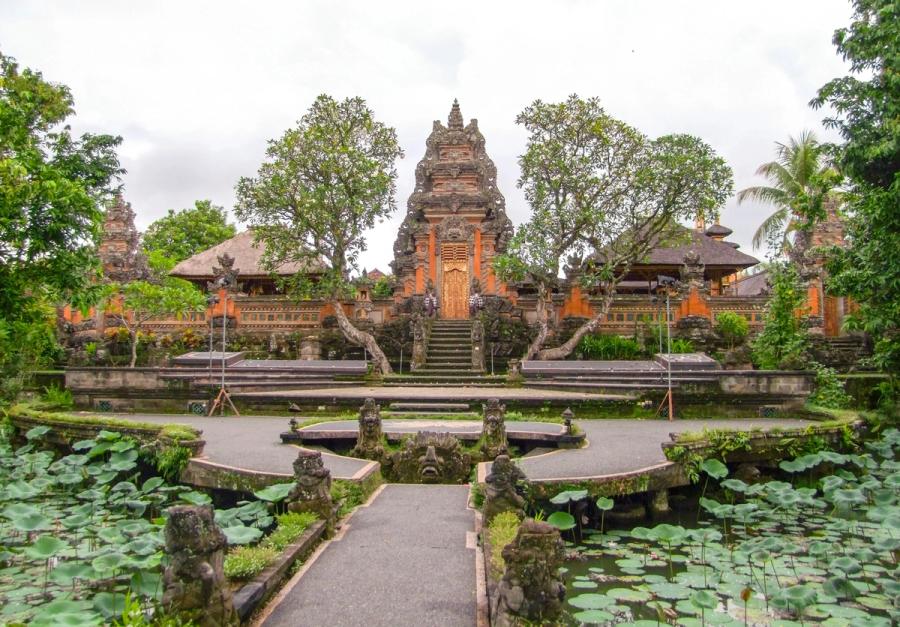
Ubud's spiritual history is rooted in Balinese Hindu tradition. At Campuhan, where two branches of the Wos River meet, Pura Gunung Lebah is associated with the sage Rsi Markandeya. Bali's temple registry recounts the tradition that he came from Java, founded a temple at the confluence, and helped establish a settlement nearby. The river junction remains central to that story of settlement and worship.
Temple visits offer a closer view of that religious life. In Ubud itself, Saraswati Temple stands behind lotus ponds. Farther out, at Tampaksiring, Tirta Empul's sacred springs are used for Hindu purification rituals. It remains a place of worship, so wear the required sarong and follow local guidance before entering a ritual pool.
4. Uluru, Australia
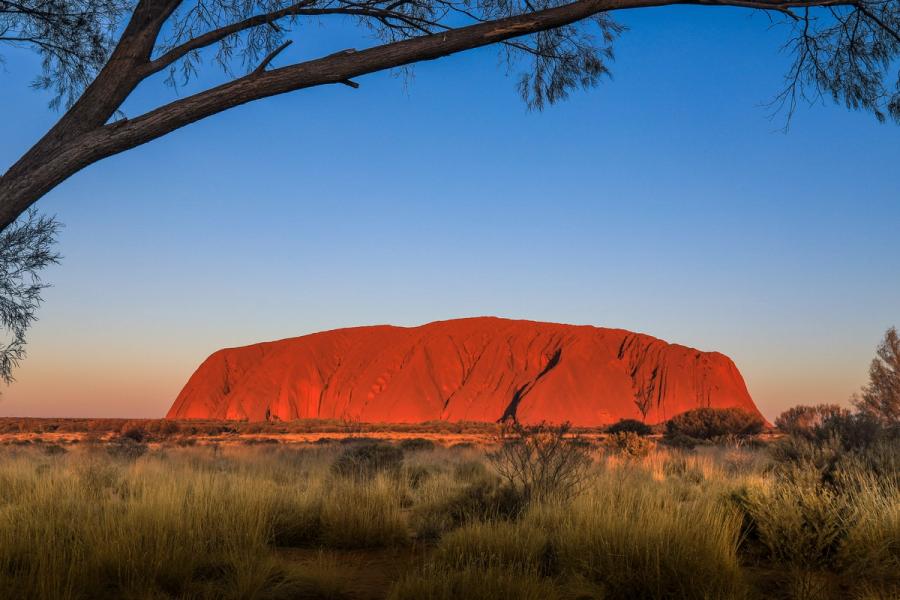
Uluru is sacred to Aṉangu, its traditional owners, whose law and beliefs, Tjukurpa, connect the landscape with ancestral beings. That relationship changed how visitors experience the rock: the climb closed on October 26, 2019, honoring Aṉangu's long-standing request. The date also marked the anniversary of the land's return to its traditional owners in 1985.
The sandstone rises 1,142 feet (348 m) above the surrounding plain, but looking up from the ground gives a different sense of it than treating the summit as a goal. The base walk runs about 6.6 miles (10.6 km), passing changing rock faces and vegetation. Follow the park's photography guidance around culturally sensitive areas, where signs ask visitors to put cameras away. A sunset view from a designated viewing area lets you watch the colors change while respecting those boundaries.
3. Varanasi, India
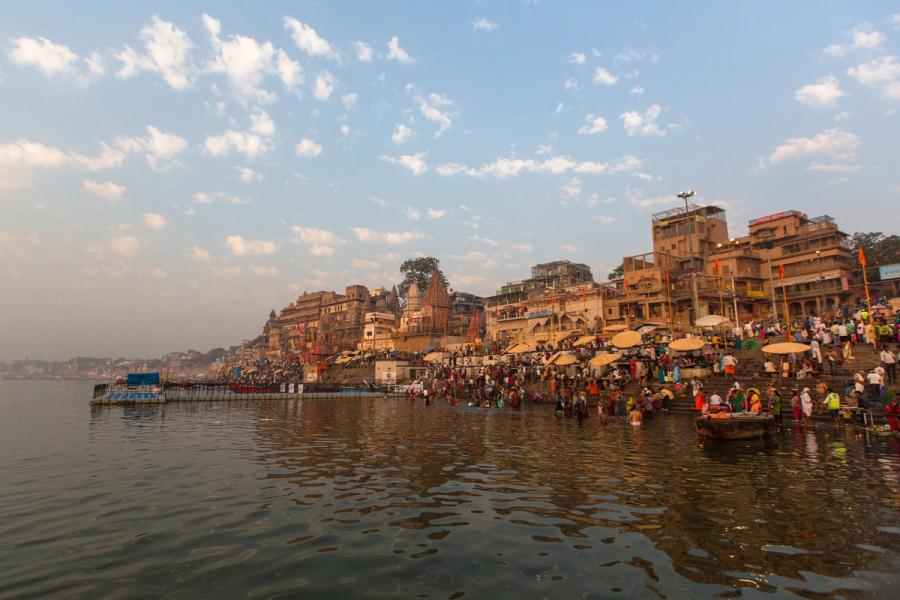
Varanasi's spiritual life unfolds along the Ganges, where ghats—steps leading down to the river—serve bathing, prayer, and funeral rites. Also called Kashi, the city holds a special place in Hindu belief: dying here is associated with moksha, liberation from the cycle of rebirth. That belief helps explain why the riverfront is both a pilgrimage destination and a place where families come to mourn.
Different ghats have different roles. Manikarnika is a major cremation ground, while Dashashwamedh Ghat's evening Ganga aarti brings lamps, prayer, and crowds to the water's edge. A boat view reveals the long line of steps and buildings, but the rituals are people's religious lives, not a performance arranged for visitors. Give mourners space and avoid photographing cremations. The city's significance lies in those continuing practices as much as in its age.
2. Machu Picchu, Peru
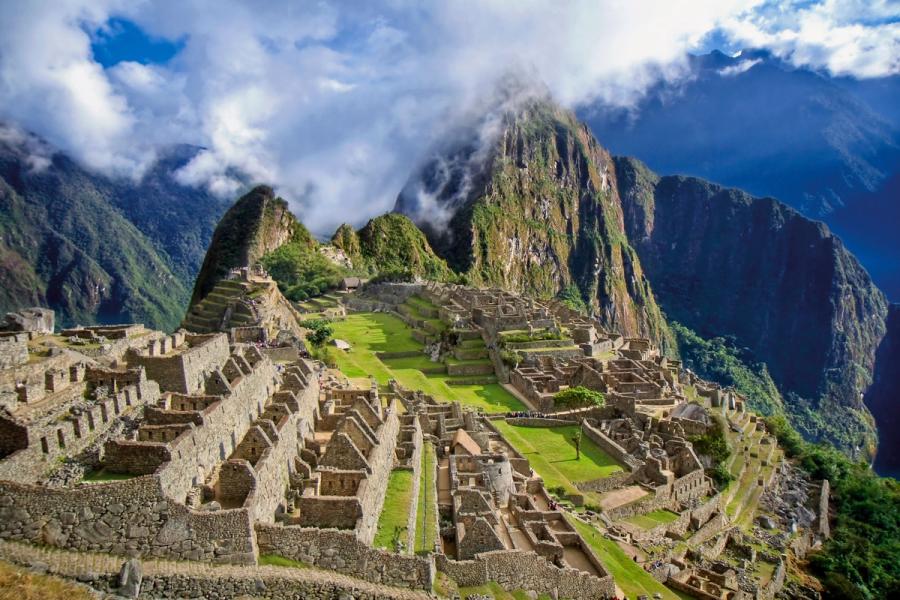
Machu Picchu brings Inca religious architecture into a steep Andean landscape. UNESCO describes the 15th-century settlement as a center with religious, ceremonial, astronomical, and agricultural functions. Its roughly 200 structures occupy a ridge above the Urubamba River, with terraces and stone buildings fitted to the mountain.
Among these ancient ruins, the Temple of the Sun and Temple of the Three Windows were dedicated to Inti, the Inca sun deity, according to Peru's Ministry of Culture. The site also separates farming terraces from residential areas, with a large square between them. Check the official route guide before booking, since routes offer different views of the sanctuary.
1. Angkor Wat, Cambodia
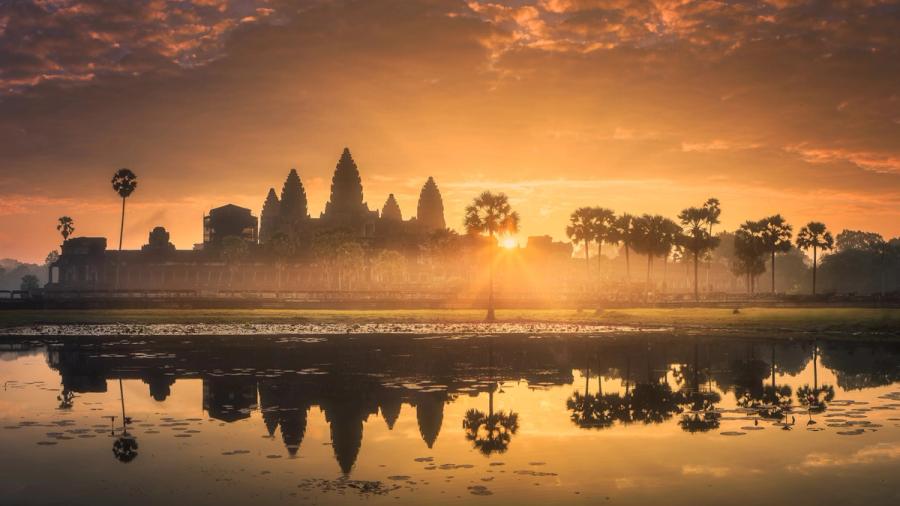
Angkor Wat holds Guinness World Records' title for the largest religious structure, covering about 402 acres (162.6 hectares). Built in the early 12th century under King Suryavarman II, it was dedicated to Vishnu before becoming a Buddhist place of worship. Its towers represent Mount Meru, the home of the gods in Hindu cosmology, giving the famous skyline a religious meaning as well as an architectural one.
Sunrise across the reflection pools is only the beginning. Inside, galleries of bas-reliefs include the Churning of the Ocean of Milk, while APSARA's account of the temple traces its later life as a Buddhist pilgrimage site. Those layers make it one of the most compelling temples to explore. Allow time for the carved stories and places of worship, and dress respectfully: Angkor Wat is more than the image on Cambodia's flag.