Female orchid mantises lure pollinating insects with their flowerlike appearance, while female eclectus parrots wear red and blue plumage beside green males. These beautiful female animals show how differently color, shape and size can develop in the two sexes.
Not every female looks different from her male counterpart. Clouded leopards share their patterned coats, and both male and female mandarinfish have brilliant colors. Here are ten animals whose females deserve a closer look.
How we chose these
Beauty is a matter of taste, so these numbers are an editorial display order, not a scientific ranking. We chose animals for their colors, patterns and distinctive shapes, using zoo, museum, wildlife-agency and research sources to explain the females' appearance. Where the sexes look alike, we say so.
10. Eclectus Parrot
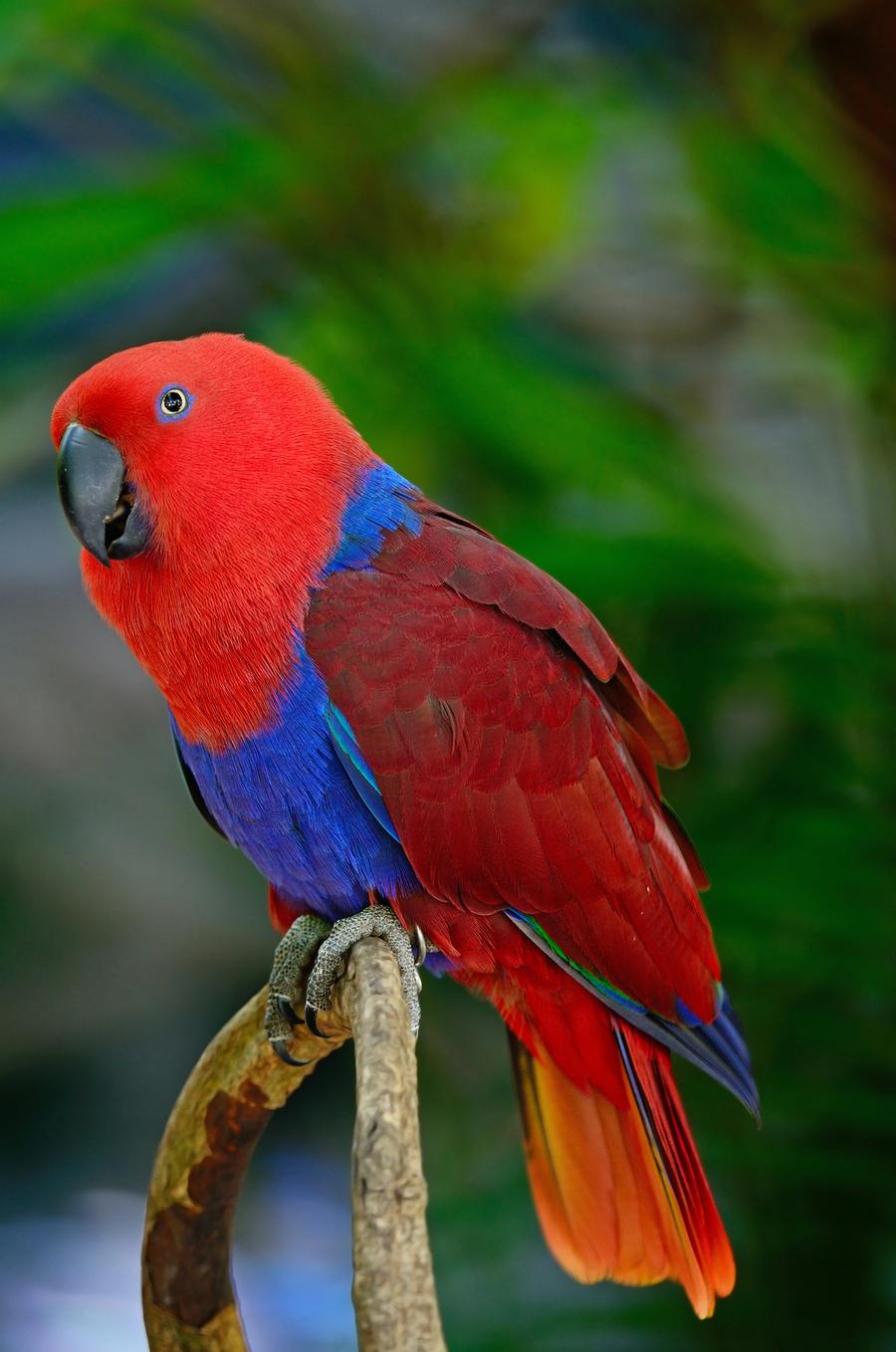
Female eclectus parrots have vivid red plumage, blue or purple areas and a black bill, making a striking contrast with the predominantly green males. The Australian Museum describes a violet-blue band across the female's belly and blue around her eye. The difference is so pronounced that early observers mistook males and females for separate species, as Taronga Zoo explains.
Eclectus parrots live in rainforest canopies, feeding on fruit, nuts, seeds and blossoms. Females nest in deep hollows in tall trees and incubate the eggs, with both parents caring for the chicks. Their contrasting plumage makes this group an especially memorable example among beautiful parrot species.
9. Southern Elephant Seal
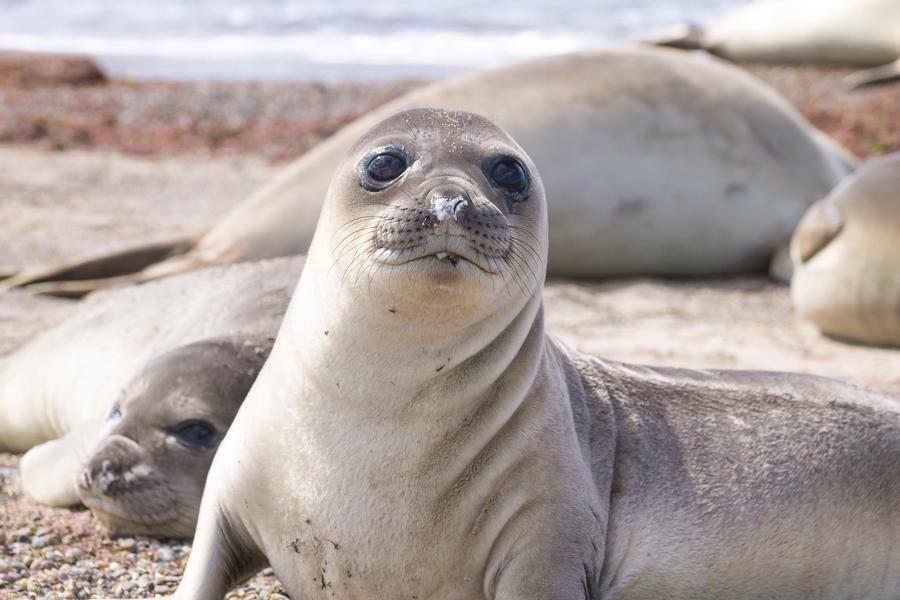
A female southern elephant seal has large dark eyes and a rounded face, without the mature bull's trunklike nose. She is much smaller, too: the Australian Antarctic Program gives females a weight of about 660–1,980 pounds (300–900 kg) just before birth, compared with up to 6,600 pounds (3,000 kg) for adult males. The species, Mirounga leonina, ranges around the Southern Ocean and breeds on sub-Antarctic islands and coasts, including Argentina's Península Valdés.
Females come ashore to have a single pup and stay beside it through a short, intensive nursing period. Pups are weaned after about three to four weeks. After breeding, mothers return to the ocean to feed on squid and fish. Females usually forage in open water, sometimes traveling thousands of miles between breeding beaches and feeding areas.
8. Panther Chameleon
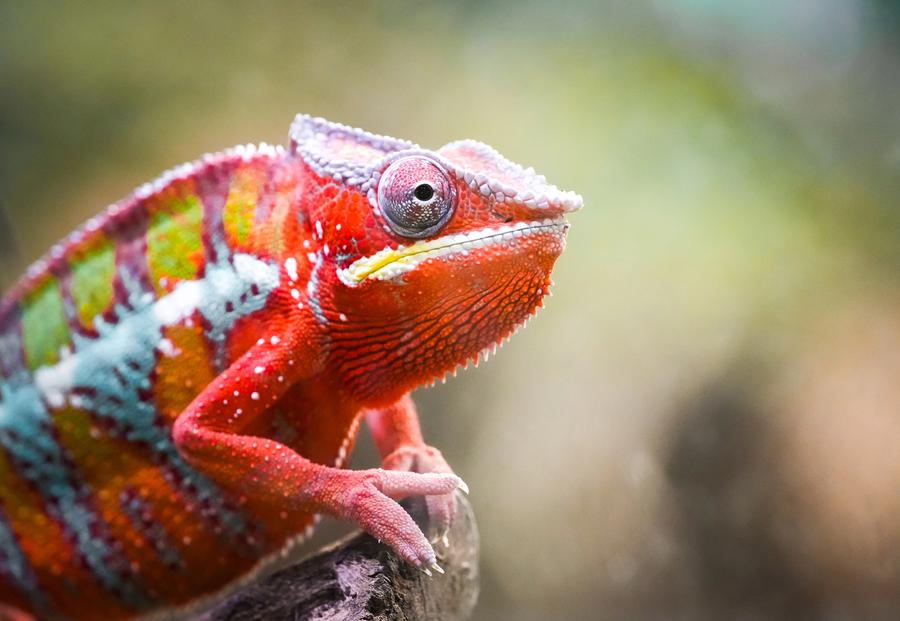
Female panther chameleons usually wear softer pink or pale-green colors than the more vividly patterned males. The intense red and green in the photo above are typical of males; females are also smaller. Native to Madagascar, this species shows substantial color variation between places, so there is no single palette shared by every individual. Animal Diversity Web describes the female's relatively subdued colors and the changes associated with reproduction.
A female that has mated can develop dark coloration with orange markings, signaling that she is unreceptive to another male. Color therefore carries information as well as helping make chameleons such interesting color-changing animals. Her curled, gripping tail and clasping feet help her move along branches, while independently moving eyes let her scan her surroundings. These details are just as distinctive as the changing skin colors.
7. Blue Poison Dart Frog
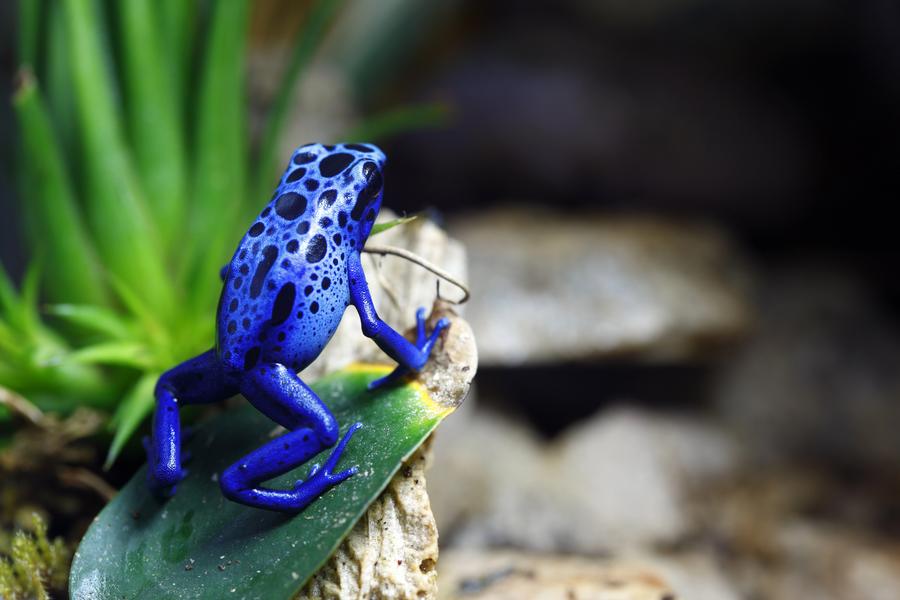
Blue poison dart frogs wear vivid blue skin scattered with black spots. Females are usually larger and rounder than males, averaging about 1.8 inches (4.5 cm) long, while males have larger toe tips. Toronto Zoo describes these differences; the blue coloring itself belongs to both sexes. Once called Dendrobates azureus, this frog is now treated as the azureus color form of Dendrobates tinctorius.
Its wild home is in forest patches within southern Suriname's Sipaliwini savanna. These frogs are active by day, moving among leaf litter and rocks near streams. The National Aquarium explains that their skin toxins deter predators and that parents carry newly hatched tadpoles to small pools. Their warning colors offer another example of the defenses used by poisonous animals.
6. Mute Swan
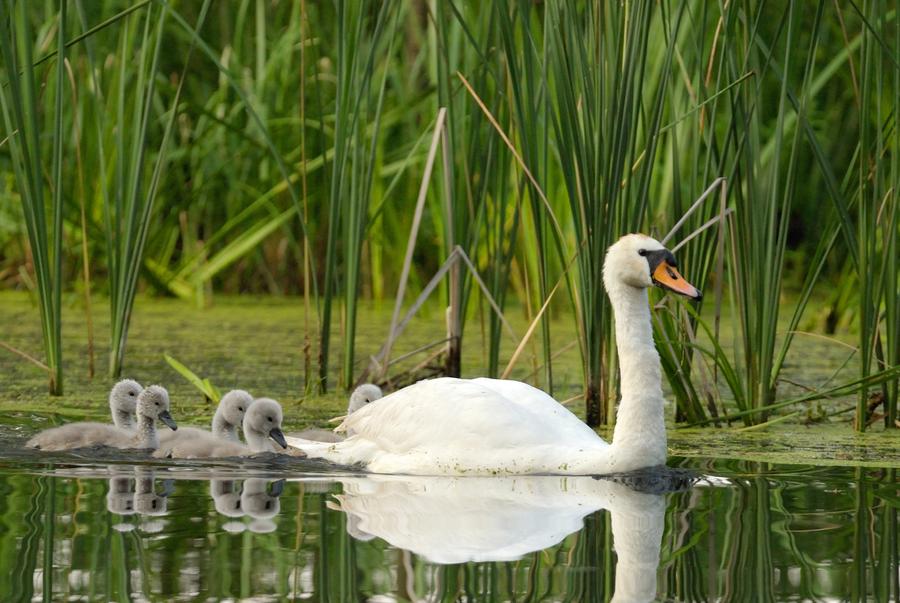
Female mute swans share the males' white plumage, curved necks and orange bills with black markings. One useful difference is the knob at the base of the bill: it is smaller in females, especially when the male's knob swells during breeding. Cornell's identification notes explain why the sexes can be difficult to distinguish at other times of year.
A swan's long neck is useful beneath the surface as well as striking above it. Mute swans reach down for aquatic plants, sometimes tipping forward with their tails raised. They form long-term pair bonds, but these are not an unbreakable lifetime rule: a female may find another partner after her mate dies. Their appearance and family life are shared features, rather than qualities exclusive to females.
5. Black-backed Dwarf Kingfisher
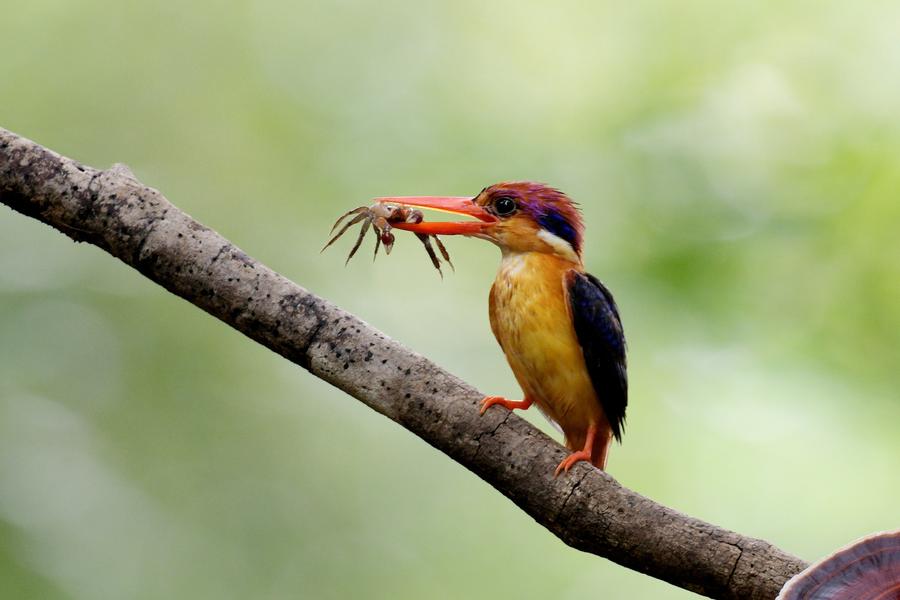
Female black-backed dwarf kingfishers are as brilliantly colored as males, with orange-yellow underparts, a lilac-tinged crown and rump, and a red bill. At only about 5–5.5 inches (12.5–14 cm) long, they pack a remarkable range of colors into a tiny body. The Bird Society of Singapore's identification account describes the dark blue-black back that helps distinguish this bird from the similar rufous-backed species.
This is Ceyx erithaca, a bird of the Indian subcontinent and mainland Southeast Asia. BirdLife treats it separately from the rufous-backed dwarf kingfisher; the two were formerly grouped under the name Oriental dwarf kingfisher. Forests and wooded areas provide its habitat, and some populations migrate south. Its jewel-like colors belong to both sexes, so plumage alone does not identify a female.
4. Clouded Leopard
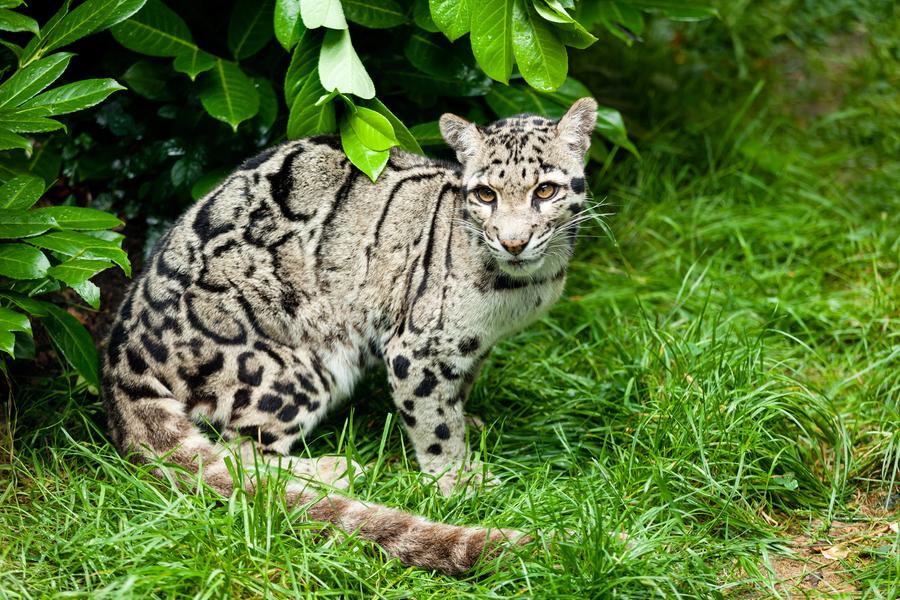
Female clouded leopards have the same large, dark-edged, cloud-shaped markings as males, but a smaller build. Their long tails and broad paws suit a life that includes climbing through forest trees. The Smithsonian's National Zoo describes their ability to climb down trunks headfirst, as well as their unusually long canine teeth relative to skull size. The coat's bold pattern is shared by both sexes.
The mainland clouded leopard, Neofelis nebulosa, lives from the Himalayan foothills through mainland Southeast Asia. The IUCN Cat Specialist Group lists it as Vulnerable and distinguishes it from the Sunda clouded leopard of Borneo and Sumatra. Females give birth to litters of one to five cubs, usually two or three. Forest loss and hunting threaten these elusive cats, whose movements in the wild remain difficult to study.
3. Mandarinfish
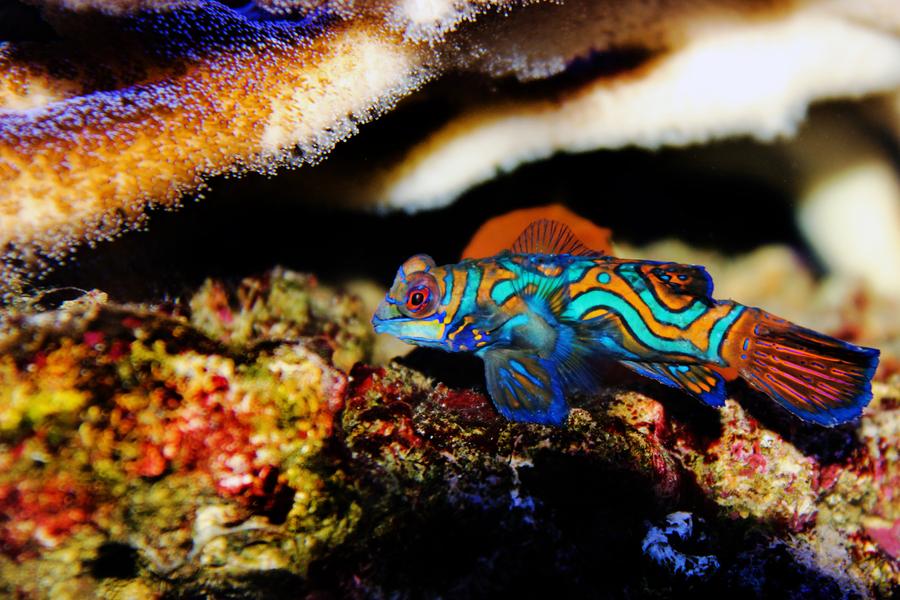
Female mandarinfish have the same rich blue, orange and yellow patterns that make males so eye-catching. They are smaller and lack the male's elongated first dorsal spine, rather than simply being a dull-colored version of him. Animal Diversity Web describes these differences in Synchiropus splendidus, a small fish found around reefs and shallow lagoons of the western Pacific.
Instead of scales, a mandarinfish has skin covered by a thick, unpleasant-smelling layer of mucus. It feeds on tiny animals, including small crustaceans, around the reef. The swirling lines on its body make the female distinctive even without the male's taller fin. Her pattern is best appreciated close up, where the blue markings can be followed across the head, body and fins.
2. Arctic Fox
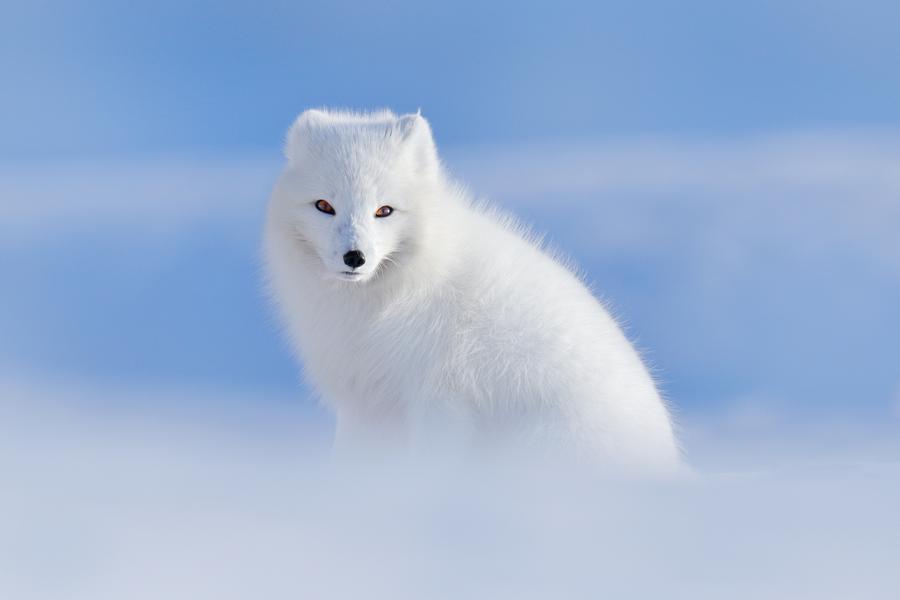
Female Arctic foxes share the species' dense coats, short ears and bushy tails with males. Their colors depend on season and color morph, rather than sex. Alaska's Department of Fish and Game describes two forms: the white morph has a white winter coat and brown summer fur, while the blue morph stays dark throughout the year, becoming somewhat lighter in winter.
The thick winter fur gives an Arctic fox its rounded appearance, while short ears and a compact body help it cope with the cold. In Alaska, litters average about seven pups, and both parents bring food to the den. Pups from the same litter can even have different color morphs. They feed on rodents, birds, eggs and other available food, including leftovers from larger predators.
1. Orchid Mantis
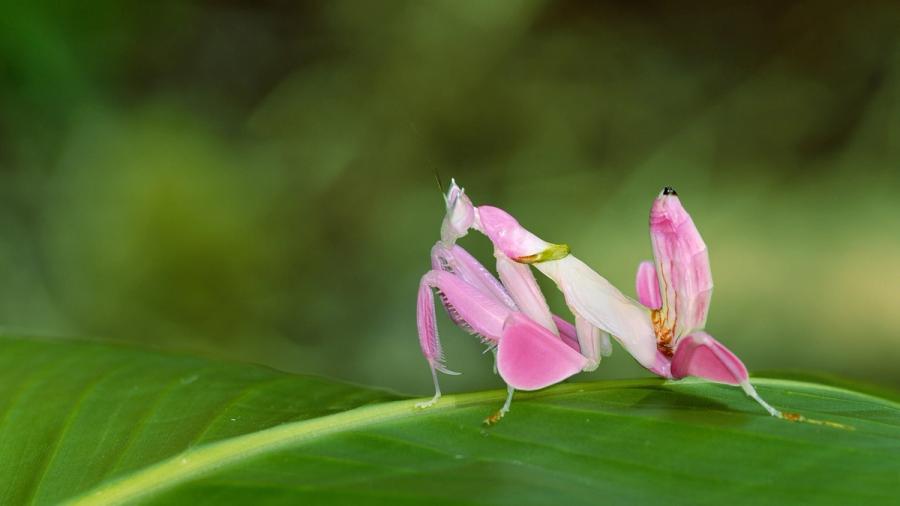
Female orchid mantises grow to about 2.4–2.8 inches (6–7 cm), more than twice the length of males at around 1 inch (2.5 cm), according to Oakland Zoo. Their white and pink coloring and petal-shaped leg lobes create a flowerlike appearance. This Southeast Asian forest insect uses its spiked front legs to seize prey that comes within reach.
That resemblance does more than hide the mantis. In O'Hanlon and colleagues' 2014 study, juvenile female orchid mantises attracted more approaches from wild pollinating insects than the flowers used for comparison. The researchers also observed successful captures. It was a test of juvenile females and those particular flowers, but it showed how an insect's flowerlike appearance can draw prey toward it.
SourcesSources are linked throughout the article. The main sources are listed below.
Animal Diversity Web — Panther chameleon
O'Hanlon, Holwell and Herberstein — Pollinator Deception in the Orchid Mantis